For many years, researchers have been on a quest to unravel the mysteries surrounding the origins and evolution of viruses and their role in the broader spectrum of life. Leading this exploration is Professor Masaharu Takemura from the Graduate School of Science at Tokyo University of Science (TUS), Japan. In collaboration with Dr. Philip Bell from Macquarie University, Australia, they proposed the cell nuclear virus origin theory, or viral eukaryogenesis, back in 2001.
This intriguing hypothesis posits that the nucleus of eukaryotic cells--characterized by a membrane-bound nucleus--may have evolved from a large DNA virus, such as a poxvirus, that infected an ancestral archaeal cell. Instead of annihilating its host, the virus could have established a symbiotic relationship, gradually integrating essential genes from the host and evolving into what we now recognize as the eukaryotic nucleus. If validated, this theory would position viruses as pivotal players in the emergence of complex life forms.
Giant DNA Viruses and Their Role
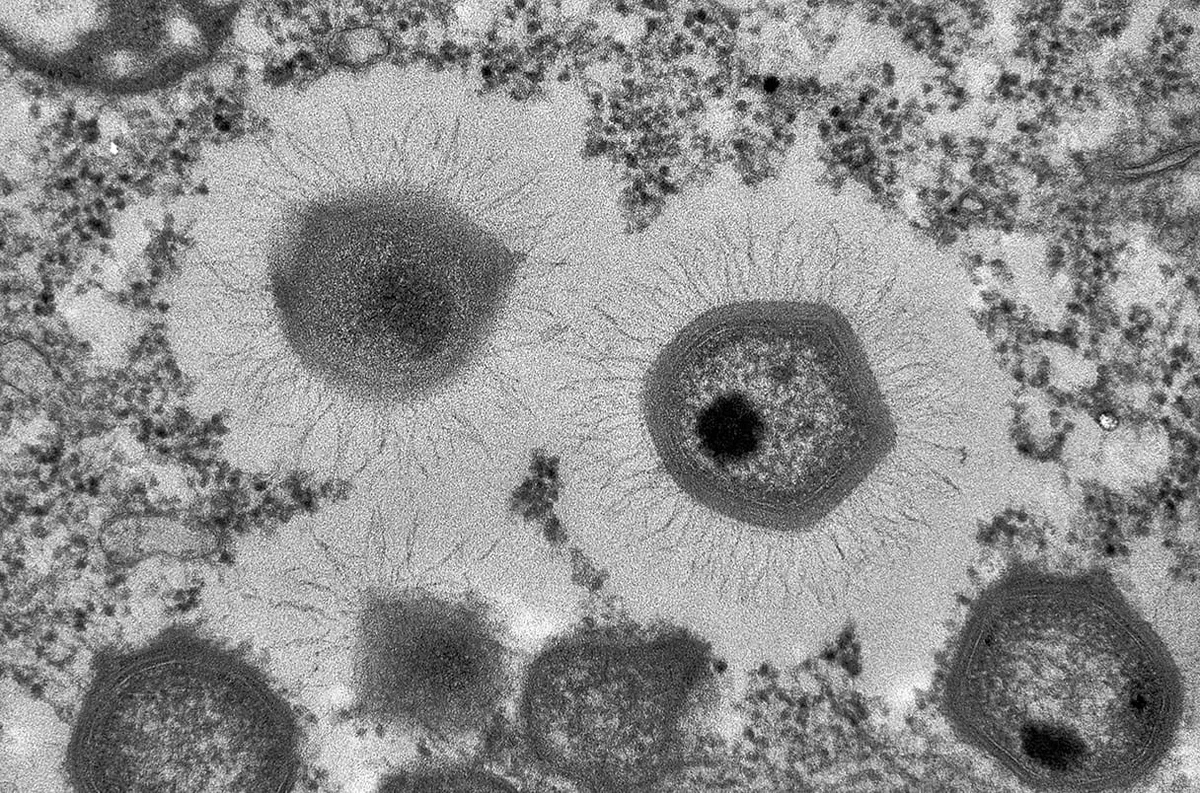
The discovery of giant DNA viruses in 2003 lent credence to this theory. These viruses create unique structures known as virus factories within their host cells, which can be membrane-bound and serve as sites for DNA replication, mimicking the functions of a primitive nucleus. This resemblance has reinforced the proposed evolutionary connection between viruses and complex cellular structures.
Recent advancements have led to the identification of additional giant DNA viruses, including those from the Mamonoviridae family, which infect acanthamoeba, and clandestinovirus, which targets vermamoeba.
Introducing Ushikuvirus
In a groundbreaking study published in the Journal of Virology, Prof. Takemura and his team at the National Institute of Natural Sciences (NINS) introduced a new giant DNA virus named ushikuvirus, isolated from Lake Ushiku in Japan. This discovery adds further weight to the nuclear virus origin hypothesis.
The research team, which included Master's students Jiwan Bae and Narumi Hantori, along with Dr. Raymond Burton-Smith and Professor Kazuyoshi Murata, emphasized the potential of giant viruses as a rich source of insights into the intersection of life and virology. "Giant viruses represent an unexplored treasure trove that could reshape our understanding of living organisms," stated Prof. Takemura.
Distinct Features and Replication Strategies
While giant viruses are prevalent, isolating them poses challenges due to their remarkable diversity. Ushikuvirus, similar to clandestinovirus, infects vermamoeba and shares structural traits with the Mamonoviridae family, particularly Medusavirus. However, ushikuvirus exhibits unique characteristics, including a distinct cytopathic effect that leads to the abnormal growth of infected vermamoeba cells.
Moreover, ushikuvirus employs a different replication strategy, breaking down the nuclear membrane during its lifecycle, contrasting with Medusaviruses that replicate within an intact nucleus. This behavior hints at an evolutionary relationship among these viral families, suggesting adaptations to various host environments.
Insights into Eukaryotic Evolution
By studying these variations, scientists are uncovering how giant viruses have diversified and how their interactions with host cells may have influenced the evolution of eukaryotic life. Prof. Takemura believes that the discovery of ushikuvirus will enhance the dialogue surrounding the evolution and phylogeny of the Mamonoviridae family, bringing us closer to understanding the mysteries of eukaryotic evolution.
Healthcare Implications
The implications of these findings extend beyond theoretical biology. Understanding how giant viruses infect amoebae could pave the way for innovative strategies to combat infections caused by harmful Acanthamoeba species.
Prof. Takemura, a prominent figure in giant virus research, aims to clarify the evolutionary pathways of giant viruses and eukaryotes while enhancing public understanding of virology through educational initiatives.