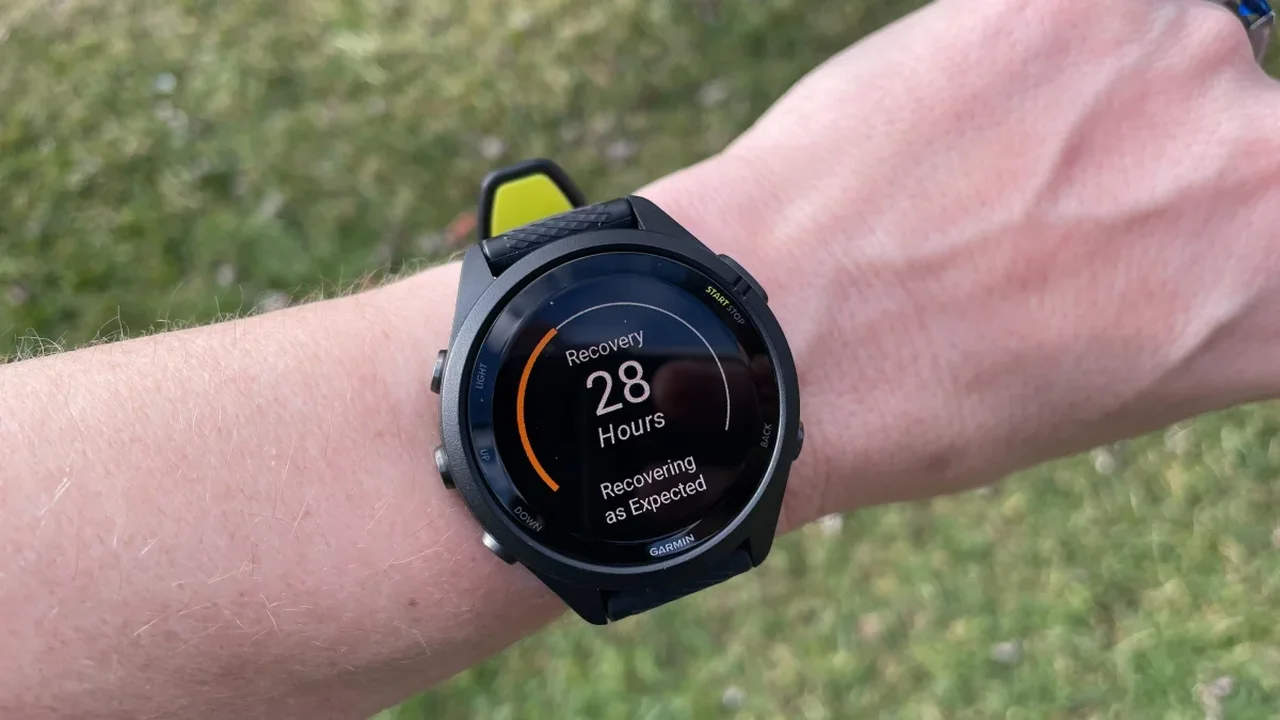
Garmin's recovery time feature is designed to estimate how long it may take before your body is ready for another workout of similar intensity. It appears in post-workout summaries on many Garmin watches, and can also be found in training-related views inside the Garmin Connect ecosystem.
What the number actually means
The timer is not a command to stop moving until it reaches zero. Instead, it reflects how long the body may still be carrying the effects of a session. Garmin says the countdown points to the moment when you are likely to get the greatest benefit from your next hard workout, not the moment when you are allowed to exercise again.
That is why the estimate can sometimes look surprisingly long, even after a moderate session. A higher number does not mean complete rest is required; it simply suggests that your next intense effort may be more effective if you wait a bit longer.
How athletes can use it
For runners and other fitness users, the metric works best as a planning tool. If a demanding session is scheduled for the next day, a longer recovery estimate may be a useful signal to shift that workout. If the plan is an easy run, mobility work, or a lighter session, the number may matter less.
Garmin also updates the estimate over time. Another workout can extend the countdown, while sleep and lower strain may reduce it faster than expected. In that sense, the feature acts as a dynamic snapshot of training load rather than a fixed rule.
Used wisely, the metric can support better pacing, smarter recovery habits, and more balanced training decisions. As wearable fitness tools become more adaptive, these insights may help shape a more personalized future for everyday performance.