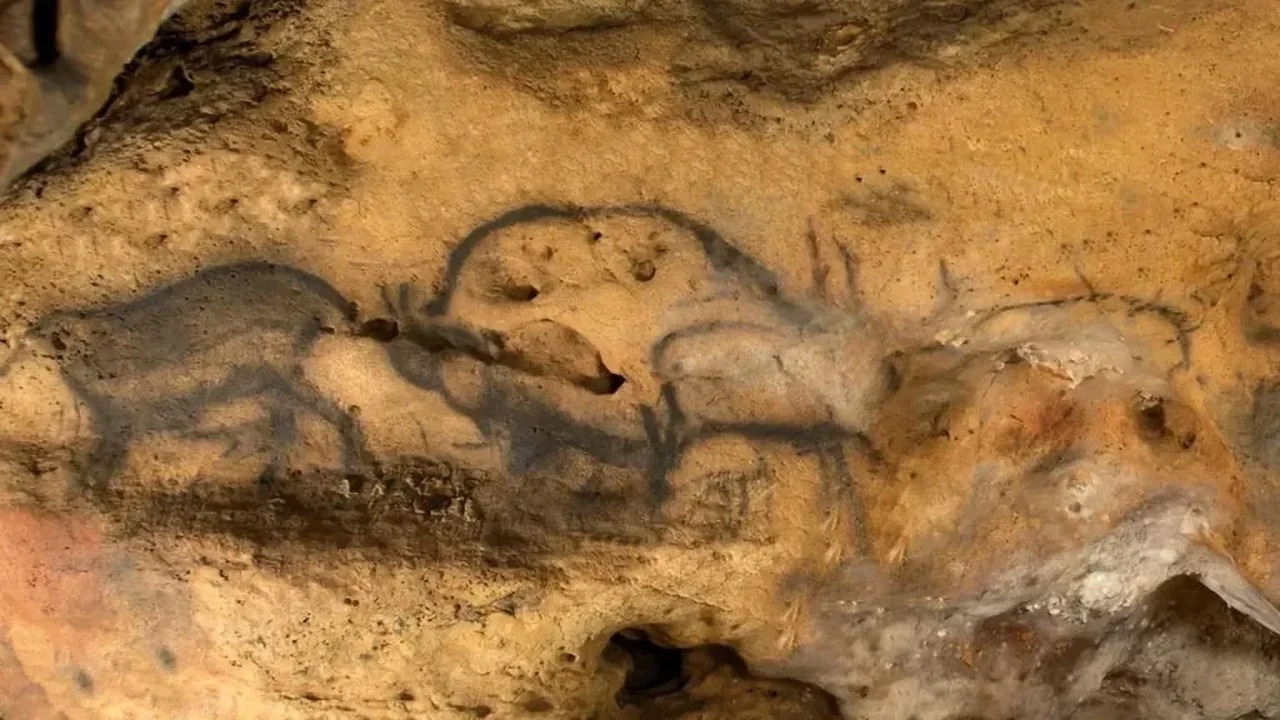
Scientists have achieved a milestone in prehistoric research by precisely dating black paintings inside Font-de-Gaume, a decorated cave in southwestern France. The study, led by the CNRS, marks the first absolute dating of these Paleolithic artworks.
Located in Dordogne's Vézère Valley, a UNESCO-listed landscape known for ancient art, Font-de-Gaume has long fascinated researchers. Until now, the age of its paintings remained uncertain because the dark pigments were assumed to be purely mineral, making radiocarbon analysis seem impossible.
Using non-invasive Raman microspectrometry and hyperspectral imaging, the team identified carbon-rich charcoal in several figures. That discovery made it possible to take tiny pigment samples from two drawings: a bison and a human or animal face.
Radiocarbon dating showed that the bison was created around 13,000 years ago. The face-like figure revealed multiple phases of painting, with some sections added thousands of years apart. The findings suggest that cave art may have evolved through repeated visits and layered artistic activity over generations.
This breakthrough offers a new path for dating Paleolithic cave art with greater precision and could help researchers better understand how early visual expression developed across time. It may also reshape future studies of prehistoric creativity and cultural continuity.