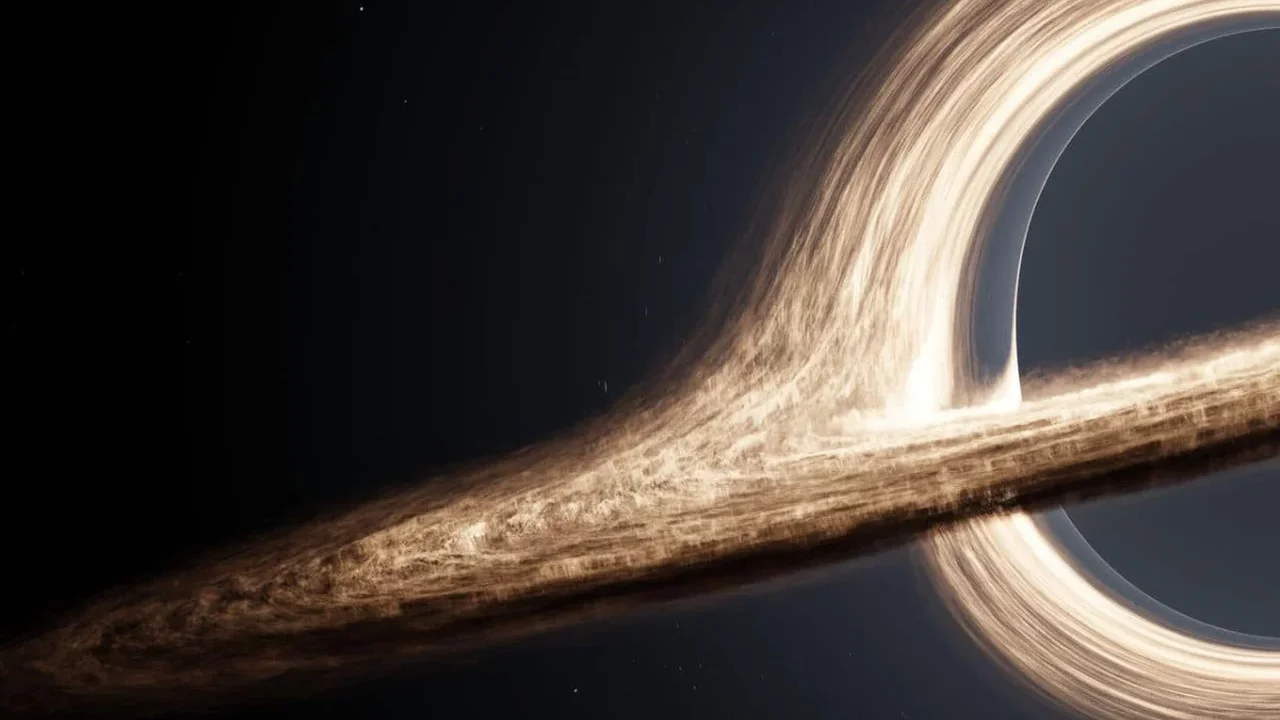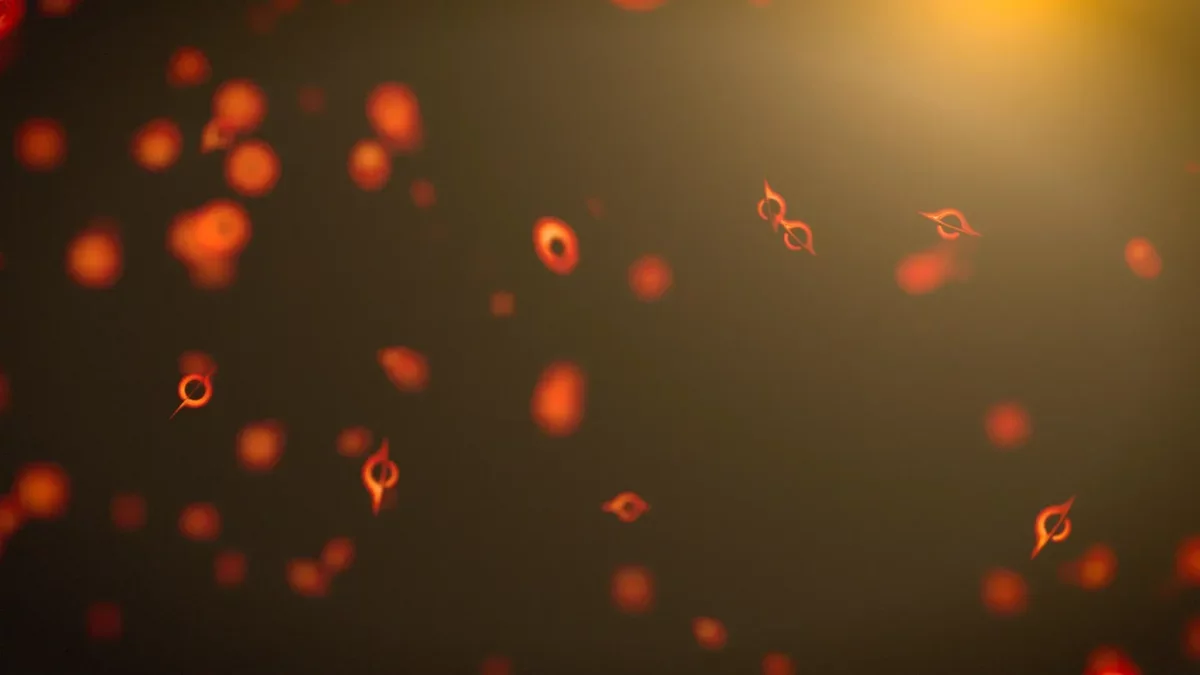
Physicists from the University of Massachusetts Amherst have made a groundbreaking discovery that could explain the sudden emergence of a rare type of black hole, known as a "quasi-extremal primordial black hole." Their research suggests that the explosive demise of these black holes might be responsible for producing a neutrino with extraordinary energy levels.
Unraveling Cosmic Mysteries
Published in Physical Review Letters, the study details how such an event could yield a unique neutrino, offering profound insights into the universe's fundamental structure. This particle could illuminate aspects of the cosmos that have long remained elusive.
Understanding Primordial Black Holes
While the formation of typical black holes is well-understood--resulting from the collapse of massive stars in supernova explosions--primordial black holes (PBHs) present a different scenario. Proposed by Stephen Hawking in 1970, these black holes are theorized to have formed shortly after the Big Bang. Although they have not yet been directly observed, they are believed to be incredibly dense and potentially much smaller than their conventional counterparts.
Hawking also introduced the concept of Hawking radiation, indicating that black holes can emit particles if they reach a certain temperature. This radiation could be detected by current telescopes, especially as PBHs evaporate and become lighter and hotter, leading to explosive events.
From Theory to Observation
Recent findings from the KM3NeT Collaboration have detected a high-energy neutrino that aligns with predictions made by the UMass Amherst team. However, this discovery raises questions, as another prominent experiment, IceCube, has not recorded similar events, suggesting a discrepancy in the frequency of these explosions.
Introducing "Dark Charge"
The researchers propose that PBHs possessing a "dark charge"--a concept akin to electric forces but involving a heavier version of the electron--could explain this inconsistency. This complex model may provide a more accurate representation of reality, potentially accounting for the missing dark matter in the universe.
Implications for Dark Matter
The implications of this research extend beyond the observation of unusual neutrinos. The existence of a significant population of PBHs with dark charge could align with astrophysical observations and help clarify the dark matter enigma that has puzzled scientists for decades.
A New Era in Cosmic Exploration
As the UMass Amherst team concludes, the observation of high-energy neutrinos marks a pivotal moment in astrophysics. This breakthrough could pave the way for experimental verification of Hawking radiation, providing evidence for primordial black holes and potentially uncovering new particles beyond the current Standard Model. The future of cosmic exploration is bright, with new discoveries on the horizon that may reshape our understanding of the universe.