In 1922, the tomb of Tutankhamun was uncovered by archaeologists, revealing an array of artifacts meticulously placed for the young Egyptian king's burial. Among the treasures, which included gold jewelry, chariots, and ceremonial objects, were numerous pairs of sandals, carefully arranged.
These ancient footwear pieces are now attracting renewed interest, providing valuable insights into the royal lifestyle, beliefs, and health conditions of ancient Egypt. Notably, they suggest that the teenage pharaoh may have faced challenges with mobility.
Footwear Fit for a Pharaoh
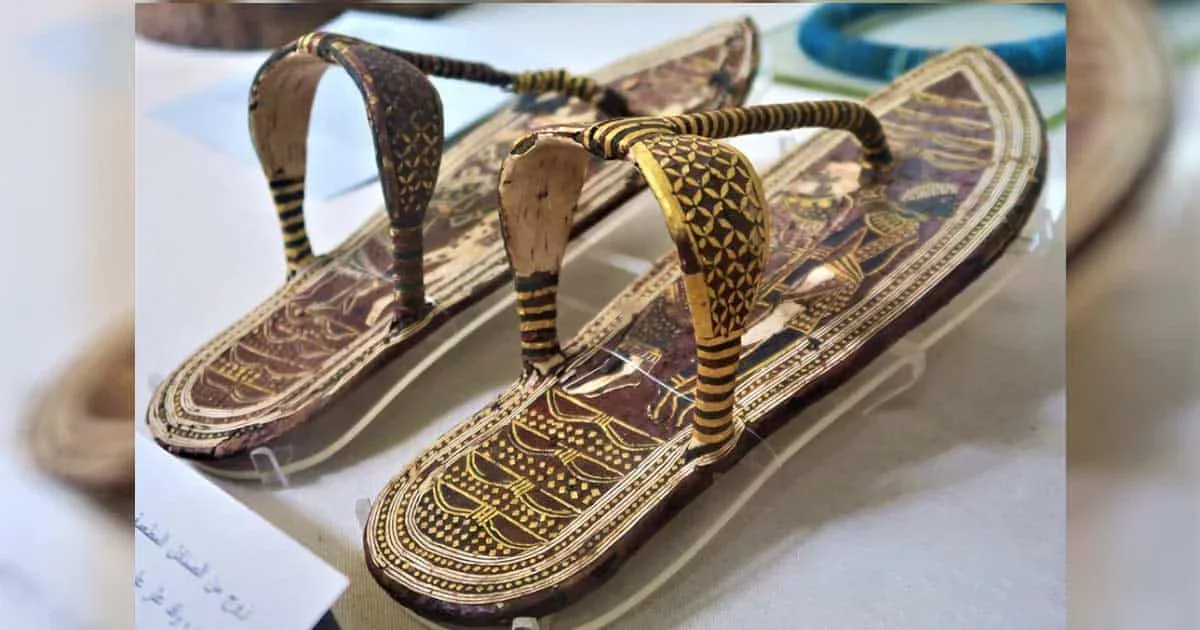
Buried alongside Tutankhamun were at least 80 pairs of sandals and shoes, crafted from diverse materials such as palm leaves, papyrus, leather, gemstones, and gold. While some were simple sewn sandals, others required the expertise of entire teams to embellish with gold, dye leather, and set stones.
According to archaeologist André J. Veldmeijer, these sandals served as significant status symbols, worn by the royal family and favored officials. He remarked, "The exact reason why these seemingly simple sandals, made from inexpensive materials, were so highly esteemed remains unclear."
Interestingly, even the golden sandals placed directly on the mummy were designed with simplicity in mind, featuring stitching patterns replicated in embossed gold.
Sandals have been a part of Nile Valley culture for over 4,000 years, typically crafted from woven plant fibers. In ancient times, wearing sandals signified high status, as many ordinary individuals went barefoot. The decoration of sandals could also represent ritual significance or social hierarchy. Egyptologist Salima Ikram noted that Tutankhamun's footwear was adorned with materials like gold, birch bark, and bone, creating luxurious designs.
Today, the collection appears more akin to a royal wardrobe than mere burial items, yet in ancient Egypt, footwear held considerable political and spiritual significance.
Symbolism in Design
One remarkable pair of sandals features images of bound captives on the inner soles, symbolizing the crushing of Egypt's adversaries with each step, represented by the traditional Nine Bows motif. Museum interpretations suggest that this imagery was intentionally positioned for the king to step on, reinforcing his dominance over enemies.
However, the sandals may also hint at King Tut's vulnerabilities. Modern CT scans of his mummy have indicated potential health issues, including a clubfoot, while DNA analysis suggests he faced additional health challenges, such as malaria. Some sandals exhibit unique strap configurations not seen in other Egyptian footwear.
Despite these peculiarities, Veldmeijer has found no definitive evidence of a distinct walking pattern in the wear marks, and similar fastening styles can be found in regions beyond Egypt. This unusual design may reflect foreign influences, adaptations, or simply a lost trend in royal fashion.
It remains uncertain whether Tutankhamun ever wore these sandals during his lifetime, as some may have been crafted exclusively for burial, intended to accompany him into the afterlife alongside food, weapons, and clothing.
Today, thousands of artifacts from the tomb, including these sandals, are showcased at Cairo's Grand Egyptian Museum.