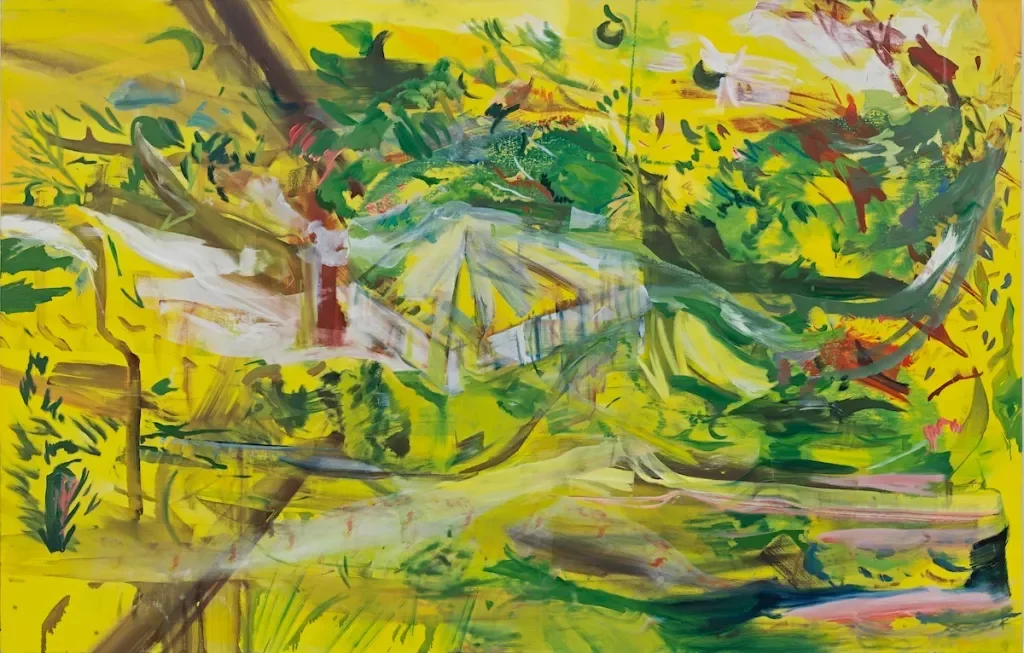
Colony Little offers a profound analysis of Claire Alexandre's exhibition, which delves into ecological themes and Black diasporic history by utilizing natural materials. In a recent review, she highlights the journey of Harriet Jacobs, an enslaved woman from North Carolina, who sought freedom in 1835. Jacobs' story, marked by her years of hiding and eventual escape, serves as a powerful backdrop to Alexandre's work.
Alexandre's exhibition also touches on the concept of marronage, representing the survival tactics of enslaved Africans who fled plantations to find refuge in remote areas. These maroons established communities based on their deep understanding of the land, using it not just for shelter but also for sustenance. The artist's pieces incorporate indigenous plant materials recognized for their healing properties, symbolizing resistance and resilience.
In another insightful piece, Sarah Brouillette examines Sophie Bishop's latest work, which investigates how social media and algorithms shape artistic engagement. Drawing inspiration from Howard S. Becker's notion of "art worlds," Bishop seeks to understand the implications of "influencer creep" on artistic visibility. Her research reveals a divide between established artists and newcomers struggling to gain recognition in a digital landscape, often leading to ambivalence towards social media.
Madeleine Schwartz recounts her visit to an exhibition in Paris showcasing artifacts from Gaza, a region with a rich yet often overlooked history. The display, housed in the Institut du Monde Arabe, features items that reflect Gaza's ancient heritage, which has been largely understudied. Schwartz emphasizes the curator's efforts to bring these artifacts to light, despite the challenges posed by limited information and accessibility.
Dr. Nasser Mohamed, Qatar's first openly gay citizen, shares his experiences navigating the asylum process in the U.S. He describes the lengthy and invasive steps involved, particularly during the interview stage, which revolved around his sexuality. Despite the challenges, his story exemplifies the resilience of individuals seeking safety and acceptance.
Rainesford Stauffer encourages readers to embrace solo experiences, highlighting their psychological and social benefits. Through personal anecdotes, individuals like Addie Tsai illustrate how solitary outings can foster self-connection and enrich one's understanding of activities, from dining alone to exploring bookstores.
In a world where art, culture, and personal narratives intertwine, these stories reflect a vibrant tapestry of human experience, encouraging us to appreciate the depth and diversity of artistic expression.