Your wallet plays a crucial role in your everyday carry (EDC), serving as a holder for your identification and payment methods. Over the years, the trend has shifted towards slimmer wallets, as individuals seek to avoid the discomfort of bulky wallets. However, carrying too many items can increase security risks, especially if sensitive information is lost or stolen.
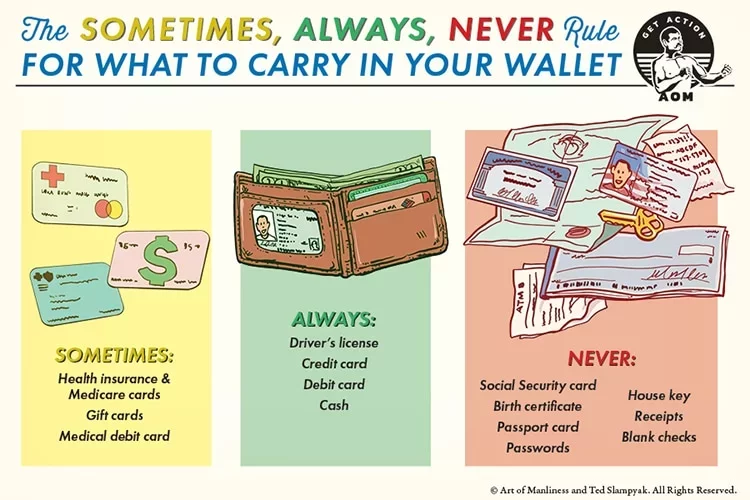
To help you maintain a streamlined wallet while minimizing risks, we categorize items into three groups: sometimes, always, and never.
Sometimes
Some items should only be kept in your wallet when necessary, as they can take up space and pose security threats.
Health insurance and Medicare cards: These cards can be misused by thieves to access medical services under your name, leading to potential financial and health record complications. It's advisable to carry them only when attending medical appointments, as most offices keep a copy on file.
Medical debit cards: Similar to health insurance cards, these should be carried only when needed to prevent fraud and reduce wallet bulk.
Gift cards: While they can be handy, keep them in your wallet only if you plan to use them soon. Otherwise, they become a target for thieves who can redeem them without ID.
Always
There are essential items that should always be in your wallet:
Driver's license: This is legally required when driving. Having it with you can help avoid unnecessary legal issues.
Credit card: Limit yourself to one primary credit card to reduce bulk and simplify cancellation if lost.
Debit card: Necessary for ATM withdrawals and payments; ensure you have fraud alerts enabled.
Cash: Carrying $100-$300 in cash can be beneficial for transactions that don't accept cards, while not being so much that it poses a significant loss if your wallet is stolen.
Never
Certain items should never be in your wallet due to their potential for misuse:
Social Security card, birth certificate, passport: These documents are rarely needed and can lead to identity theft if lost.
Passwords: Storing passwords in your wallet is a security risk; it's vital to keep them secure and private.
House key: If your wallet is stolen, a thief would have both your key and your address, compromising your home's security.
Blank checks: These can lead to check fraud if they fall into the wrong hands.
Receipts: While they usually don't contain sensitive information, they can clutter your wallet. Discard those you don't need and securely store the important ones.
In conclusion, refining what you carry in your wallet not only enhances convenience but also significantly reduces the risk of fraud. As we move towards a more digital future, being mindful of our physical belongings can lead to a safer, more organized lifestyle.