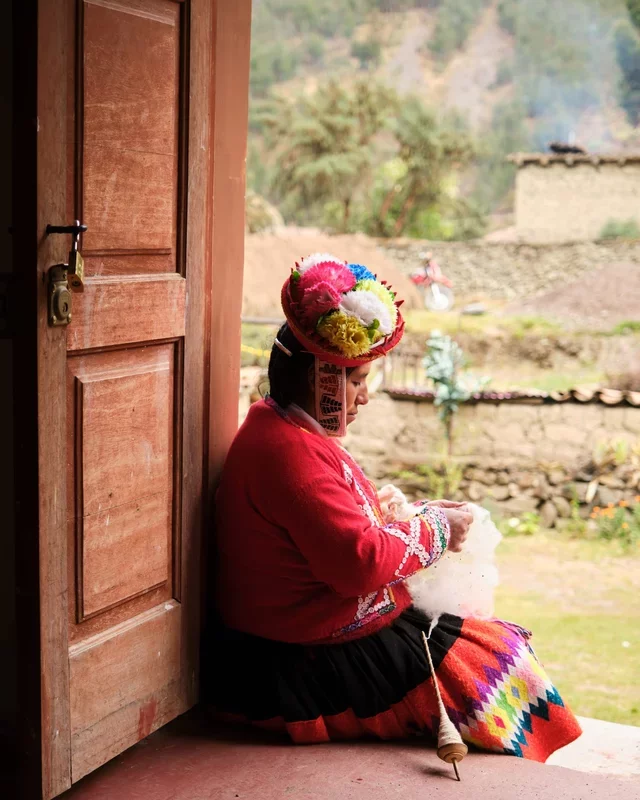
The Sacred Valley of Peru has a rich history intertwined with the natural world, where rural communities have traditionally relied on agriculture and livestock for sustenance. This deep connection to nature is especially evident among the Quechua communities, Indigenous peoples who have historically focused on subsistence living rather than monetary economies. However, the rise of cash-based systems, including health clinics and schools, has gradually transformed their way of life. Many Quechua men have sought employment in tourism, while women often stay behind to manage homes and farms, leading to increased dependency on family support.
In response to these changes, the nonprofit organization Awamaki was established in 2009 to support the communities surrounding Ollantaytambo, Cusco. Founders Kennedy Leavens and Miguel Galdo aimed to continue their previous work with local artisans, particularly women weavers from Patacancha, after their initial project ended. Awamaki has since expanded its efforts, now assisting nine cooperatives with 174 artisans engaged in crafts and tourism.
Awamaki emphasizes collaboration and sustainability, striving to enhance market access and economic opportunities for its partners. The organization also addresses the pressing challenges posed by climate change, which significantly impacts the Sacred Valley. As glaciers retreat and water supplies dwindle, Awamaki's mission is not to replace traditional livelihoods but to expand economic avenues that enable families to thrive while preserving their cultural heritage.
By partnering with Awamaki, cooperative members can dedicate themselves to their traditional crafts, including spinning, dyeing, and weaving, while receiving support in sales and tourism coordination. The Andean highlands, rich in history and home to significant sites like Machu Picchu, attract numerous visitors each year. This influx of tourists creates opportunities for artisans, who previously faced challenges when unannounced visitors disrupted their work.
Women artisans, like Ricardina from the Cusci Qoyllur cooperative, highlight the demanding nature of their craft, which involves not only weaving but also raising alpacas and processing wool. The support from Awamaki has fostered greater financial independence among these women, allowing them to make collective decisions about their livelihoods and futures. As Daniela, a weaver from the Puskariy Tika cooperative, notes, their work enables them to improve their lives gradually.
Awamaki's initiatives, including tourism programs, have proven transformative for many artisans, providing a steady income that allows them to continue their weaving traditions. Nadia from the Rumia cooperative shares how being part of Awamaki has changed their circumstances, enabling them to maintain their cultural practices while teaching their children about environmental stewardship. This holistic approach ensures that the artisans' work remains deeply rooted in their community values.
As Awamaki continues to support these remarkable women, it not only champions their craft but also contributes to a sustainable future where traditional practices coexist with modern economic opportunities.