In a groundbreaking development, physicist Enbang Li from the University of Wollongong in Australia has reignited a long-standing debate about the speed of light. His recent experiments indicate that light may actually accelerate when influenced by gravity, challenging the established notion that the speed of light in a vacuum is constant, as proposed by Albert Einstein in his 1905 theory of special relativity.
Einstein's theories have been foundational in physics, particularly his general relativity, which posits that massive objects can bend light due to their gravitational pull. This phenomenon was famously confirmed during a solar eclipse in 1919, but the idea that gravity could alter the speed of light itself has remained largely theoretical.
An Innovative Experiment
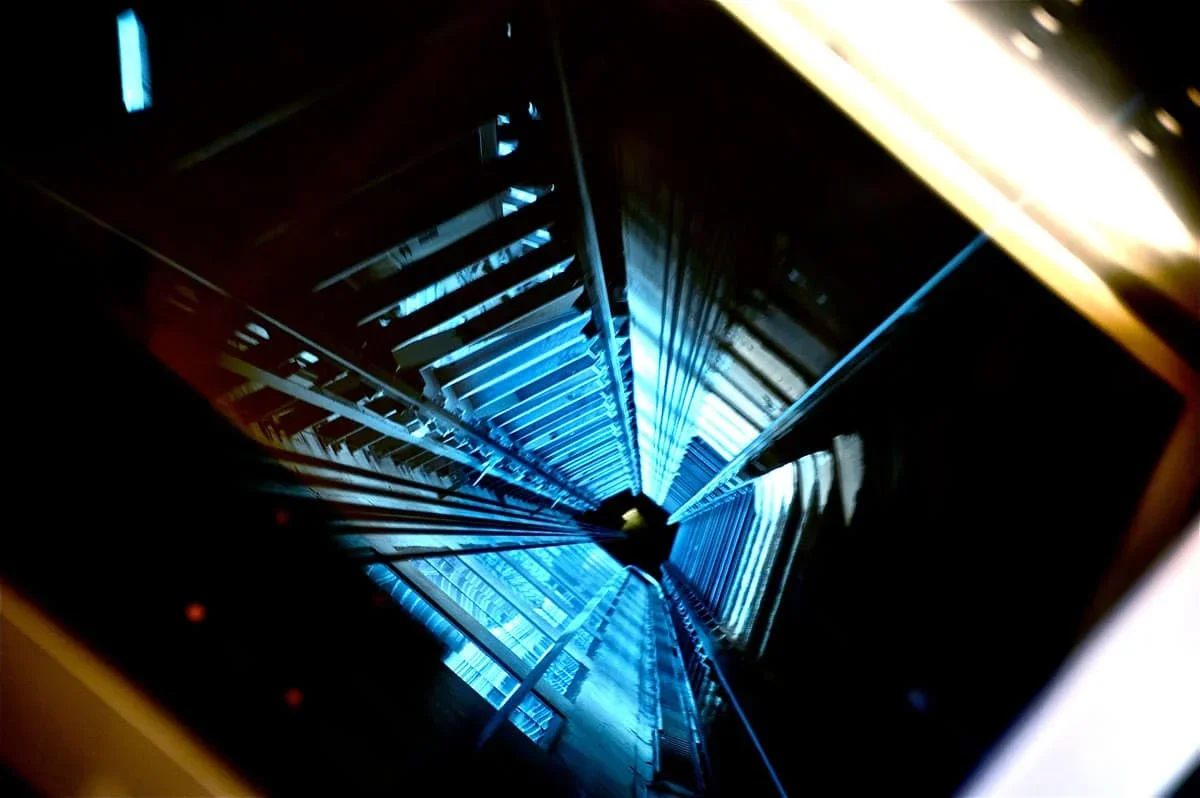
Li's innovative approach involved constructing a machine that could detect potential changes in light speed as it traverses different gravitational fields on Earth. He conducted his experiments in an elevator shaft, utilizing a coil of fiber-optic cable that, if fully extended, would measure 10 kilometers in length. By firing laser beams through this cable and measuring the time taken for the light to return, he found that light traveled slightly faster at the bottom of the shaft compared to the top.
To ensure accurate results, Li implemented a meticulous setup to minimize environmental disturbances, including temperature fluctuations and electromagnetic interference. His findings suggest that local gravitational variations can indeed affect the speed of light, aligning with Einstein's earlier, albeit abandoned, hypothesis from 1911.
Implications for Earth Sciences
Li has taken his research further by developing a portable device capable of detecting changes in light speed near objects with varying gravitational densities. In a subsequent experiment, he noticed that light moved faster in proximity to a 72-kilogram weight than when it was farther away.
The implications of these findings could be profound, particularly in the realm of Earth sciences. Enhanced gravity-sensing technologies could revolutionize how we monitor climate changes and locate underground resources. Traditional gravimeters, which are sensitive to vibrations and movements, could be replaced by Li's device, which has no moving parts and could function in various environments, including on planes or submarines.
A Vision for the Future
Experts in the field, including Chris Stevens from the University of Canterbury, have praised Li's work as ambitious and intriguing, although they emphasize the need for cautious interpretation of the results. If validated, Li's research could prompt a reevaluation of our understanding of relativity and open new avenues for technological advancements in geophysics.
As we continue to explore the mysteries of gravity and light, such developments might pave the way for innovations that enhance our understanding of the universe and improve our ability to monitor and respond to environmental changes.