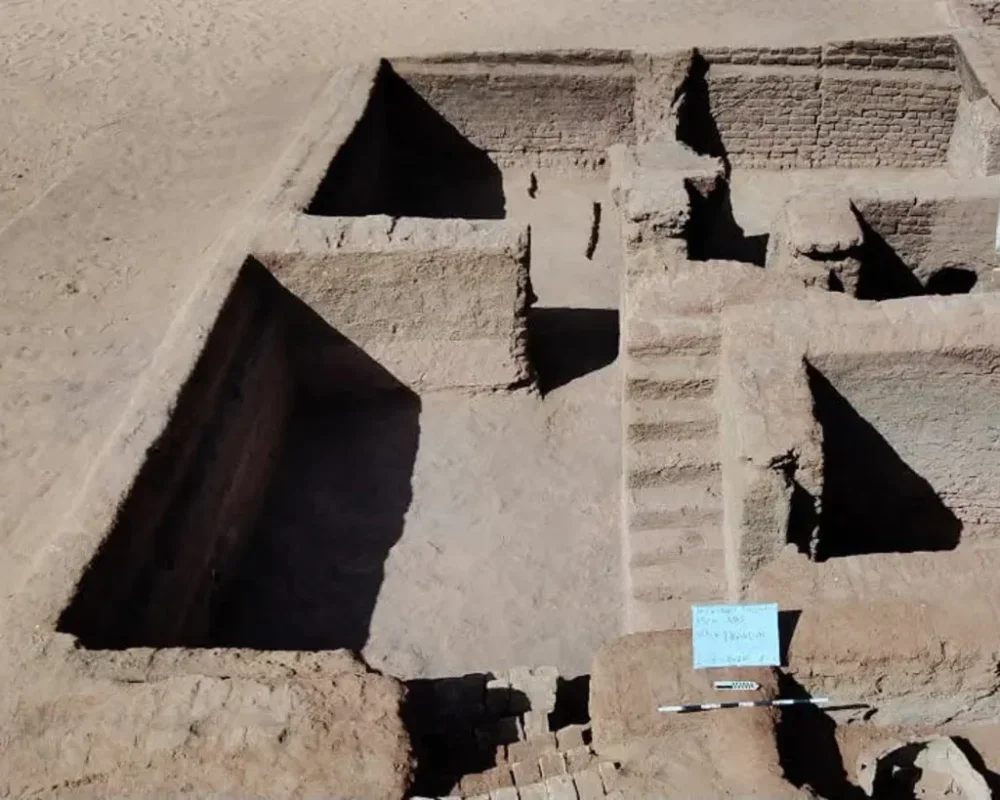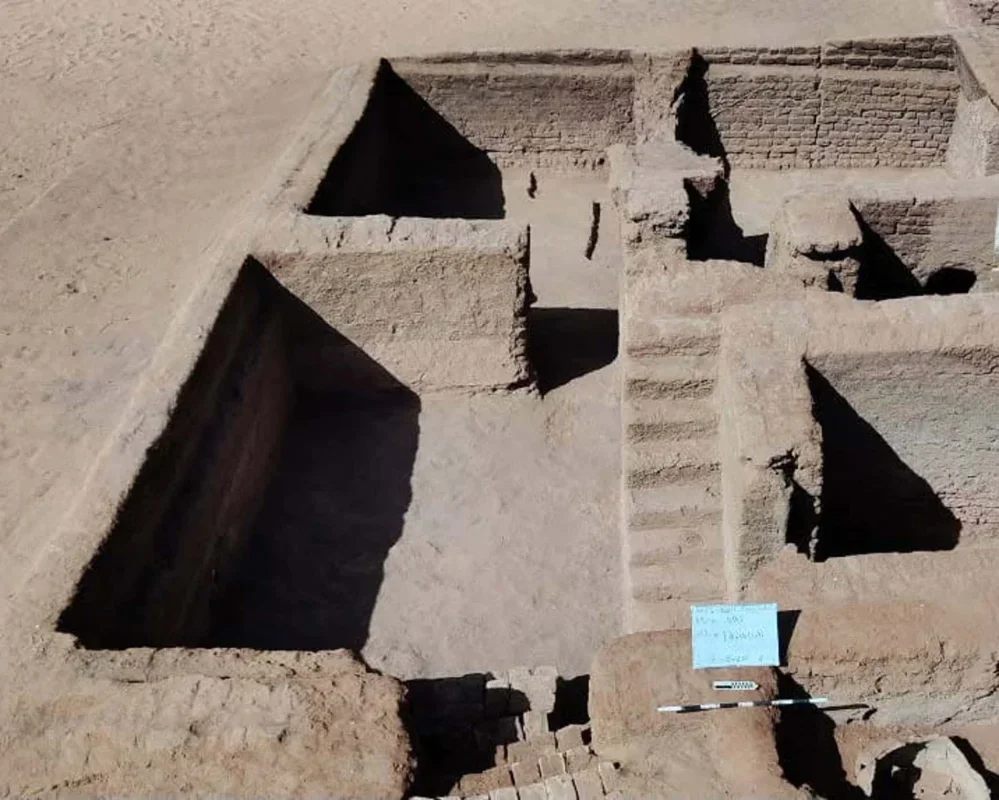
Archaeologists in Egypt's Dakhla Oasis have uncovered a remarkably preserved Byzantine-era settlement that offers a vivid look at daily life in the Western Desert more than 1,600 years ago. The site, at Ain Al-Sabil in New Valley Governorate, includes streets, homes, churches, ovens, coins and written records.
Planned Urban Life in the Oasis
The settlement appears to have been carefully designed, with north-south streets intersecting east-west roads to form open spaces and a structured urban layout. At its center stood a basilica-style church dating to the mid-fourth century, alongside two watchtowers, a fortified building and mud-brick houses with reception rooms and vaulted roofs.
Everyday domestic life is also visible in the remains. Archaeologists documented bread ovens, kitchens, stone grinding tools and bronze coins, showing how residents cooked, worked and managed household routines on the edge of the desert. One residence linked to a church deacon named Tisous may have functioned as an early house church before the community built a dedicated basilica.
Among the most valuable finds are around 200 ostraca -- pottery fragments used for writing -- inscribed in Coptic and Greek. These texts include contracts, commercial notes and correspondence, pointing to a community that was active in trade, administration and literacy. Coins bearing Byzantine emperors, Latin inscriptions and Christian symbols further reflect the region's cultural transition during Late Antiquity.
New Insights from the Mediterranean Coast
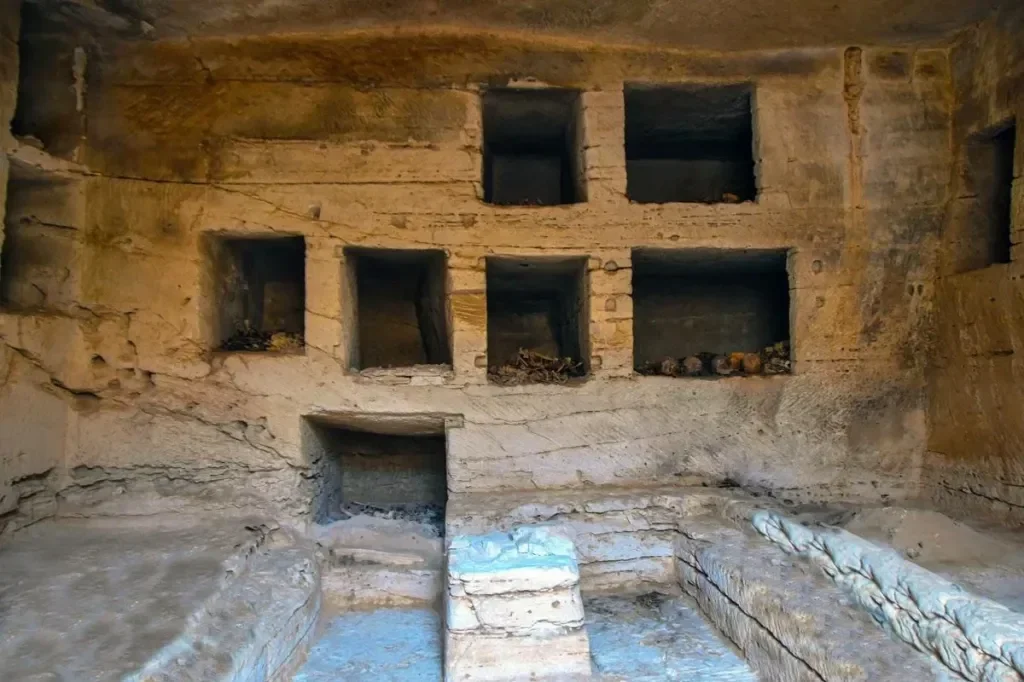
In a separate discovery at Marina el-Alamein, west of Alexandria, researchers uncovered 18 tombs, including rock-cut chambers and limestone-built burials. The site is widely associated with Leukaspis, a Greco-Roman port city that once connected Egypt to Mediterranean exchange networks.
Inside the tombs, archaeologists found pottery, lamps, altars, a granite sarcophagus, a plaster sphinx and gold pieces placed in some mouths as part of the ancient "golden tongue" tradition, believed to help the dead speak in the afterlife.
Together, these discoveries illuminate a dynamic chapter of Egyptian history shaped by religion, settlement planning and everyday resilience. They may help future research map how desert communities and coastal cities bridged the ancient world and the Byzantine age.