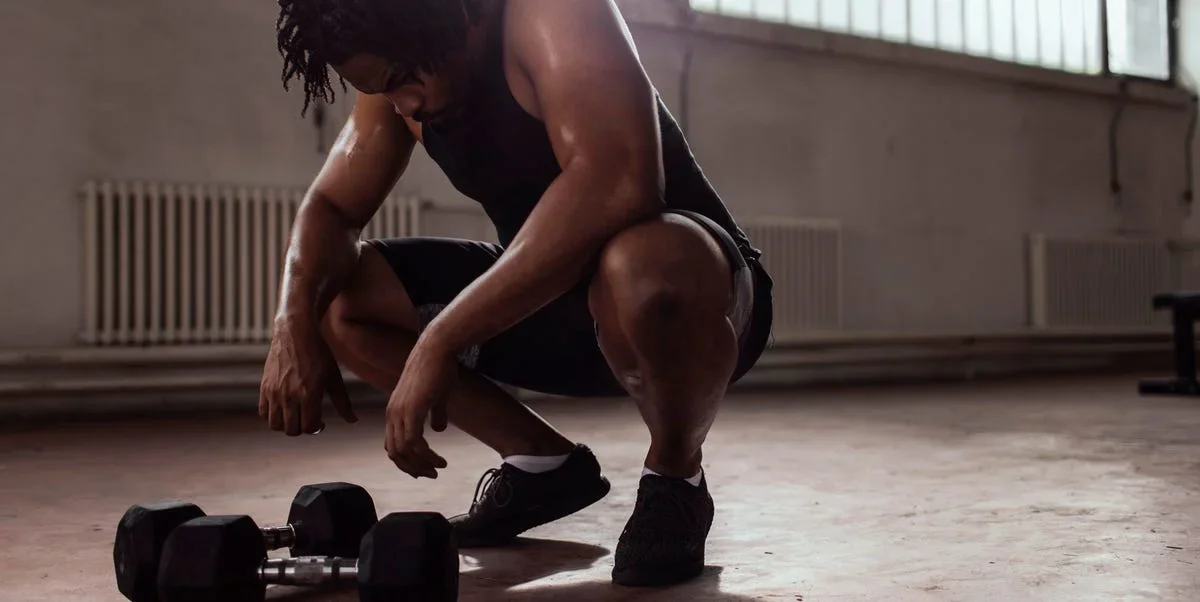
Dumbbells can be a highly effective way to train the lower body, especially when space, time, or equipment is limited. By targeting the quads, glutes, and hamstrings with controlled resistance, this approach supports strength, muscle growth, and better movement quality without relying on a barbell setup.
Four Dumbbell Moves for Leg Day
Goblet Squat is a foundational lower-body exercise that challenges the core while building leg strength. Holding a dumbbell close to the chest encourages an upright torso and strong posture. The key is to squat within your mobility range while keeping the heels grounded and the knees tracking outward. Suggested format: 4 sets of 6 to 8 reps.
Single-Leg Deadlift brings a unilateral focus, helping each side work independently. This movement emphasizes balance, hamstring engagement, and glute activation. Keep the back flat, the core braced, and the hips square as you hinge forward. Suggested format: 3 sets of 8 to 10 reps per side.
Reverse Lunge offers a smooth, controlled way to train the legs with less impact than a forward step. It strengthens the lower body while demanding stability through the torso and hips. Step back with control, lower into a strong position, and drive up through the front foot. Suggested format: 3 sets of 8 to 10 reps per side.
Lateral Lunge adds side-to-side movement, helping train the body in a more complete way. This frontal-plane exercise supports mobility, coordination, and leg strength beyond straight-ahead patterns. Keep the core active, step wide, and push back to standing with control. Suggested format: 3 sets of 6 to 8 reps per side.
Dumbbells also offer flexible holding positions, including front rack, goblet, and suitcase styles. That versatility makes them useful for beginners and experienced lifters alike. More importantly, dumbbell training encourages stability, coordination, and balanced strength across both sides of the body.
For athletes, active adults, and anyone building a practical fitness routine, dumbbell leg work can improve balance, explosiveness, and everyday movement efficiency. This simple format shows how smart training tools can keep evolving with modern lifestyles, shaping a more accessible future for strength and performance.