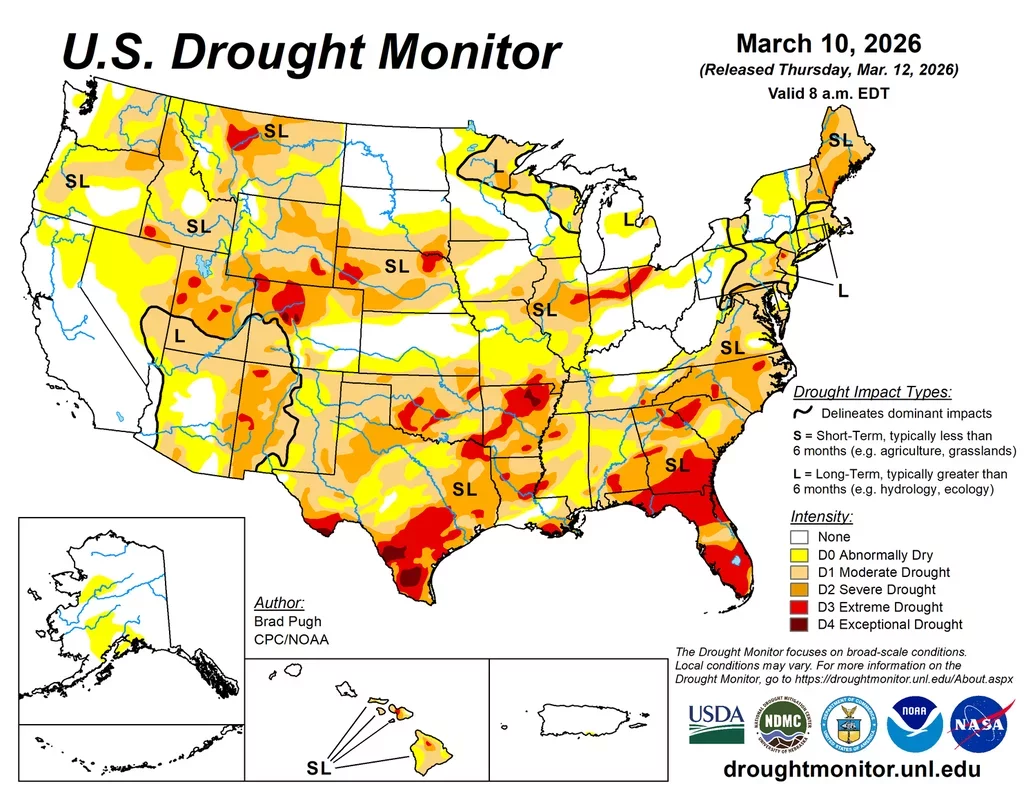
Recent reports indicate that while the Midwest has experienced some relief from drought conditions due to early March precipitation, states like Nebraska and Texas are still grappling with significant water shortages as they approach the growing season.
The latest findings from the U.S. Drought Monitor reveal that regions in the eastern Corn Belt have benefited from rainfall, yet conditions worsen as one moves westward. Nebraska is particularly affected, with approximately 96% of the state classified as experiencing drought. This marks a slight decline in moisture levels, with the Drought Severity and Coverage Index increasing from 231 to 235.
Eric Hunt, an extension educator at the University of Nebraska-Lincoln, noted that the drought situation varies across the state. He expressed cautious optimism for southeast Nebraska, provided additional rain arrives soon, while central and western areas face more dire circumstances.
In Texas, nearly 99% of the state is under drought conditions, with some regions experiencing extreme drought for the first time in decades. Russell Boening, a fourth-generation farmer from Floresville, Texas, highlighted the stark contrast in weather patterns within the state. While Dallas/Fort Worth has seen adequate rainfall, his area continues to suffer from prolonged dryness, severely impacting crop planting schedules.
Boening pointed out that irrigation is not sufficient to compensate for the lack of rainfall, which has led to only half of the expected planting being completed this season. The last substantial rainfall in the area occurred in mid-2022, leaving farmers anxious as they prepare for the upcoming growing season.
Despite the challenges, there is a glimmer of hope. Incremental rains could still occur, potentially aiding farmers and their crops. However, experts warn that substantial relief will require significantly above-average precipitation in the coming weeks.
As growers in Nebraska and Texas navigate these uncertain conditions, the future of agriculture in these regions hangs in the balance. The resilience of farmers and advancements in agricultural practices will play a crucial role in overcoming these environmental challenges.