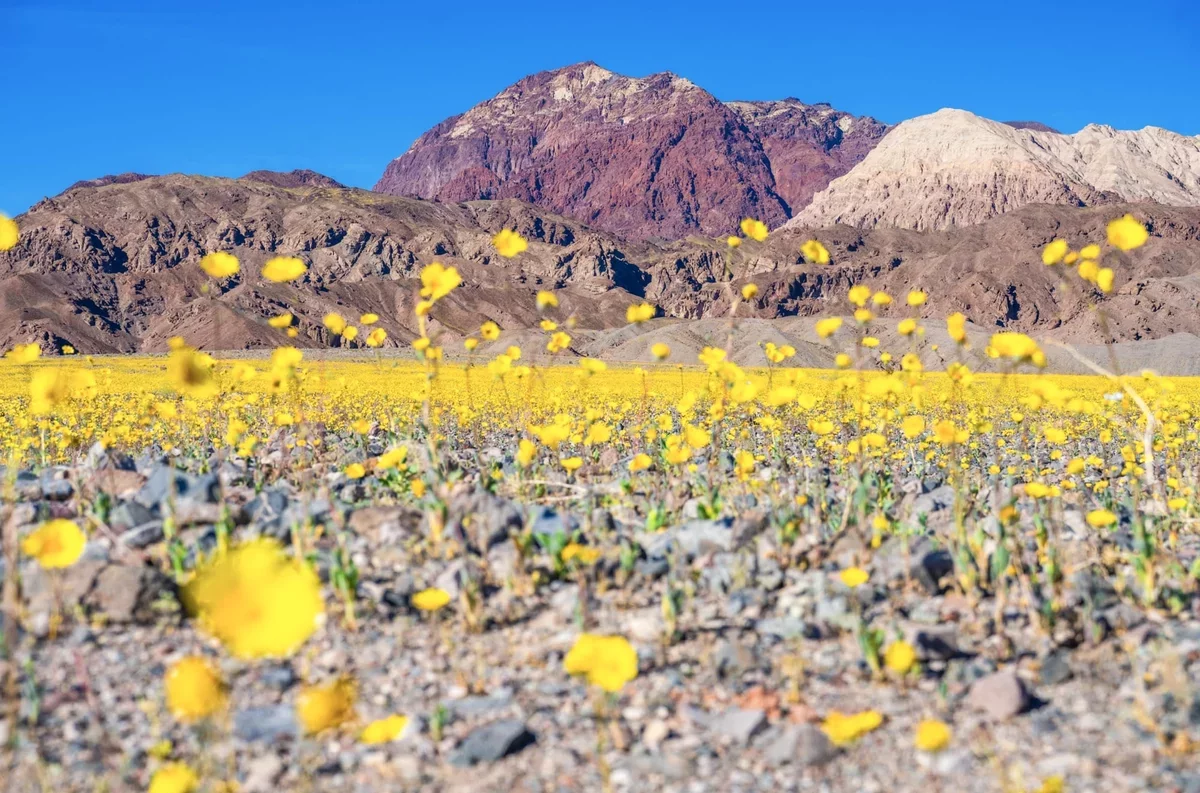
Death Valley, renowned as the driest and lowest national park in the United States, is also known for being one of the hottest places on the planet, with a record air temperature of 134 degrees Fahrenheit set in 1913. Despite its ominous name, this park bursts with life, especially highlighted by a rare "superbloom" that has recently unfolded.
Photographer Dr. Elliott McGucken, who specializes in capturing landscapes and nature, found himself captivated by the vibrant wildflower displays set against the backdrop of the Mesquite Flat Sand Dunes and the majestic Telescope Peak. The predominant flowers featured in this superbloom include magenta Phacelia and golden Desert Gold, alongside other varieties such as Mojave Stars and Brittlebush.
While working in Yellowstone National Park, McGucken learned of the exceptional rainfall that had primed Death Valley for this stunning floral event. Recognizing the rarity of superblooms, which last occurred in 2016, 2005, and 1998, he quickly made his way to California. "As nature photographers, we often wait for those 'hell yes' moments to pack up and move out, and this was definitely one of those moments!" he exclaimed, noting the drastic temperature shift he experienced in just one day.
By early March, Death Valley National Park announced that it was witnessing its most impressive superbloom in a decade. At lower elevations, wildflowers typically begin to bloom in early March, with their vibrant colors potentially lasting until mid-month, while blooms at higher elevations can continue from April to June.
Though the peak of the superbloom has passed, some wildflower displays remain visible in certain areas of the park. McGucken's impressive photography captures the essence of this fleeting beauty, showcasing how nature can surprise and inspire us.
This remarkable event not only highlights the resilience of nature but also serves as a reminder of the beauty that can emerge even in the harshest environments. As climate patterns shift, such natural phenomena may become more frequent, inviting us to appreciate and protect our planet's diverse ecosystems.