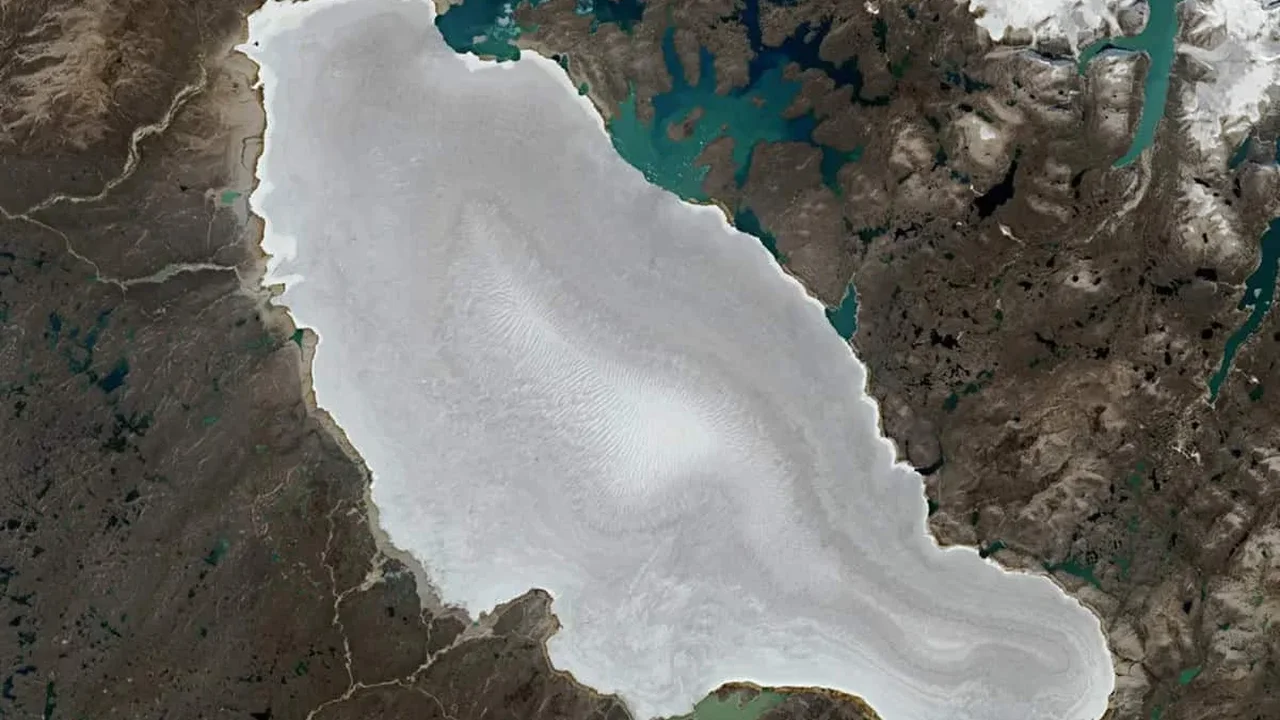
A study published in Science suggests that the Barnes Ice Cap on Canada's Baffin Island may have been showing the first signs of a new glacial period--until rising temperatures reversed its growth.
Researchers from Columbia University's Lamont-Doherty Earth Observatory reconstructed the ice cap's history using two kinds of evidence: 35 rock and boulder samples, and 88 samples of plants exposed as the ice retreated. The rocks indicate the ice cap reached its smallest extent about 3,560 years ago. Radiocarbon dating of the plants suggests it began expanding around 2,000 years ago, with a notable growth phase during the cooler summers of 1780-1880.
Clues preserved beneath the ice
Unlike many glaciers, the Barnes Ice Cap is frozen to the bedrock beneath it. This helped preserve mosses as the ice advanced, leaving a record researchers could use to track its changing edge.
Since about 1960, the ice margin has retreated by roughly 200 to 800 meters. The study's authors connect the reversal to human-driven greenhouse gas emissions, which have increased atmospheric temperatures and outweighed natural factors that would otherwise favor cooling in the region.
A question of scale
The researchers interpret the ice cap's earlier expansion as a possible beginning of glacial growth, not proof that a full ice age had started. Some climate scientists, including researchers at the Potsdam Institute for Climate Impact Research, have argued that a new glacial cycle remains many millennia away. The distinction depends partly on whether early regional ice growth or the formation of vast continental ice sheets defines the start of a glaciation.
The findings offer a rare view of how ice sheets can begin to form, while the debate highlights the limits of drawing global conclusions from one region. Continued climate research will help clarify how human emissions are reshaping long-term planetary cycles and the conditions that could shape Earth's climate far into the future.