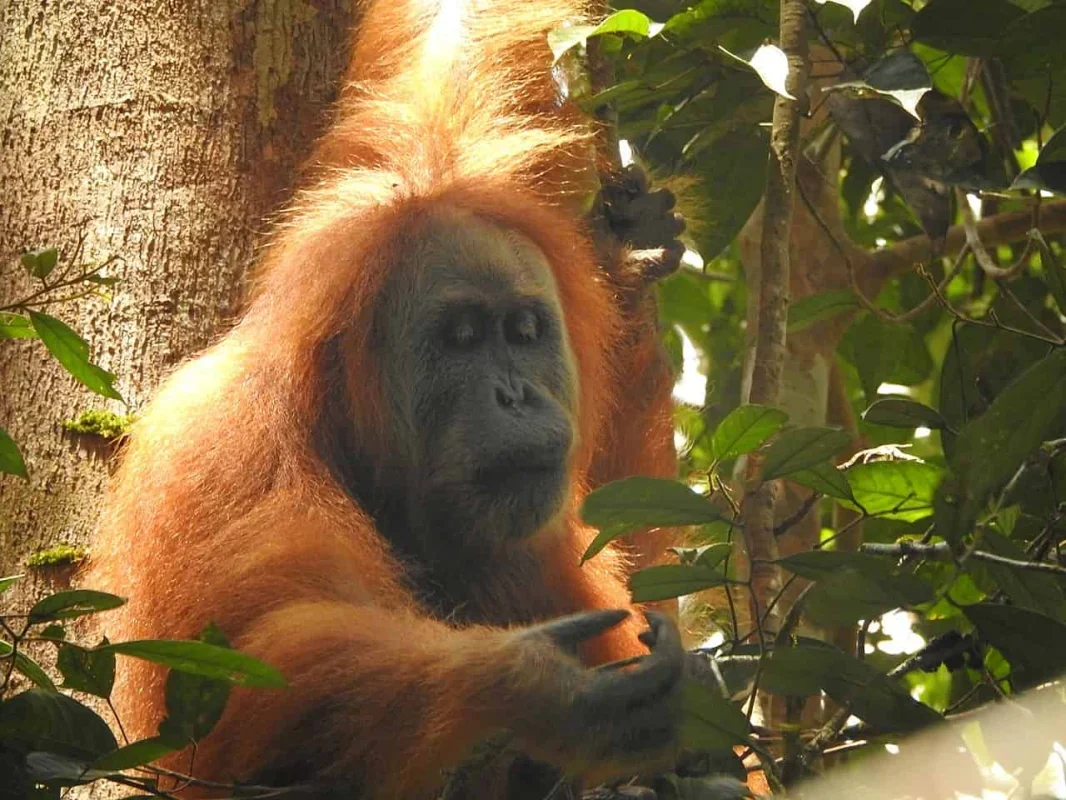
A major storm system in Sumatra has brought a new conservation reality into focus for the world's rarest great ape. A study published in Current Biology estimates that Cyclone Senyar caused the loss of about 58 Tapanuli orangutans, equal to roughly 7% of the species' remaining wild population.
A fragile habitat under pressure
The Tapanuli orangutan lives only in a limited part of North Sumatra, with its strongest remaining habitat in the Batang Toru ecosystem. This forest has already been narrowed by roads, farming, mining, palm oil expansion, and hydropower projects, leaving the species with little room to adapt.
Researchers assessed satellite images of landslides after the cyclone and matched the damaged zones with orangutan density estimates. Their analysis showed that around 8,300 hectares of habitat were affected, representing nearly 12% of the forest cover in the area.
The storm brought intense rainfall that saturated steep slopes and triggered widespread collapse. Because Tapanuli orangutans spend most of their lives in the canopy and reproduce slowly, even a single extreme event can reshape the future of a small population.
Why the impact matters
Scientists note that the species' recovery rate is naturally limited, since females typically give birth only every six to nine years. That makes every adult loss significant. The study suggests the real toll could be higher, as it did not fully account for canopy damage, food loss, or longer-term breeding effects.
Experts say the event highlights the importance of keeping Batang Toru intact, restoring forest connections, and planning conservation strategies that reflect a warming climate and heavier rainfall patterns. Temporary pauses in industrial activity may help, but long-term protection is seen as essential.
For conservation science, the cyclone is a clear reminder that resilient ecosystems depend on both protection and connectivity. The future of the Tapanuli orangutan may help shape how endangered species are safeguarded in an era of stronger climate extremes.