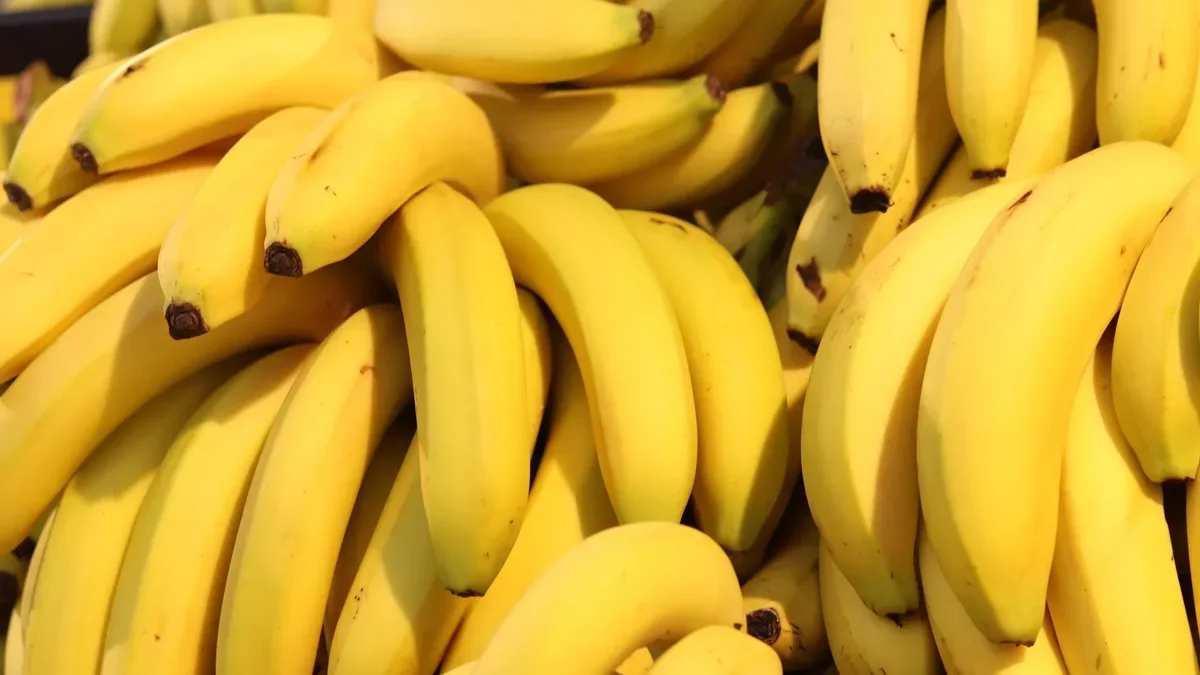
A recent study has raised alarms about the presence of toxic metals in bananas, cassava, and cocoa pulp cultivated in regions impacted by a mining disaster. Researchers analyzed the levels of cadmium, chromium, copper, nickel, and lead--elements associated with iron oxides found in mining tailings. Their results indicate that consuming bananas grown in these contaminated areas could pose health risks, particularly for children aged six and under.
"Our team has been investigating the aftermath of the dam failure for several years. We collected our initial samples just a week after the incident and recognized an immediate threat of contamination to plants, soil, water, and fish. However, we were left wondering: Does this contamination pose a risk to human health?" reflects Tiago Osório, an agronomist and professor at the Luiz de Queiroz College of Agriculture, University of São Paulo (ESALQ-USP).
The findings, published in Environmental Geochemistry and Health, detail how plants can absorb potentially toxic elements (PTEs) from mining waste and incorporate them into edible tissues, potentially entering the human food chain. This research is part of Amanda Duim's doctoral dissertation at ESALQ, which has led to seven international publications and significant accolades, including the USP Thesis Award in Sustainability and the Capes Thesis Award from Brazil's Ministry of Education.
Understanding Soil Contamination and Its Effects on Crops
Duim, the lead researcher, emphasizes the unique aspect of this study, which connects human health risks to the transfer of PTEs from soil to crops. "The concentration of iron oxides in the soil, the primary component of the tailings, is directly related to its levels in the plants. We investigated how these components move from the soil to water and then to the plant, including its leaves and fruits," she explains.
"To comprehend the biochemical dynamics of their release, we must first identify which elements are present and in what quantities," adds Osório.
Duim commenced her doctoral research in 2019, examining whether plants from flood-prone areas could aid in restoring contaminated ecosystems. She assessed both cultivated crops and native species. "We wanted to understand how native species influence iron oxide dissolution and how PTEs from this waste accumulate in plants, as different species have varying capacities to absorb these elements," she notes. "Our goal was to identify the most effective native species for remediating contaminated environments, and we discovered multiple species that can serve this purpose, with results already published. For cultivated species, we aimed to determine if PTEs would transfer to the fruits and edible parts of the plants."
To assess contamination levels, the research team meticulously collected soil and plant samples. They washed and weighed the fresh plants, dried them, and then reweighed them. Roots, stems, leaves, and peeled fruits were ground separately for analysis. "We converted the 'plant powder' into a solution using various acids, allowing us to measure the concentration in the solution. By calculating the concentration of material in the solution and comparing it to the weight of the diluted material, we could determine the PTE concentration in milligrams per kilogram of dry biomass," explains Duim.
In their findings, nearly all PTEs, except for chromium, were found in higher concentrations in the roots and tubers of bananas and cassava. Conversely, cocoa exhibited elevated levels in its stems, leaves, and fruits. Notably, copper and lead concentrations in cocoa pulp surpassed the limits set by the Food and Agriculture Organization (FAO).
Upon discovering that some edible portions exceeded recommended PTE levels, the team conducted a comprehensive health risk assessment.
Evaluating Health Risks for Different Age Groups
The researchers calculated risk quotients (RQ), risk indices (RI), and total risk indices (TRI) for individuals consuming bananas, cassava, and cocoa pulp, differentiating between children (under six years) and adults (over 18). The RQ measures a person's estimated daily intake of a substance against a reference dose deemed safe. The TRI helps assess potential non-carcinogenic health risks associated with PTE exposure. A TRI below 1 indicates a low risk.
"These elements are naturally occurring in the environment, and we encounter them at lower concentrations. However, in the aftermath of a disaster like the one in Mariana, where exposure is likely to rise, we must be particularly cautious," warns Tamires Cherubin, a health sciences Ph.D. and co-author of the study. Standard assessment methods gauge the bioavailability of these elements, as certain concentrations can lead to kidney and heart issues, gastrointestinal discomfort, and respiratory damage. Short-term exposure may also result in skin irritation and eye problems.
The researchers accounted for the amount of locally produced food consumed by residents, using data from the Brazilian Institute of Geography and Statistics (IBGE). They also considered the duration of exposure, variations in body weight between children and adults, and the time required for adverse effects to manifest.
"Based on the reference daily intake limits for contaminants from existing literature, we established thresholds for cadmium in fruits at 0.05 mg/kg-1, in tubers at 0.1 mg/kg-1, for chromium at 0.5-1.0 mg/kg-1, for copper at 20.0 mg/kg-1, for nickel at 0.5-1.0 mg/kg-1, for lead at 0.8-2.3 mg/kg-1, and for zinc at 50.0 mg/kg-1," Cherubin clarifies.
For most metals, TRI values remained below 1, indicating no significant non-carcinogenic risk for adults consuming these foods from the Doce River estuary. However, the TRI for bananas surpassed 1 for children, signaling potential health concerns, primarily due to elevated lead levels, with cadmium concentrations in bananas also exceeding FAO guidelines. Researchers caution that prolonged exposure to lead, even at low levels, may adversely affect brain development, potentially lowering IQ and leading to attention and behavioral issues.
Long-Term Risks and Continuous Exposure
The team warns that consuming food grown in contaminated soil over extended periods could result in cumulative effects. "Considering Brazil's average life expectancy of around 75 years, there may be a carcinogenic risk due to possible direct and indirect DNA damage over time," Cherubin states. Such genetic harm could elevate the risk of cancers affecting the central nervous system, digestive tract, and blood-forming tissues. "Ultimately, this depends on the human body's ability to absorb and metabolize these environmental elements," she concludes.