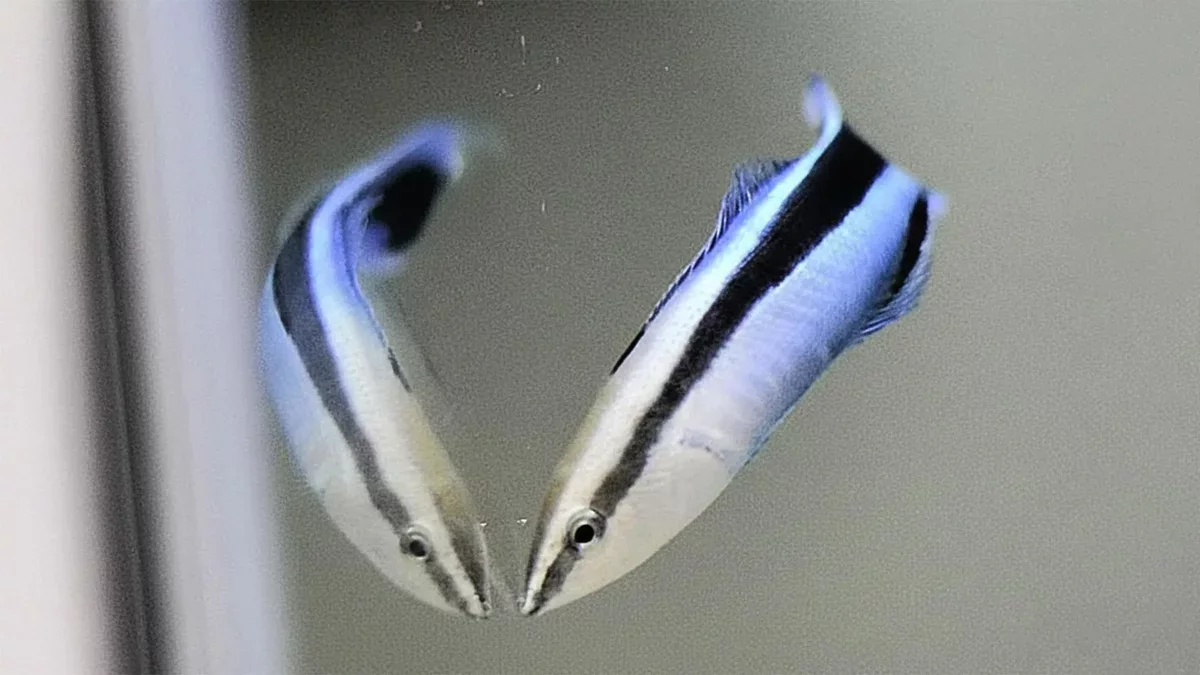
A groundbreaking study led by Specially Appointed Researcher Shumpei Sogawa and Professor Masanori Kohda at the Graduate School of Science has revealed fascinating insights into the cognitive abilities of cleaner wrasse. Following previous findings that these fish can recognize themselves in photographs, the latest experiments utilized the mirror test--an established method for assessing animal cognition.
Innovative Mirror Experiment
In this experiment, researchers marked the fish with artificial 'parasite' designs. Remarkably, even those cleaner wrasse unfamiliar with mirrors quickly adapted, using their reflections to identify and attempt to remove these markings. The speed of their reactions was astonishing; some fish began scraping off the marks within just one hour of seeing their reflection, with an average response time of only 82 minutes. In previous studies, similar behaviors typically took several days to manifest.
Dr. Sogawa elaborated, "Traditionally, cleaner wrasse were shown a mirror for days before a mark was added. In our study, we reversed this order. The fish were marked first, then introduced to the mirror. This likely created a situation where they were aware of an anomaly on their bodies that they could not see. The mirror provided immediate visual feedback, prompting quicker reactions."
Creative Use of Objects
After several days of interacting with the mirror, the fish exhibited even more complex behavior. Some picked up small pieces of shrimp from the tank floor, carried them toward the mirror, and released them, observing how the shrimp moved in reflection. This behavior, termed 'contingency testing,' showed that the fish were not just using their bodies to explore the mirror but were also employing an external object to understand the reflective environment. This type of behavior has been observed in other intelligent species, such as manta rays and dolphins.
Implications for Self-Awareness Research
This deliberate exploration supports the notion that the mirror behaviors of cleaner wrasse indicate a level of flexible self-awareness rather than mere instinctual responses. Dr. Sogawa noted, "These findings suggest that self-awareness may not be exclusive to a few species that pass the mirror test but could be present across a wider array of species, including fish." The researchers emphasize the importance of exploring self-awareness in various animal groups, including invertebrates, which could reshape our understanding of evolution and consciousness.
Professor Kohda added that the implications of this research extend beyond academic discussions, potentially influencing animal welfare, medical research, and even advancements in artificial intelligence. The study has been published in Scientific Reports.