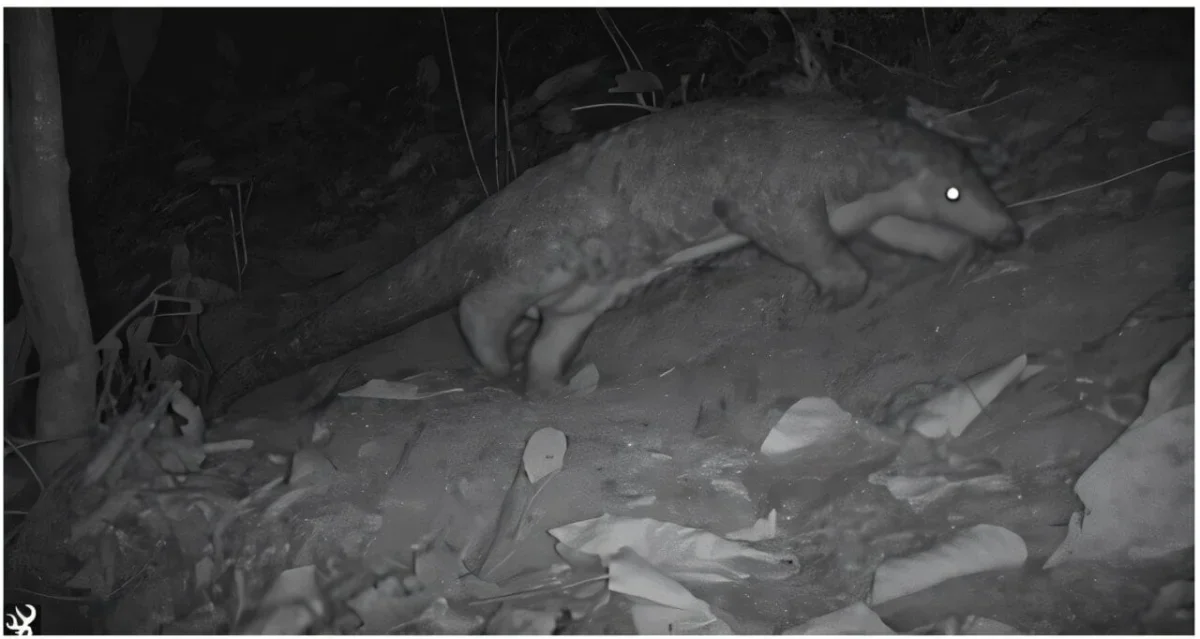
In a remarkable conservation breakthrough, researchers have documented the presence of the Chinese pangolin (Manis pentadactyla) in Nepal's Sunsari District, specifically within a revered "sacred community forest." This significant sighting occurred in January 2025, marking the first camera-trap evidence of this critically endangered mammal in the region.
The discovery elevates Sunsari to the list of 28 Nepali districts where the Chinese pangolin has been recorded, highlighting the ecological importance of smaller forests beyond the confines of national parks. This finding underscores that even modest forest areas can play a crucial role in biodiversity conservation.
The Unique Salak
Known locally as salak, the Chinese pangolin is a distinctive mammal characterized by its scaly exterior, resembling a dinosaur. These creatures primarily feed on ants and termites, using their specialized tongues to extract their meals. Unfortunately, they face severe threats, including habitat destruction and illegal poaching, leading to their classification as Critically Endangered on the IUCN Red List.
Despite extensive searches in Sunsari over the years, evidence of the pangolin had previously been limited to burrows and tracks, with no definitive sightings until now. The discovery in Panchakanya forest, a small area of just 0.56 square kilometers, is particularly notable given its proximity to human settlements and the Sewti River.
A Breakthrough Moment
In January 2025, a team led by Tujin Rai from Tribhuvan University set out to find definitive proof of the pangolin's presence. They strategically placed motion-detecting cameras in areas showing signs of pangolin activity. After several days of monitoring, they captured two video clips of a male Chinese pangolin, confirming its existence in the forest.
This study marks a pivotal moment in conservation efforts, as it provides the first photographic evidence of the species in Sunsari District. The researchers expressed optimism about the potential for more pangolins in the area, given the numerous burrows and foraging signs they observed during their survey.
Implications for Conservation
This finding raises important questions about the conservation potential of small, often overlooked forests in Nepal. Approximately 94% of the potential habitat for Chinese pangolins lies outside protected areas, primarily within community forests. The presence of the pangolin in Panchakanya suggests that these spaces can offer refuge for endangered species, despite human activity.
To ensure the survival of the Chinese pangolin, experts recommend ongoing monitoring, community engagement, and awareness initiatives focused on protecting these vital habitats. The researchers concluded that the pangolin's presence enriches the ecological significance of urban habitats and offers a unique opportunity to link cultural values with conservation efforts.
This study, published in the journal Oryx, emphasizes the importance of community involvement in wildlife protection and the potential for small forests to contribute significantly to biodiversity conservation in the future.