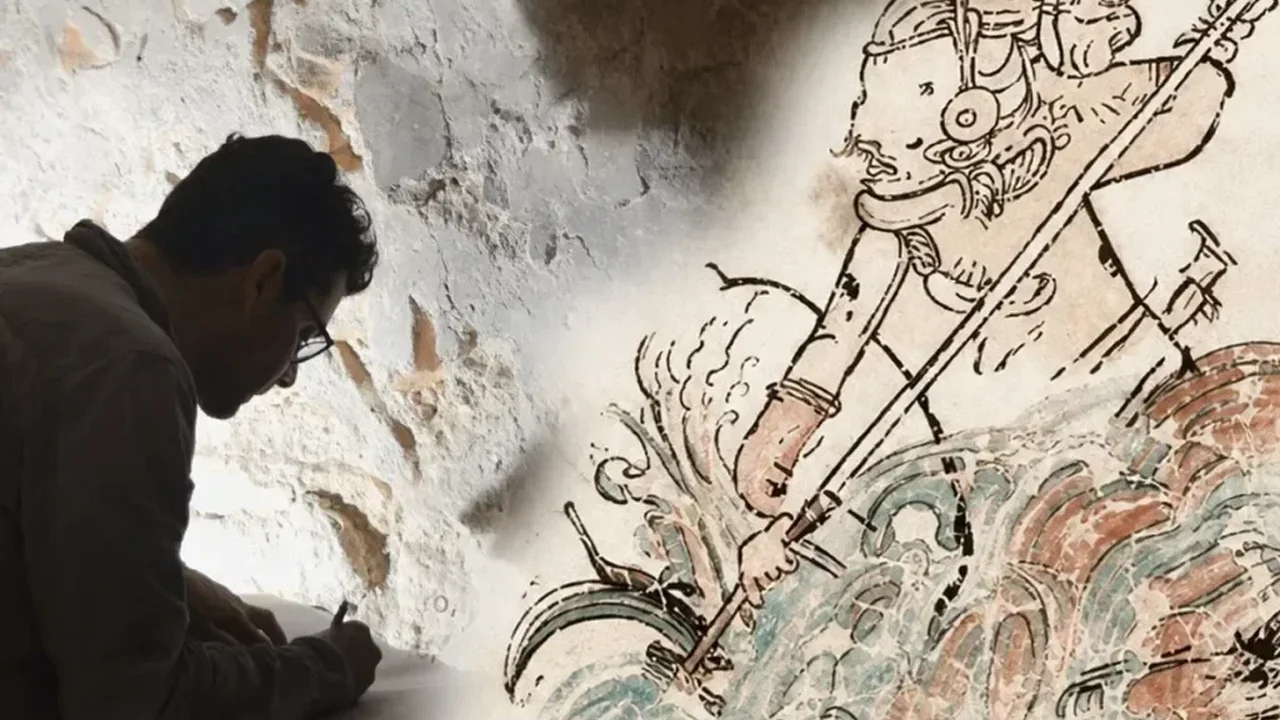
Archaeologists studying the ancient Maya city of Calakmul in Mexico believe they may have identified one of the earliest known depictions of the mythic hero Juun Ajaw. Their research, developed over three years and published in IdeAs, reexamines a mural long thought to show a spear-bearing warrior.
The mural was originally found in one of Calakmul's earliest architectural zones, inside an underground chamber designed to resemble a cave. Using advanced imaging methods, the team reconstructed the painting and its setting after the artwork was removed for conservation in 2004.
According to the researchers, the figure's posture, headdress, and symbolic details suggest a deeper mythological reading. They propose that the scene may have been part of a ritual space created to evoke water, caves, and the underworld--elements that held powerful meaning in Maya cosmology.
Calakmul, which flourished in the 7th and 8th centuries, was among the most influential kingdoms in the Maya world and is known for its architectural and artistic achievements. The city's origins reach back to around 500-400 BCE, adding further weight to the mural's historical significance.
The study also highlights how ancient builders used engineered spaces to shape sacred experiences, blending art, architecture, and belief into a single environment. Continued research may reveal even more about how Maya communities used imagery to express identity and myth. This discovery could deepen future understanding of how visual storytelling shaped early Mesoamerican culture.