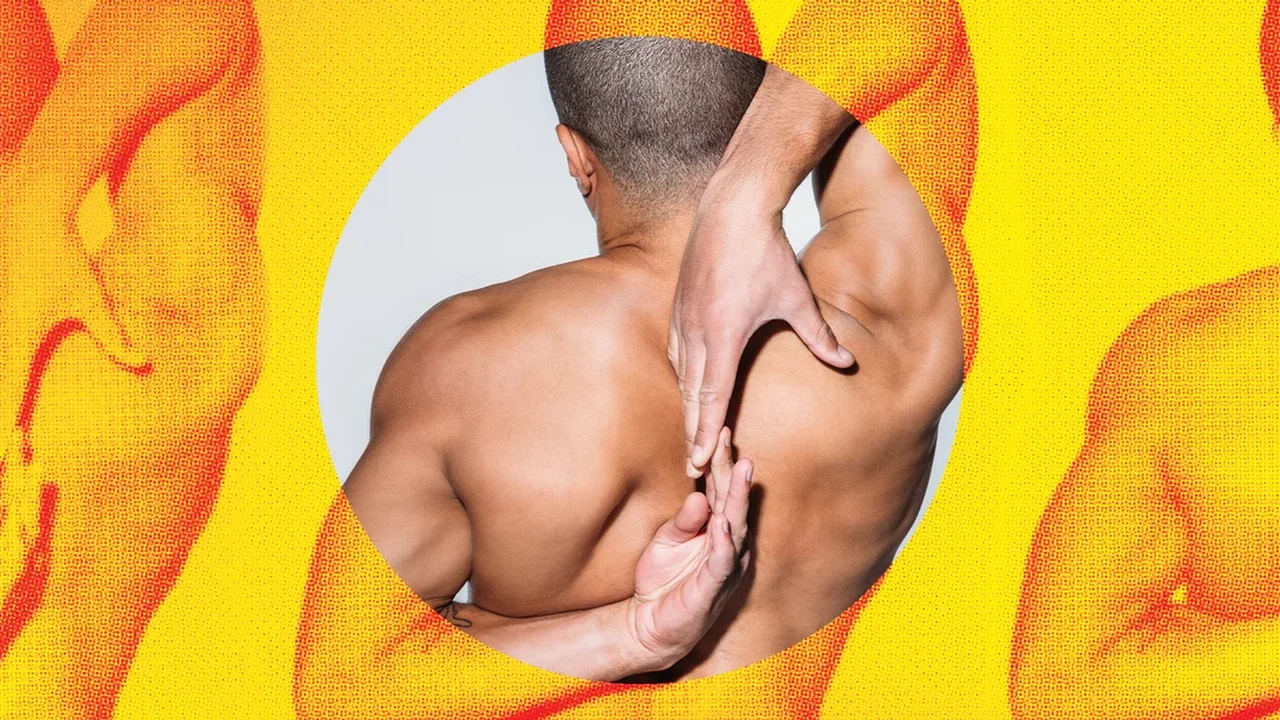
Modern routines often keep the body leaning forward over desks, laptops and phones. Over time, this posture can limit shoulder mobility, making overhead movements feel less controlled and causing the lower back or chest to compensate.
A joint designed for versatile movement
The shoulder supports several essential actions: lifting the arm overhead, moving it out to the side, and rotating it inward or outward. These patterns matter in training, swimming, lifting, carrying and everyday tasks such as placing an item on a high shelf.
A useful sign of limited mobility appears when raising the arms overhead requires an exaggerated arch in the lower back or a lifted ribcage. In these moments, the torso may be taking over work that should come from the shoulder complex and upper back.
A simple mobility check
Stand with your back against a wall, keeping your hips, shoulder blades and wrists in contact with it. Start with your arms overhead, then slowly lower them while maintaining contact. If the wrists, elbows or shoulder blades repeatedly pull away, improving range of motion and upper-back control may be worthwhile.
Balance pushing with pulling
Shoulder function is closely connected to the muscles around the shoulder blades. Training plans that focus heavily on presses but give less attention to the back can create an imbalance. Rows, including dumbbell rows and plank rows, can strengthen the rhomboids, lats and rear deltoids that help stabilize the shoulder area.
A practical approach is to include slightly more pulling volume than pressing volume each week. This does not mean avoiding chest exercises; it means building a more balanced foundation for strength and movement quality.
Two focused exercises
External rotation work with a light resistance band can support the rotator cuff. Keep the elbow near the torso at a 90-degree bend, then rotate the forearm outward with control. Light, consistent sets can be more useful than heavy loading.
Y raises are another effective option. Performed face-down on an incline bench with light weights, the movement trains the lower trapezius and reinforces shoulder-blade positioning. Quality technique and a comfortable range should remain the priority.
Track progress through control
Progress may show up as smoother overhead reaches, better push-up form and improved stability during rows and presses. Gradually building toward controlled bodyweight movements is a practical benchmark. Anyone with persistent discomfort should seek guidance from a qualified health professional.
As mobility training becomes a regular part of fitness, it can help shape a future where movement quality is valued as highly as visible strength.