A recent study published in the journal Circulation by the American Heart Association has unveiled a significant discovery regarding cholesterol management. Researchers have identified a protein known as HELZ2, which plays a crucial role in regulating the activity of apolipoprotein B (APOB). This gene is essential for producing apoB proteins that form lipoproteins, the particles responsible for transporting cholesterol and fats throughout the body.
According to Dr. Zhao Zhang, the study's senior author and an Assistant Professor at UT Southwestern's Center for the Genetics of Host Defense and Internal Medicine, "These particles are a major driver of plaque buildup in the arteries." The findings indicate that HELZ2 serves as a vital control point for the quantity of cholesterol-carrying particles that ultimately enter the bloodstream.
Mechanism of HELZ2 in Cholesterol Reduction
The research team discovered that HELZ2 reduces harmful cholesterol levels by shortening the lifespan of APOB messenger RNA (mRNA) within liver cells. When HELZ2 activity is heightened, the breakdown of the APOB message accelerates, leading to a decrease in the production of apoB proteins and, consequently, fewer cholesterol-carrying lipoproteins in the bloodstream.
Dr. Yiao Jiang, a postdoctoral researcher in the Zhang Lab and co-author of the study, noted, "What surprised us is that HELZ2 acts much earlier, by controlling how long the apoB 'message' survives before the protein is even produced."
To elucidate HELZ2's function, the researchers employed a large-scale genetic screening system developed by Nobel laureate Dr. Bruce Beutler, who is the Director of the Center for the Genetics of Host Defense at UT Southwestern. During their investigation of unusual fat accumulation in mice livers, they identified a mutation that enhanced HELZ2 activity and reduced APOB mRNA stability.
Impact on Cholesterol and Liver Fat
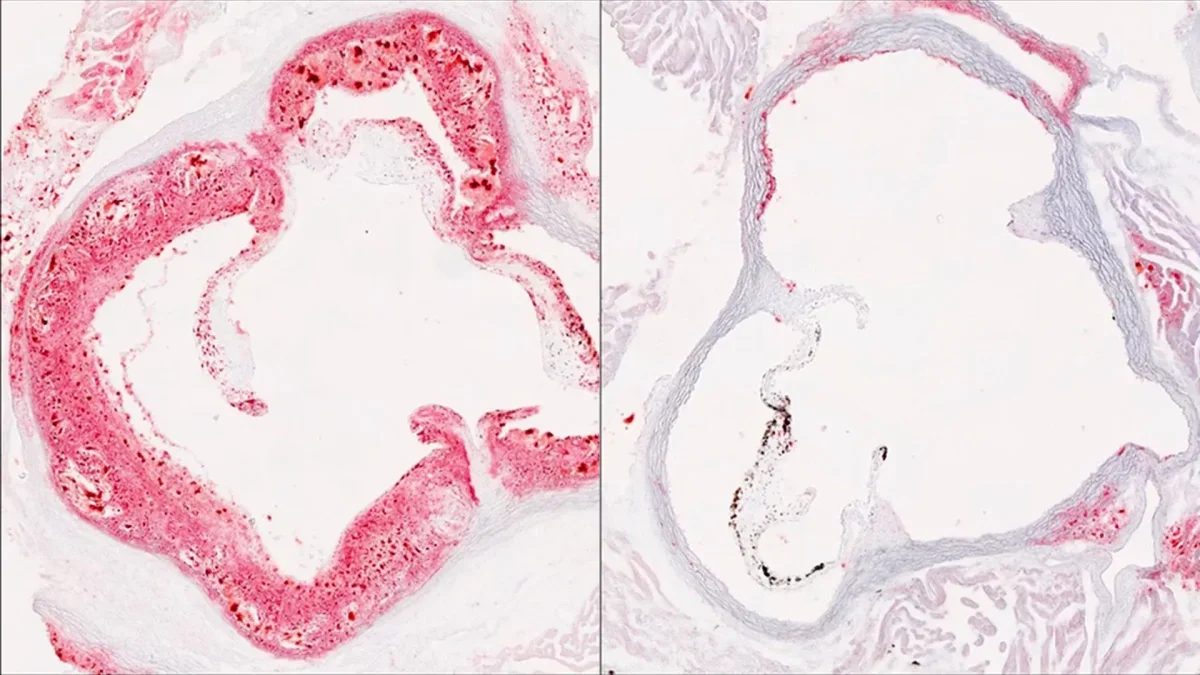
Mice with the HELZ2 mutation exhibited lower levels of lipoproteins, including LDL (low-density lipoprotein) cholesterol and triglycerides, in their bloodstreams. These mice also displayed increased protection against atherosclerosis, a condition associated with heart attacks and strokes. However, this came at the cost of higher fat accumulation in their livers. Mice lacking the mutation demonstrated the opposite effects, indicating a delicate balance between circulating cholesterol and liver fat storage.
"We can think of HELZ2 as a kind of dial between the liver and the bloodstream," Dr. Zhang explained. "Adjusting it can lower blood cholesterol but increase liver fat, or vice versa. This balance makes HELZ2 particularly intriguing as a potential therapeutic target."
HELZ2: A New Avenue for Cholesterol Management
While statins are currently the most commonly prescribed medications for lowering cholesterol, the discovery of HELZ2 introduces an innovative approach to managing harmful cholesterol particles. By influencing the genetic instructions before protein production, researchers believe that fine-tuning HELZ2 activity could pave the way for reducing dangerous cholesterol levels and developing new treatments for fatty liver disease.
Dr. Zhang remarked, "The idea that we can control apoB at the RNA level represents a major shift in how we think about cholesterol regulation." This breakthrough may offer new molecular strategies for addressing cholesterol-related health issues in the future.