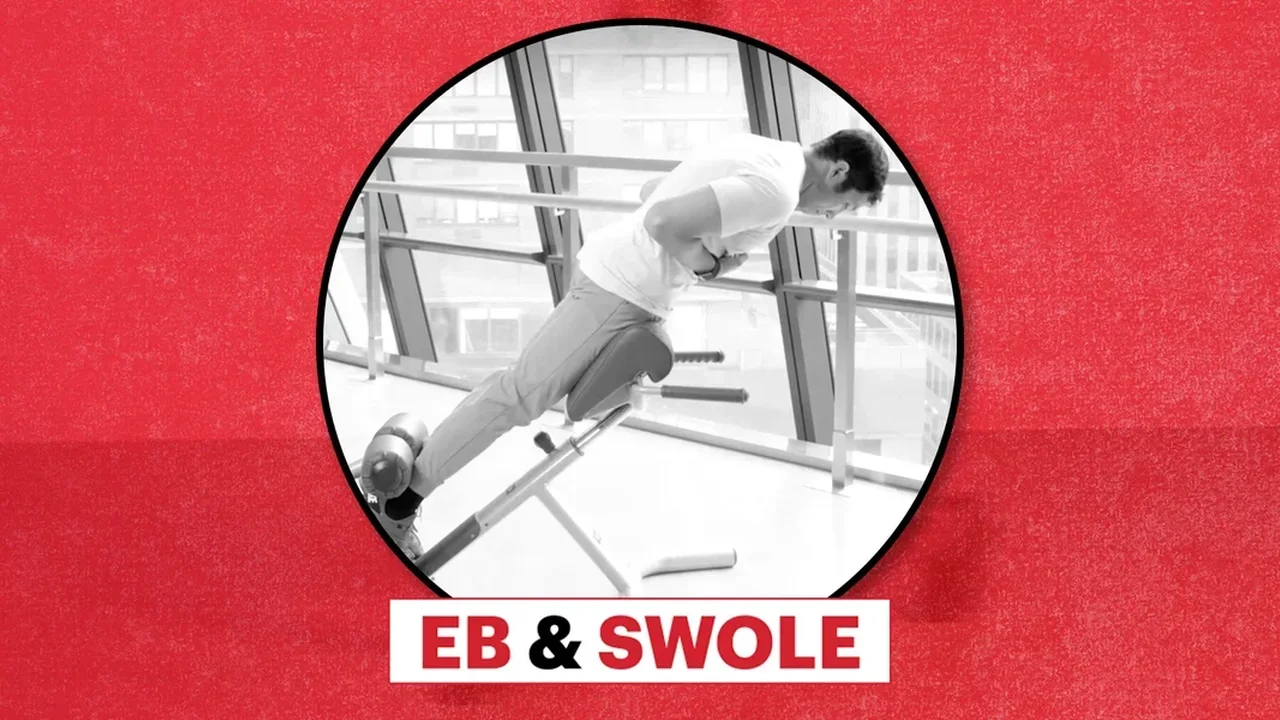
Back extensions are a familiar gym movement for targeting the lower back, but they are more nuanced than they first appear. Fitness specialist Ebenezer Samuel, C.S.C.S. notes that the exercise is not ideal for everyone and may not be the most efficient way to train the hip hinge.
How to Set Up Correctly
If you use a back extension machine, positioning matters. The pad should sit about two to three inches below the hip crease so the torso can move through a fuller range. When the pad is too high, the motion becomes restricted and the exercise loses much of its value.
Traditional Form
To perform the standard version, secure your legs, keep your feet stable, and brace your torso so your body starts in a straight line. Lower your upper body with control, pause briefly at the bottom, then rise back up while keeping tension through the core and glutes.
A Smarter Variation
A small adjustment can shift the focus: slightly round the upper back during the movement. This variation places more emphasis on the glutes and reduces the load on the spinal erectors. Light external resistance, such as a dumbbell or kettlebell, can be added carefully once the form is solid.
For most people, 3 to 4 sets of 15 to 20 reps is a practical range. The exercise can work as a warmup or as a finishing movement, but it should not be the main lift in a routine.
Back extensions mainly engage the spinal erectors, glutes, and core. Still, many athletes may benefit more from movements like deadlifts, Romanian deadlifts, or good mornings, which train the hip hinge in a more natural way. For those who want an additional glute-focused accessory, the back extension can be a useful tool when performed with precision. In the future, smarter exercise selection may continue to shape more efficient and individualized strength training.