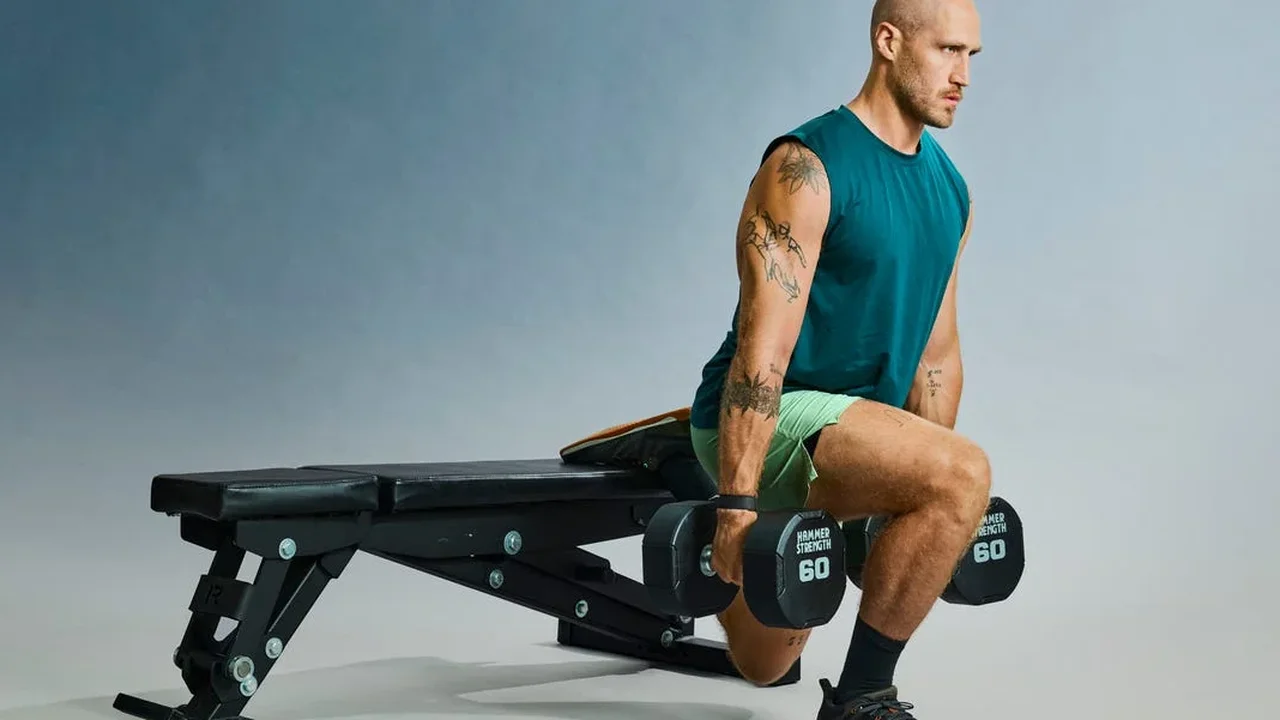
The Bulgarian split squat stands out as one of the most effective unilateral lower-body exercises, training one leg at a time to better reflect real movement patterns like walking, climbing stairs, and jumping. It also helps reveal and correct strength imbalances that traditional two-leg squats can hide.
Why It Matters
According to fitness specialist Ebenezer Samuel, C.S.C.S., the move challenges balance, posture, and control while placing major emphasis on the glutes, quads, and hamstrings. Because the exercise is more technical than a standard squat, setup and body position are key to getting the most from it.
How to Perform It
Begin in front of a stable bench or raised platform. Place one foot behind you on the bench, keep your front shin vertical, and lower until your back knee hovers just above the floor. Keep your core tight, chest controlled, and gaze forward. Drive up through the front foot while keeping the glutes engaged.
Samuel recommends starting with bodyweight to lock in form before adding load. For bodyweight work, 3 sets of 15 to 20 reps per leg can be effective. Once the movement feels solid, dumbbells, kettlebells, or a barbell can be added, with lower rep ranges such as 3 sets of 8 to 10.
Technique Tips
The best results come from a precise setup: too close to the bench can strain the front knee, while too far reduces the stretch and training effect. At the bottom, avoid letting the back knee touch down, and keep the glutes active to maintain alignment and power through the lift.
For variety, advanced versions such as pulse pause, pass-through clean, dead stop, and mixed-load variations can add new coordination and strength demands to the same foundational pattern.
As functional training continues to shape modern fitness, exercises like the Bulgarian split squat may play a bigger role in building efficient, resilient movement for the future.