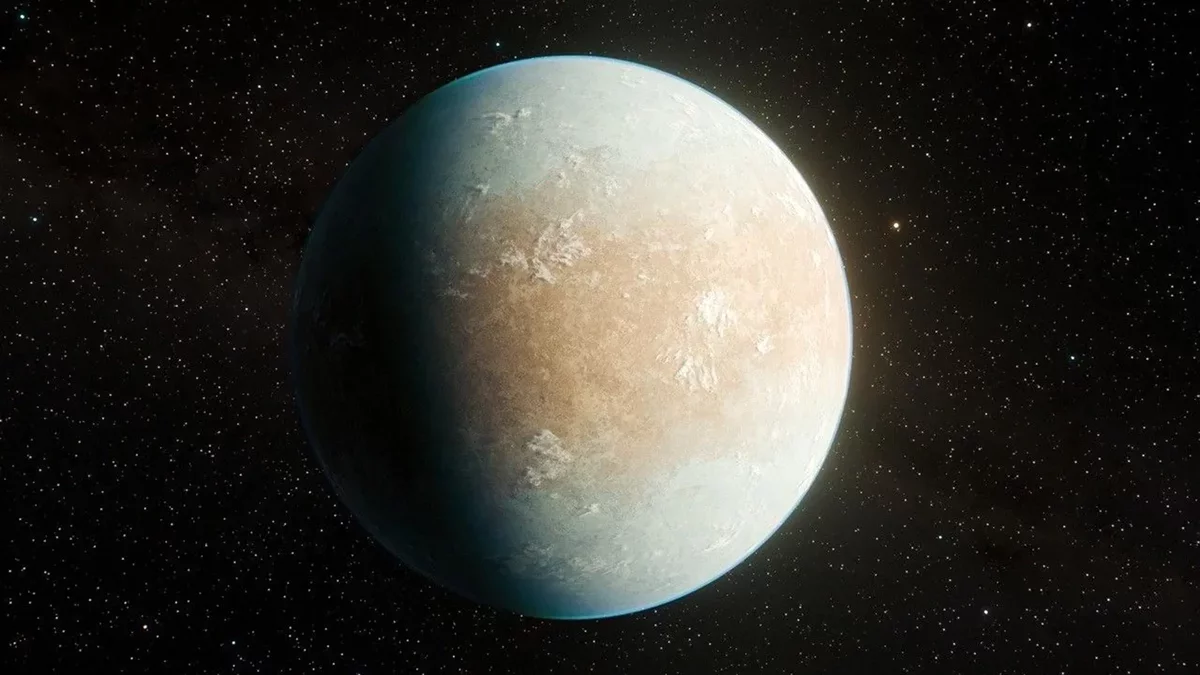
A recent analysis of data from NASA's Kepler Space Telescope has led to the discovery of a rocky planet, slightly larger than Earth, orbiting a Sun-like star approximately 146 light-years away.
Orbiting Near the Habitable Zone
Designated as HD 137010 b, this planet is currently a "candidate," indicating that further observations are required to validate its existence. Initial calculations suggest it completes an orbit roughly every year, placing it at a distance from its star comparable to Earth's orbit around the Sun.
The planet is situated near the outer edge of its star's "habitable zone," a region where conditions could permit the presence of liquid water on its surface, provided the atmosphere is conducive. Should it be confirmed, HD 137010 b could represent the first Earth-size exoplanet with a yearlong orbit that transits in front of a nearby, luminous star, making it a prime target for subsequent studies.
A Potentially Colder World
Despite its favorable orbit, this planet may receive significantly less warmth than Earth. Estimates indicate it receives less than one-third of the heat and light our planet obtains from the Sun. Though its host star belongs to a similar class as our Sun, HD 137010 is cooler and less bright.
This results in surface temperatures on HD 137010 b potentially reaching a maximum of minus 90 degrees Fahrenheit (minus 68 degrees Celsius). In comparison, Mars has an average temperature of about minus 85 degrees Fahrenheit (minus 65 degrees Celsius), suggesting that this potential Earth counterpart could be even chillier than the Red Planet.
Challenges in Confirmation
To elevate its status from "candidate" to "confirmed," astronomers need to observe repeated transits. A transit occurs when a planet crosses in front of its star from our perspective, momentarily dimming the starlight.
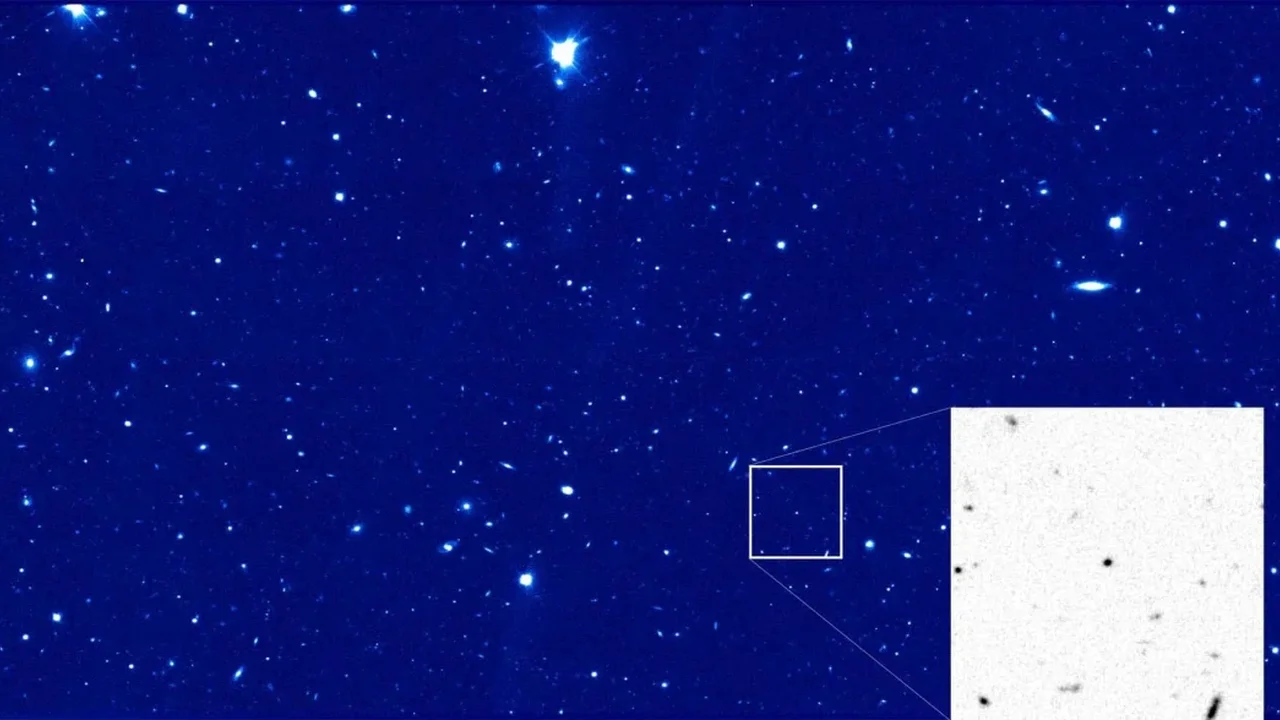
In this instance, only one transit was detected during Kepler's extended K2 mission. This event saw the planet's shadow take approximately 10 hours to traverse the star's surface, compared to about 13 hours for Earth transiting the Sun as viewed from a distant location. Researchers utilized this crossing duration and computational models to estimate the planet's likely orbital period.
Even with this precise single detection, confirmation requires observing the same event occurring regularly, which poses a challenge. Since the planet appears to orbit at a distance similar to Earth's, transits would only happen about once a year. Planets with shorter orbits pass in front of their stars more frequently, making them easier to detect, which is a key reason Earth-like exoplanets are so difficult to identify.
Future confirmations may be achieved through NASA's TESS (Transiting Exoplanet Survey Satellite) or the European Space Agency's CHEOPS (CHaracterising ExOPlanets Satellite). If these do not succeed, astronomers might need to wait for more advanced space telescopes to provide additional insights.
Could a Dense Atmosphere Offer Warmer Conditions?
While the planet may be extremely cold, researchers propose that HD 137010 b could still sustain milder conditions. Climate models indicate that with a thicker atmosphere rich in carbon dioxide, the planet might retain enough heat to allow liquid water to exist.
According to atmospheric simulations, there is a 40% chance that the planet resides within the "conservative" habitable zone and a 51% chance it lies within the more extensive "optimistic" habitable zone. Simultaneously, there is approximately a 50-50 likelihood that it orbits entirely outside the habitable zone.
The findings were published in The Astrophysical Journal Letters on January 27, 2026, in a paper titled "A Cool Earth-sized Planet Candidate Transiting a Tenth Magnitude K-dwarf From K2." The study was led by Alexander Venner, a Ph.D. student in astrophysics at the University of Southern Queensland, Toowoomba, Australia, who is now a postdoctoral researcher at the Max Planck Institute for Astronomy, Heidelberg, Germany.