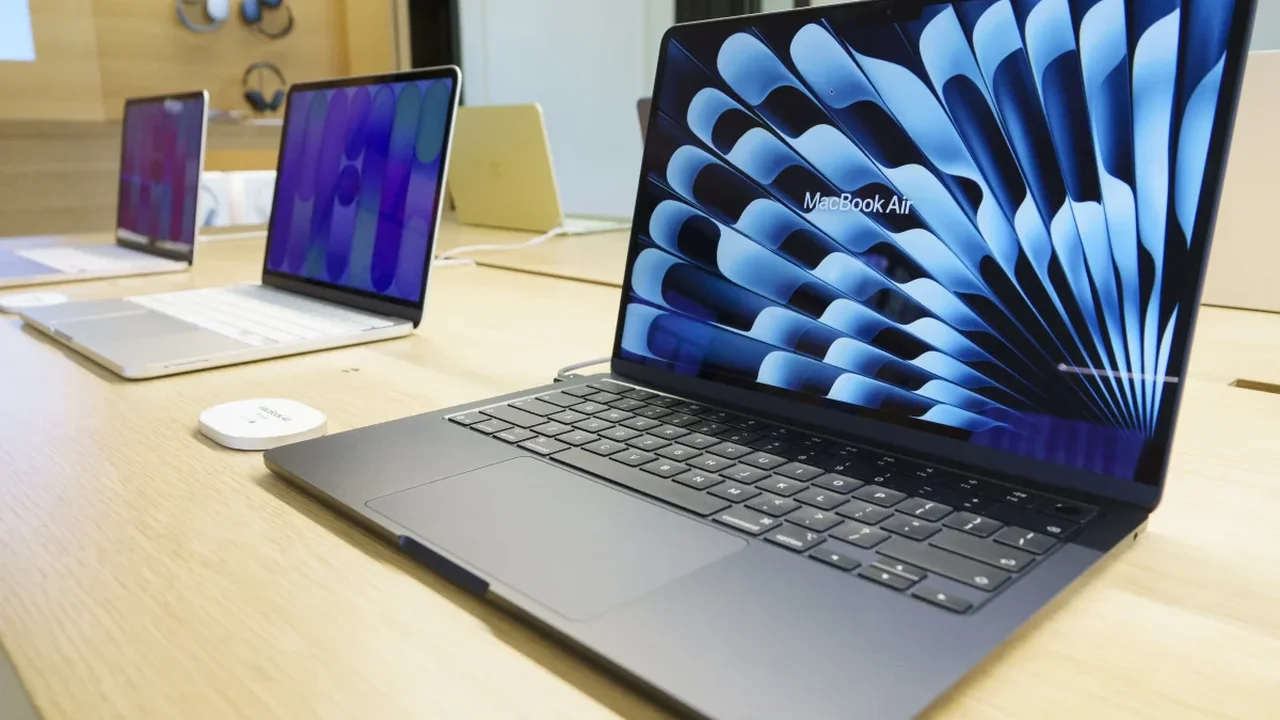
Apple recently introduced its latest MacBook Air and MacBook Pro models, showcasing the powerful new M5 Pro and M5 Max chips. These advancements promise to enhance performance significantly, featuring an 18-core CPU that delivers over four times the peak GPU compute power for AI tasks compared to earlier models.
However, consumers may be taken aback by the new pricing structure. The base model of the MacBook Pro, equipped with the M5 Pro chip, begins at $2,199 for the 14-inch version and $2,699 for the 16-inch variant. The models with the M5 Max chips command even higher prices, starting at $3,599 and $3,899 for the 14-inch and 16-inch models, respectively.
In contrast, the previous generation's 14-inch MacBook Pro with the M4 Pro chip launched at $1,999, highlighting a noticeable increase in cost.
The rise in prices is largely attributed to a shortage of RAM, driven by the increasing demand for computers and data centers to support AI technologies. This shortage has led to a surge in memory prices, impacting various sectors, including laptops.
Analysts predict that the RAM shortage could significantly affect smartphone shipments this year, which in turn may also influence the laptop market. Apple's pricing strategy might indicate broader trends in how the tech industry is navigating these challenges.