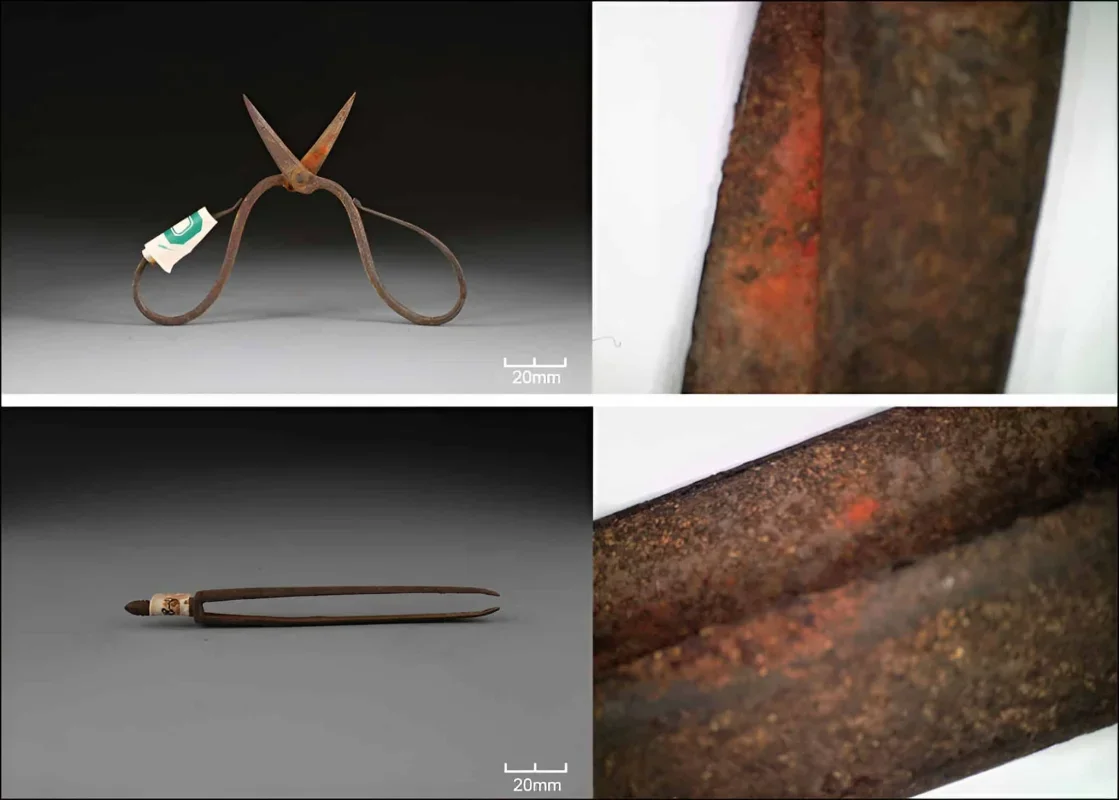
Recent research on two 600-year-old surgical instruments discovered in a Ming Dynasty tomb in eastern China has unveiled residues of aconitine, a potent compound derived from wolfsbane. This discovery may represent the earliest direct chemical evidence of a topical anesthetic utilized in surgical procedures, indicating that some Chinese physicians may have numbed tissue before performing operations.
"Six centuries ago, a Ming Dynasty surgeon operated with a pair of iron scissors and tweezers, and today we can detect the traces of anesthetic medicine left on these tools using advanced laser technology," stated Congcang Zhao, an archaeologist from Northwest University in China and co-author of the study.
A Surgeon's Tomb
The surgical instruments originated from the tomb of Xia Quan, a physician who lived from 1348 to 1411, excavated in Jiangyin, Jiangsu Province, in 1974. Among the burial items were iron medical tools, including scissors and tweezers, each measuring approximately 12.3 centimeters.
While the artifacts were initially too delicate for traditional testing methods, modern techniques allowed researchers to analyze minute rust-colored residues without damaging the tools. The team first employed portable X-ray fluorescence to confirm that both instruments were predominantly iron, with an impressive purity of around 97%, reflecting the advanced ironworking practices of the Ming era.
Following this, they meticulously selected three tiny red particles from the tools for further analysis using micro-Raman spectroscopy. This method revealed organic materials, including chemical signatures linked to oils or lipids, and importantly, a cyano group indicative of aconite alkaloids. A comparison with a reference sample of Aconitum carmichaelii, commonly known as Chinese wolfsbane, reinforced the hypothesis that the residues originated from this plant.
The residues were located in areas consistent with their operational use, such as on the blades, suggesting minimal risk of later contamination. Researchers noted that the presence of aconitine, while potentially lethal, has been documented in traditional Chinese medicine for pain relief when properly prepared.
Poison or Medicine?
Historically regarded as dangerous, wolfsbane requires careful preparation to be used safely in medicine. Ming texts detail methods to mitigate its toxicity, such as soaking in black soybean decoction or boiling in vinegar. This indicates that practitioners possessed a sophisticated understanding of how to transform a hazardous plant into a therapeutic agent.
Carney Matheson, an archaeologist at Griffith University, commented on the implications of this finding, suggesting it reshapes our understanding of early surgical practices. Preparing such a toxic substance for medical use necessitated a remarkable depth of scientific knowledge.
These findings, published in the journal Antiquity, not only highlight the ingenuity of ancient Chinese medical practices but also pave the way for a deeper appreciation of historical surgical techniques and their evolution over time.