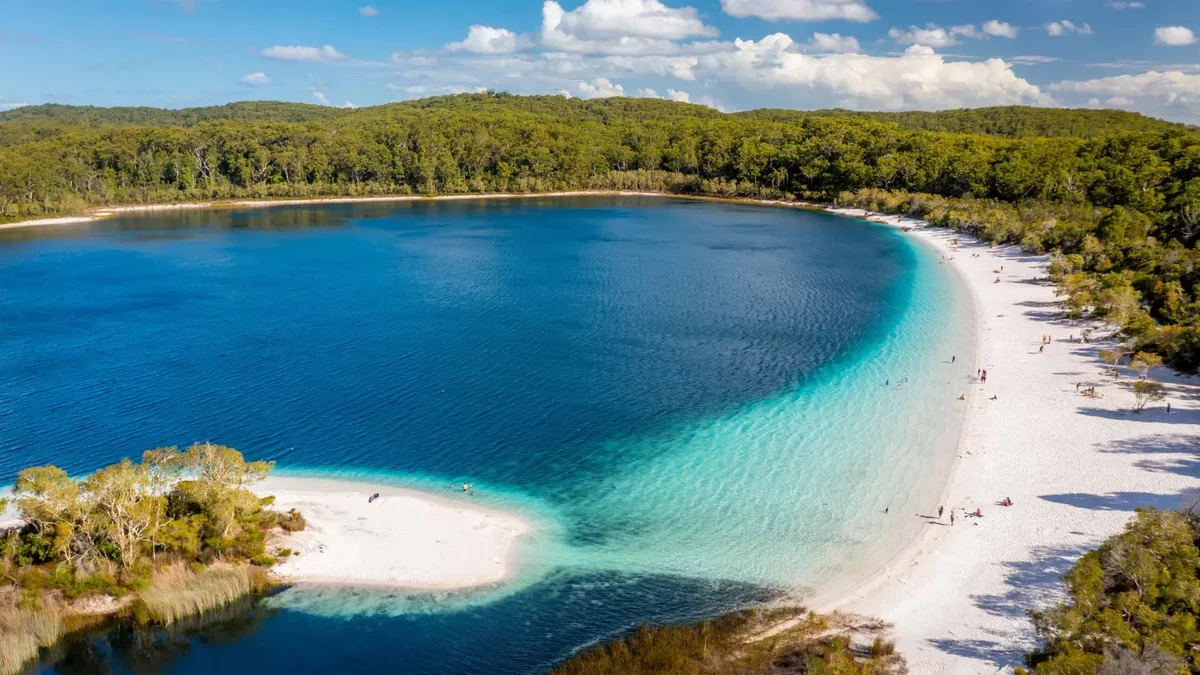
Recent analysis of sediment layers from K'gari, the world's largest sand island located off Queensland's southeastern coast, has revealed intriguing evidence of a significant drying event approximately 7,500 years ago during the middle Holocene.
Lead researcher Associate Professor John Tibby from the University of Adelaide states, "Our findings indicate that despite a period of increased rainfall following the last Ice Age, some of K'gari's deepest lakes experienced unexpected desiccation." This phenomenon is particularly notable as it diverges from the typical drying events observed in Australia, which usually occur during drier periods.
Associate Professor Tibby elaborates that while many Australian lakes dried up during the Millennium Drought, the lakes studied on K'gari have persisted for 35,000 to 55,000 years. Their unexpected drying during a time of heavy rainfall raises questions about the climatic conditions of the era.
Wind Patterns and Lake Dynamics
The research team suggests that shifting wind patterns may shed light on this enigmatic event. Dr. Harald Hofmann, a co-author from the Commonwealth Scientific and Industrial Research Organisation (CSIRO), points out that regional wind systems likely determined the distribution of rainfall. "Previous studies indicate that Minjerribah, a nearby island, also experienced heavy rainfall, but due to southeast trade winds, this moisture primarily nourished Minjerribah's lakes, leaving K'gari's lakes dry," he explains.
These findings underscore the need to understand how K'gari's lakes might react to future climate changes. Dr. Hofmann emphasizes, "With predictions of a drier climate combined with more intense rainfall, it's crucial to assess the risk of these lakes drying out."
Uncovering the Past Through Sediment
The research team identified the ancient drying episode by noting a significant absence of sediment deposits in some of the island's oldest lakes. "Sediment acts as a historical record, capturing events around the lake," says Associate Professor Tibby. Layers of pollen within the sediment reveal past vegetation, while increased sand content indicates erosion. Missing sediment layers suggest a more drastic change.
According to their study, sediment was absent from certain lakes between 7,500 and 5,500 years ago, indicating that these bodies of water were not present during that time.
Cultural Heritage of K'gari's Lakes
To the Traditional Owners, the Butchulla people, these lakes are revered as The Eyes of K'gari. Co-author and Butchulla man Conway Burns highlights the importance of safeguarding these sites for future generations. "K'gari embodies the dreaming spirit that shaped the island, and her eyes are not just water; they represent a connection to eternity," he shares.
Burns emphasizes the sacredness of these waters, stating, "We are entrusted with the duty to protect her beauty and spirit, ensuring that future generations can also connect with and respect this remarkable landscape."