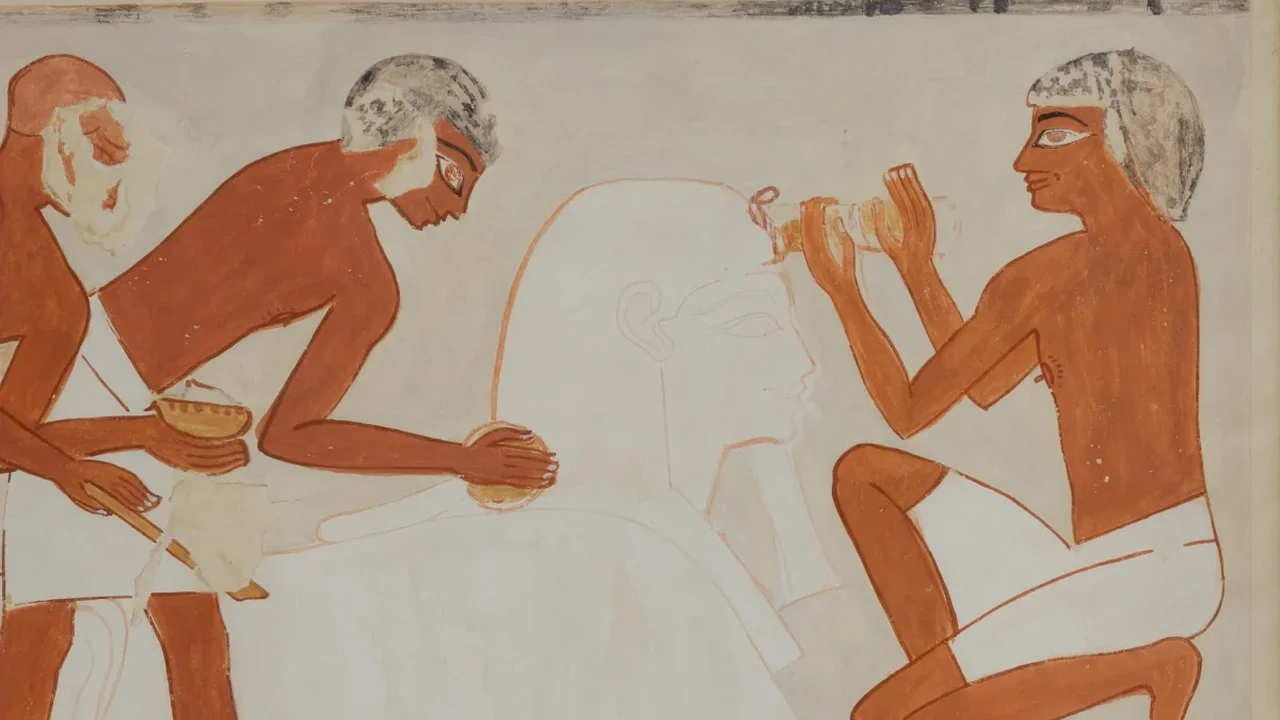
Ancient Egypt's enduring legacy is often told through royal monuments and celebrated treasures. A new material-focused interpretation instead brings attention to the skilled craftspeople whose technical knowledge shaped the civilization's visual world.
Made in Ancient Egypt, a 2025 catalogue accompanying an exhibition at the Fitzwilliam Museum at the University of Cambridge, examines objects through the hands, materials and processes behind them. Rather than following the familiar sequence of Egyptian dynasties, the publication is structured around materials including clay, stone, papyrus, metal and wood.
This approach offers a closer look at the professional networks that supported makers such as potters, sculptors, coffin builders, metalworkers and carpenters. It also recognizes that Ancient Egyptian culture did not frame "art" in the same modern sense, making practical expertise and material analysis especially valuable for understanding how objects were produced.
Technology Reveals Ancient Expertise
Scientific tools are helping researchers trace the precision behind these works. A micro-CT scan of linen cartonnage dated between 380 and 30 BCE identified the application of gold leaf within its construction, revealing a sophisticated decorative process used in funerary wrappings.
Other studies highlight artisans' command of controlled firing techniques for faience, carefully designed tools and detailed material inventories. Research into Egyptian carpentry has also shown how makers achieved remarkably tight wooden joints in a mummy coffin dating to around 680 BCE.
These findings position Ancient Egyptian craft not simply as decoration, but as a field of advanced experimentation, measurement and adaptable design. By centering the people who transformed raw materials into lasting cultural objects, the research expands how this civilization's creativity can be understood.
Future-facing archaeological science may continue to uncover the practical intelligence embedded in ancient objects, connecting historic craftsmanship with today's evolving approaches to design, conservation and technology.