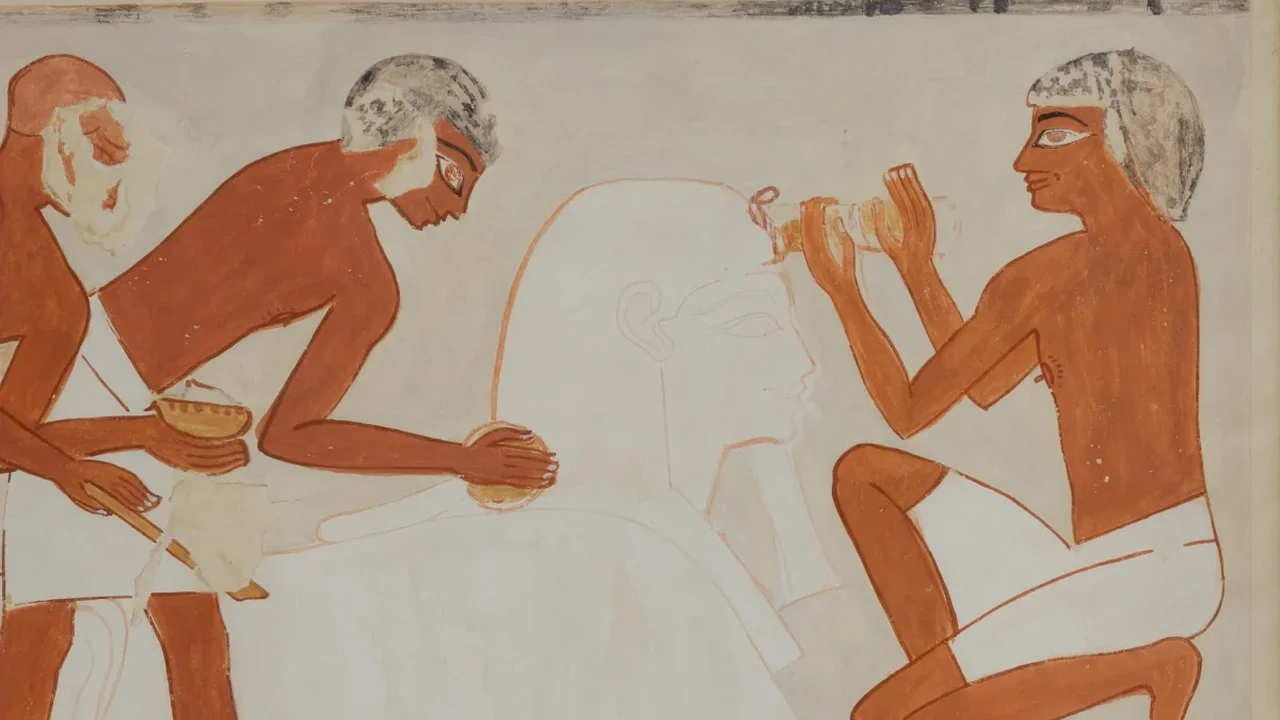
Recent discoveries have unveiled that the ancient Egyptians utilized a primitive form of correction fluid to amend mistakes in their artworks and documents. This fascinating finding was highlighted during the preparations for the exhibition "Made in Ancient Egypt" at the Fitzwilliam Museum in England.
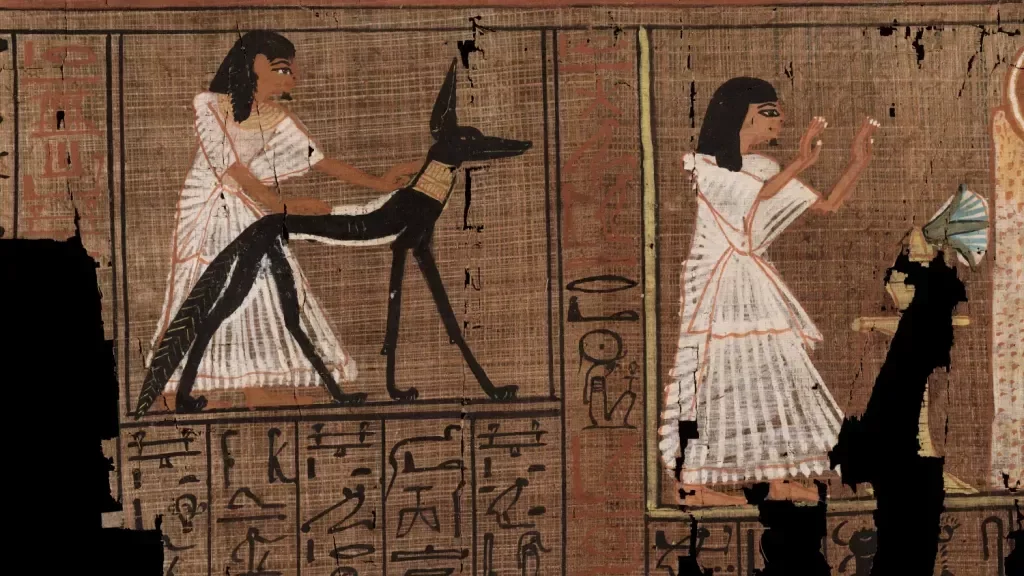
While curating a 3,300-year-old papyrus, museum staff observed alterations made to a painted jackal, which had been modified to appear slimmer. This jackal is depicted in a scene from a version of the Book of the Dead, a scroll designed to guide the deceased through the afterlife, specifically crafted for the tomb of the royal scribe Ramose. In this vignette, Ramose is shown walking alongside the jackal, likely representing Wepwawet, the jackal-headed deity associated with guiding armies and protecting the dead.
Visible white lines along the jackal's body and its hind legs suggest that an artist had taken it upon themselves to adjust the figure's appearance. Helen Strudwick, a senior Egyptologist at the museum and curator of the exhibition, remarked, "It's as if someone saw the original way the jackal was painted and said, 'It's too fat--make it thinner,' so the artist has made a kind of ancient Egyptian correction fluid to fix it."
Strudwick elaborated on the analysis of this white paint, revealing that it comprises a blend of huntite and calcite. Advanced imaging techniques, including a 3D digital microscope, have also detected flecks of orpiment, a yellow pigment, likely added to help the correction blend seamlessly with the original pale cream color of the papyrus.
This intriguing technique has been identified in other Egyptian documents, such as the Book of the Dead of Nakht housed in the British Museum and the Yuya papyrus located at the Egyptian Museum in Cairo. Strudwick noted that curators are often surprised when this method is pointed out, as it is not immediately apparent.
The Book of the Dead of Ramose was uncovered in 1922 in Sedment, Egypt, and select sections of this remarkable scroll will be exhibited in "Made in Ancient Egypt" at the Fitzwilliam Museum until April 12.