Researchers at Chalmers University of Technology have advanced the idea of a self-driving laboratory with an AI-enabled system that can generate hypotheses, plan experiments, operate automated equipment and learn from the results.
Built on the laboratory infrastructure of Eve, an earlier robotic platform designed for scientific discovery, the new system combines biological knowledge, machine learning and language-model agents. Human researchers continue to define research goals, set safety boundaries and interpret the wider importance of the findings.
From data to laboratory experiments
The platform began with roughly 60,000 known relationships involving yeast genes, metabolism and observable traits. Pattern-analysis tools used this information to create logical rules and nearly 2,000 possible hypotheses focused on amino acids.
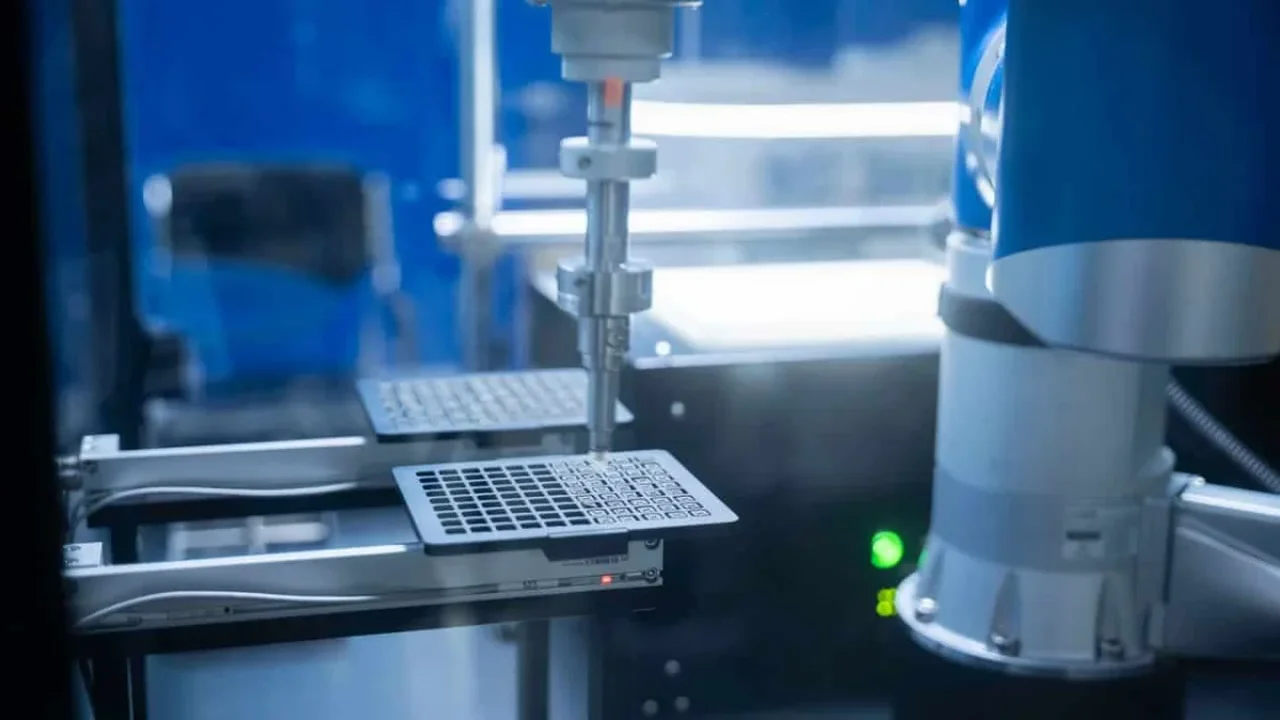
AI agents then translated selected ideas into practical laboratory workflows. One agent developed an experimental plan, another evaluated possible variations, and a third converted the final plan into instructions for robotic systems. The automated lab grew yeast cultures, introduced nutrients and chemicals, monitored growth and analyzed cellular metabolites.
Crucially, the system retained both successful and unsuccessful outcomes. This allowed each experiment to refine later predictions, creating a continuous cycle of hypothesis, experiment, evidence and revision.
Unexpected biological connections
Among the findings, the system identified a previously underexplored interaction in which glutamate increased yeast sensitivity to spermine. It also detected an unexpected relationship between arginine and caffeine.
In another experiment, an initial prediction about glutamate and formic-acid stress did not produce the expected result. Rather than discarding the outcome, the AI examined the metabolic data and proposed a new candidate molecule: aminoadipate. Follow-up testing showed that aminoadipate partially improved yeast growth under formic-acid stress, with growth rising by about 7% per millimolar.
The platform is not fully independent. Researchers still prepare some materials, oversee workflows and review proposed experiments. Complex biological questions can also challenge language models, making expert supervision essential.
The study, published in the Journal of the Royal Society Interface, illustrates how AI and laboratory robotics can support scientists by accelerating repetitive experimental cycles. As these systems mature, they could help research teams explore more ideas, faster, while keeping human judgment at the center of discovery.