Artificial intelligence developers are expanding the data libraries used to train large language models, and physical books have become part of that process. Reports connected to Anthropic's "Project Panama" indicate that large quantities of purchased books were scanned after their bindings were removed, placing fresh attention on the relationship between technology, cultural memory and access to knowledge.
Books as Creative Infrastructure
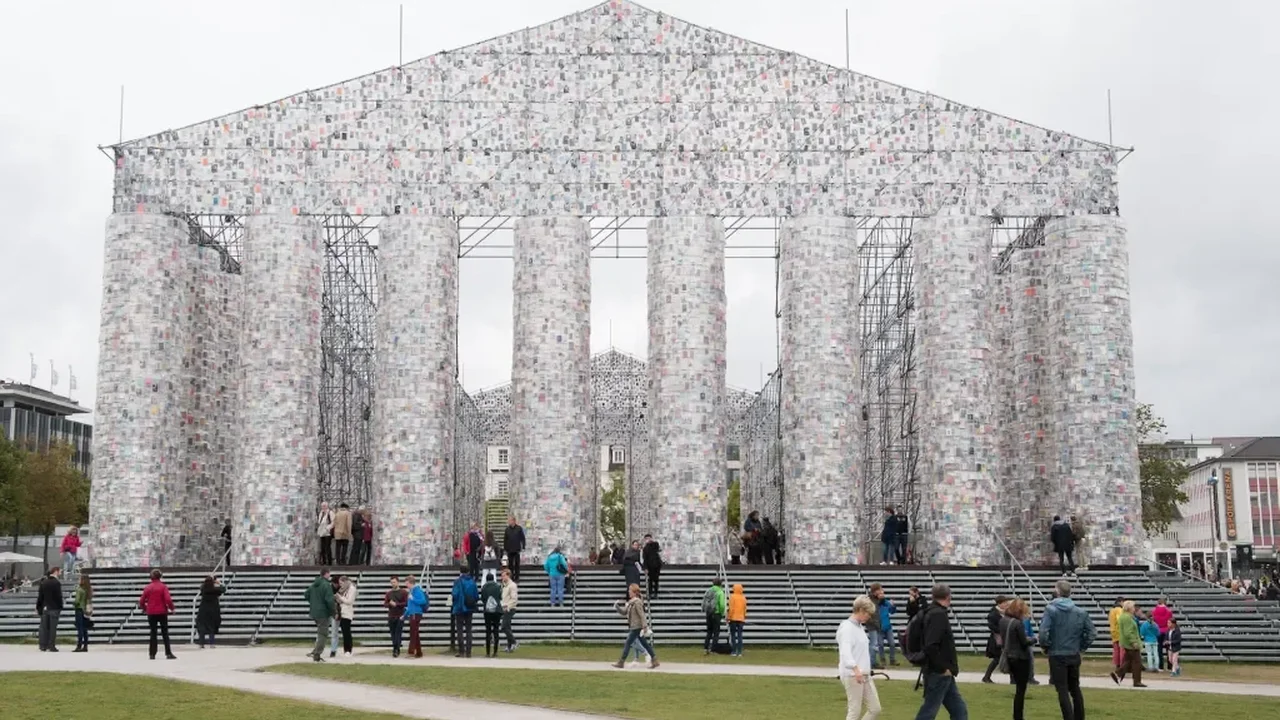
For generations, artists have turned to old, overlooked and out-of-print books for visual references, research and material experimentation. Collage, assemblage and research-based art often begin with discoveries made in printed pages. Artists including Marta Minujín, Pablo Helguera and Harold Ancart have used books in ways that transform printed material into new cultural experiences.
The discussion is not simply about whether books should remain physical or become digital. It also raises questions about which works are preserved, how their contents are shared and who controls the resulting archives. The Antiquarian Booksellers' Association of America notes that truly rare and unique volumes occupy a narrower category than commonly assumed; many older books acquired in bulk may be widely available or no longer relevant to contemporary readers.
Physical and Digital Media Can Coexist
Several artists see the rise of AI as another chapter in the long history of changing creative tools. From the printing press to photography, digital editing and online publishing, new technologies have repeatedly reshaped how culture is produced and distributed without eliminating earlier formats.
Digitization can make texts more searchable and accessible, while physical books continue to offer tactile, archival and artistic value. For creators, the key issue is maintaining a healthy balance: protecting irreplaceable works, supporting public access to knowledge and encouraging responsible innovation in AI training practices.
Paul Chan, whose work has explored AI through a synthetic self-portrait project, frames books themselves as a technology that has continually adapted across centuries. His perspective reflects a broader cultural opportunity: rather than treating print and digital systems as rivals, institutions and creators can design pathways where both remain active.
The future of art and publishing may depend on stronger preservation standards and more open digital stewardship, enabling AI-era tools to expand creative research while keeping cultural heritage within reach.