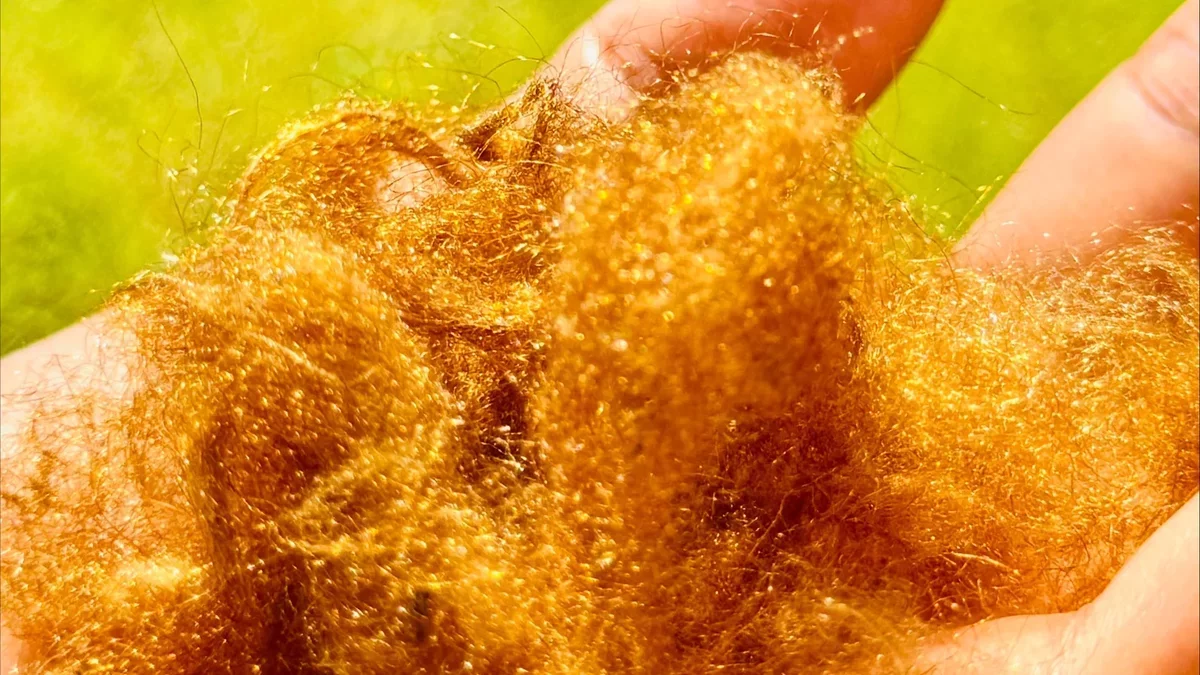
Sea silk, often hailed as the "golden fiber of the sea," was one of the most esteemed materials during the ancient Roman period. This luxurious fabric was exclusively worn by influential individuals, including emperors and popes. The unique fiber is derived from byssus threads produced by the Pinna nobilis, a large clam native to the Mediterranean, which uses these threads to secure itself to underwater surfaces. Renowned for its radiant golden hue, lightweight nature, and exceptional durability, sea silk earned the title of "legendary silk." A notable example is the Holy Face of Manoppello, an ancient religious artifact in Italy believed to be crafted from this extraordinary material.
The Decline of Traditional Sea Silk
Over the years, marine pollution and environmental degradation have drastically impacted Pinna nobilis populations, driving the species towards extinction. Consequently, the European Union has enacted a complete ban on the harvesting of this clam. As a result, sea silk has transitioned from a vibrant craft to a historical relic, with only a limited quantity produced today by a handful of skilled artisans.
To address this challenge, the POSTECH research team turned their attention to the Atrina pectinata, a pen shell commonly cultivated for food in Korea. Similar to Pinna nobilis, this species also produces byssus threads for anchoring. The researchers found that the byssus from Atrina pectinata closely resembles the physical and chemical characteristics of traditional sea silk fibers. Leveraging this discovery, they devised a method to process the pen shell threads and recreate the enchanting sea silk.
The Science Behind Sea Silk's Enduring Radiance
The researchers' success extended beyond merely replicating the fabric's visual appeal. They uncovered the reason behind sea silk's ability to retain its golden luster for centuries. Rather than relying on dyes, the color is produced through structural coloration, which occurs when light interacts with minuscule structures at the nanoscale.
The team identified that the iridescence of sea silk is attributed to a spherical protein structure known as "photonin." These proteins are arranged in layers that reflect light similarly to soap bubbles or butterfly wings. Since the color originates from structural properties rather than pigments, it remains stable and resists fading over extended periods.
Why the Color Endures for Millennia
The research also revealed that the intensity of the color is influenced by the organization of the proteins. A more orderly arrangement leads to a brighter and richer golden appearance. Unlike conventional fabrics, where color is applied externally, the hue of sea silk emerges naturally from the internal alignment of its proteins, explaining its remarkable longevity over centuries.
Transforming Waste into Sustainable Luxury
A significant outcome of this research is the conversion of pen shell byssus, previously considered waste, into a valuable textile. This innovative approach not only reduces marine waste but also paves the way for sustainable materials that carry profound cultural and historical significance.
Professor Dong Soo Hwang remarked, "Structurally colored textiles possess inherent resistance to fading. Our technology enables enduring color without the need for dyes or metals, opening new avenues for sustainable fashion and advanced materials."