Welcome to the 328th installment of "A View From the Easel," a series dedicated to artists as they share insights about their creative environments. This week, artists delve into the concept of inventing their own alphabets while exploring cosmic themes.
Lusmerlin Lantigua, Columbia, Maryland, and Philadelphia, Pennsylvania
Duration of Work in Space: Lantigua has been utilizing his Maryland studio for three years and his Philadelphia space intermittently for four years.
A Day in the Studio: He begins his day with sunlight, stretching, reading, and sometimes enjoying the outdoors, even in chilly weather. In the absence of sunlight, he turns to a white lamp. His most productive hours occur from late morning to early afternoon, preceded by a meditative practice of dancing or singing karaoke to align his body and mind for painting.
Impact of Space on Work: The studio's garden view allows Lantigua to observe nature, which profoundly influences his artwork. The flexible layout of the studio supports ambitious projects, including a 28-foot painting titled "The Big Rip," which addresses the universe's potential collapse.
Zoë Elena Moldenhauer, Gowanus, Brooklyn
Duration of Work in Space: Moldenhauer has been working in her studio since fall 2021.
A Day in the Studio: She walks to her studio almost daily, transforming her space based on the urgency of her projects. Even during breaks, she uses the time to clean, read, or relax, maintaining a connection to her creative practice.
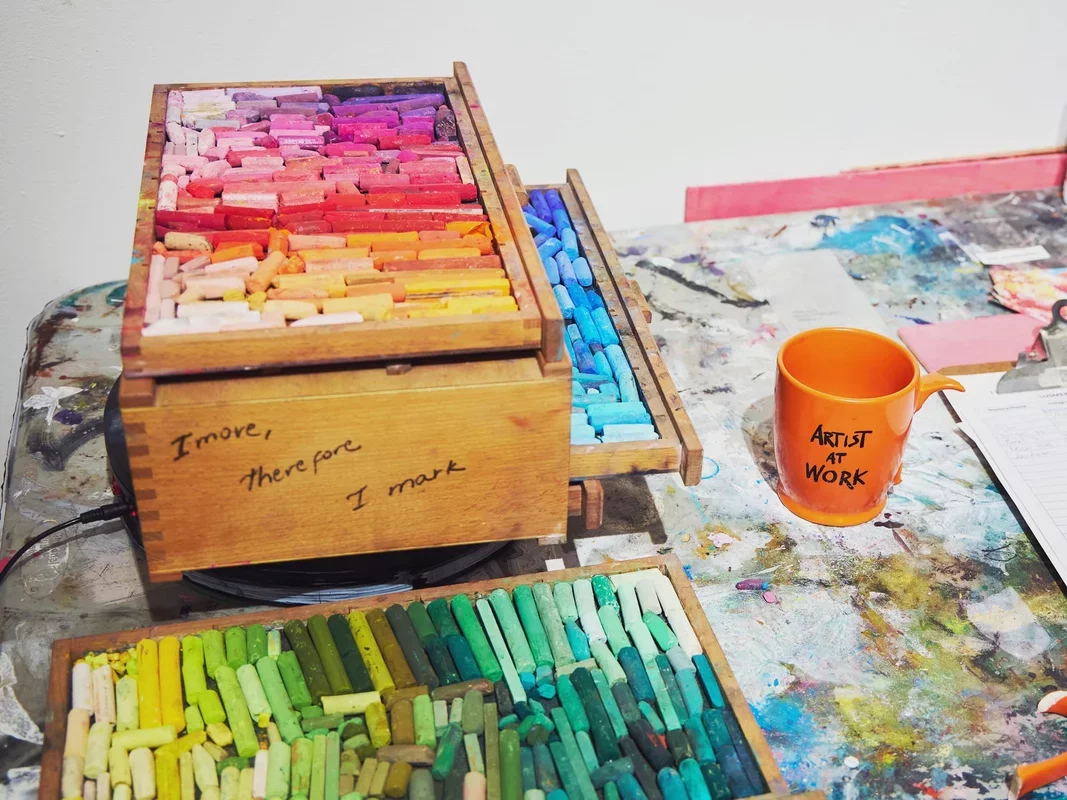
Impact of Space on Work: Moldenhauer's small studio is equipped with movable surfaces and shelves, allowing her to create intimate and rhythmic works that often incorporate layering of materials. The unique layout and basement setting add a playful challenge to her artistic process.
Community Interaction: Engaging with Gowanus' vibrant arts scene, she participates in events like the Gowanus Open Studios, fostering connections with fellow artists and art enthusiasts.
Both artists express a deep appreciation for their studios, recognizing them as vital spaces for creativity and community. Their reflections highlight how personal environments influence artistic output and foster connections, emphasizing the importance of supportive networks in the creative process.
As artists continue to navigate their creative journeys, the evolution of their spaces and practices may inspire future generations to explore and redefine the relationship between art and environment.