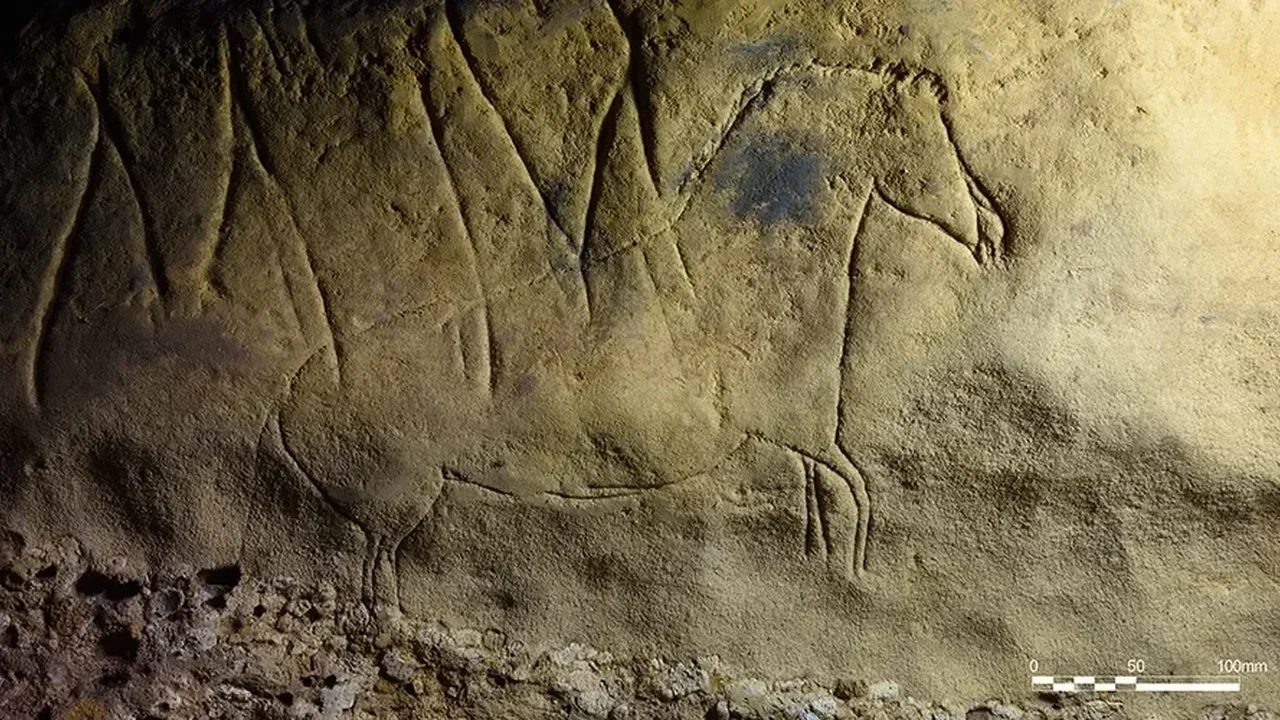
More than 280 engravings discovered in Cova de la Font Major in Catalonia are reshaping understanding of Paleolithic art in northeastern Iberia. The find, made during a 2019 research project, is among the largest known collections of Ice Age rock art in the region and is detailed in the journal Antiquity.
For years, researchers considered Paleolithic rock art uncommon in this part of the Iberian Peninsula. The newly identified works--featuring animals and abstract patterns--suggest the area supported a larger population than previously assumed, with a distinctive artistic tradition of its own.
Artists made the cave's rough surfaces part of the work
The engravings appear across several small galleries. Some compositions include hundreds of loop-shaped marks. Rather than avoiding the cave's uneven rock, the artists used its natural features: seams between different rock types helped define figures, while a fissure was incorporated into a scene of deer drinking.
The engravings went unrecognized for decades, despite visitors passing the surfaces during tours. Researchers identified their possible Paleolithic origins while surveying the cave as part of a wider study.
By expanding the known range and variety of Iberian rock art, the discovery offers a richer picture of how early communities expressed ideas through images. Further study of the engravings may help clarify the connections and diversity of prehistoric artistic traditions.