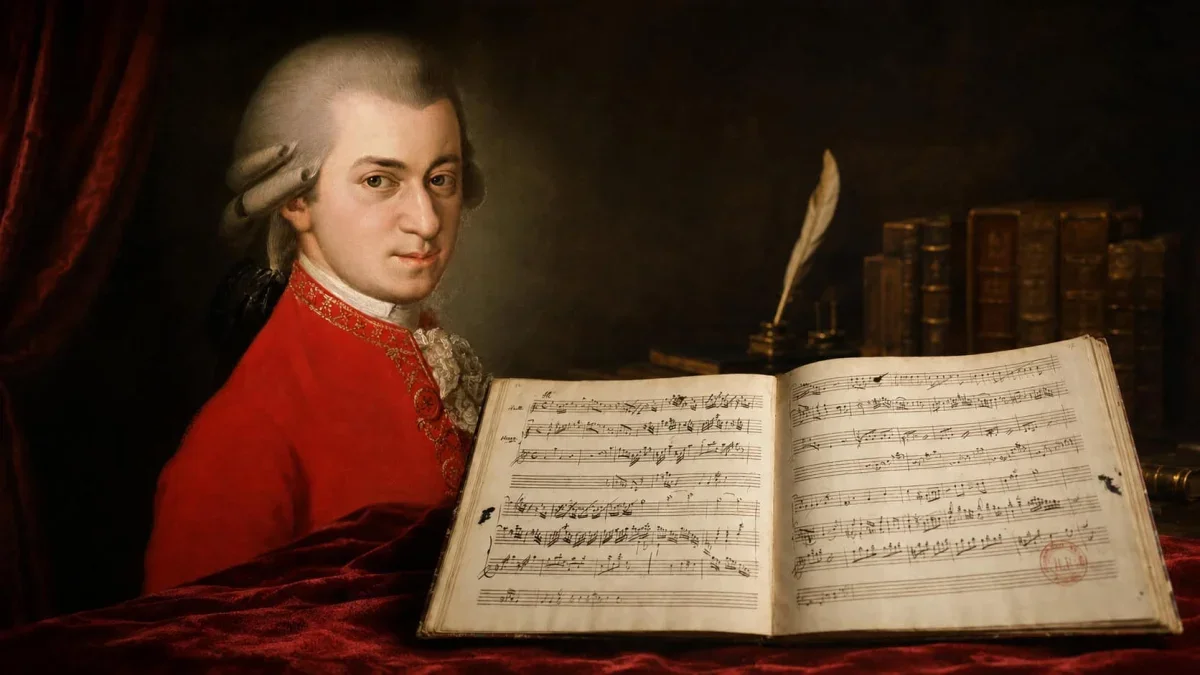
A newly authenticated notebook linked to Wolfgang Amadeus Mozart is offering a fresh look at both his creativity and his role as a mentor. The 44-page manuscript, identified in the archives of the National Library of France, contains teaching notes, corrections, exercises and seven previously unknown pieces for flute and harp.
A Rare Glimpse Into Mozart's Workshop
The notebook is believed to date from 1778, when Mozart was 22 and living in Paris. It was used while he taught Marie-Louise-Philippine de Bonnières de Guînes, a young aristocrat and harpist, whose father hoped she could compose music for family performances. The pages show Mozart guiding her through harmony, melody and short musical forms, while also revising her work in real time.
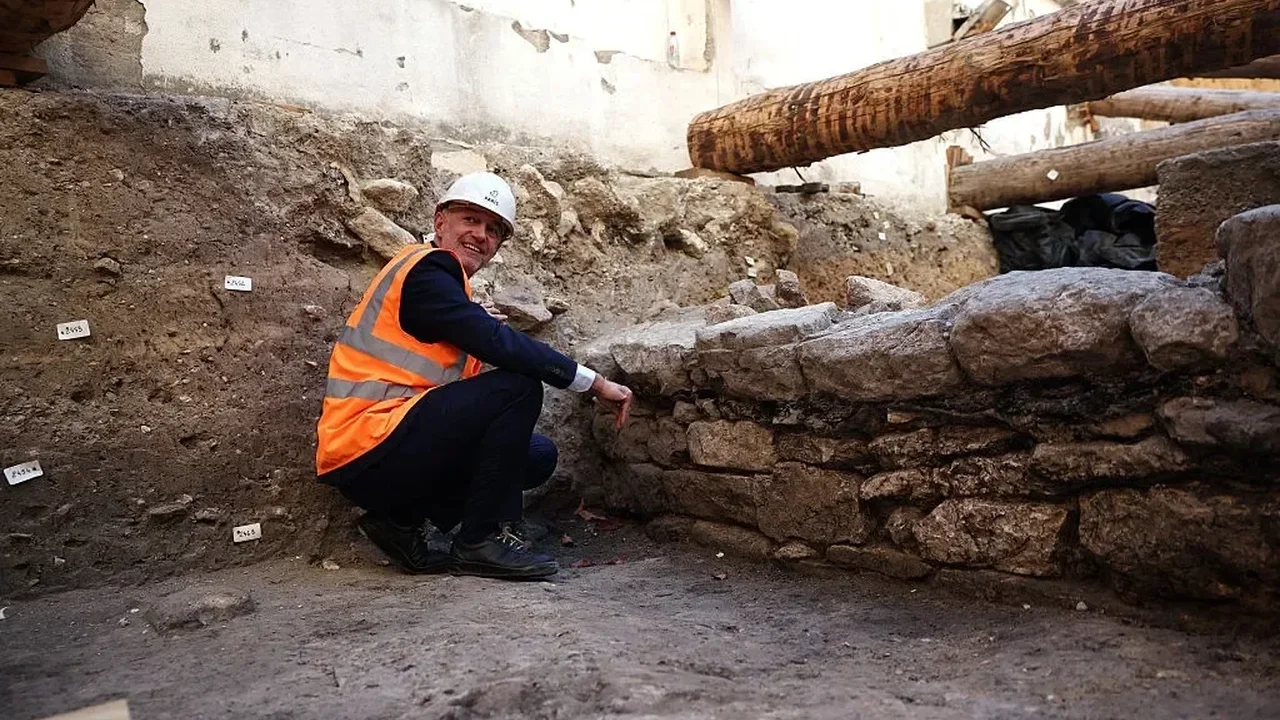
François-Pierre Goy, a conservator at the National Library of France, found the manuscript while reviewing a group of anonymous scores. He noticed familiar details in the handwriting and notation, including Mozart's style of braces, clefs and final bars. After comparison with known manuscripts, the attribution was confirmed by experts, including musicologists at the library and the International Mozarteum Foundation in Salzburg.
The discovery also adds context to Mozart's Paris period, when he composed for the same musical circle connected to the Duke of Guînes. The notebook includes material linked to the flute-and-harp repertoire, a field in which Mozart wrote relatively little. One of the newly identified movements appears to be largely in his own hand, while another remains incomplete.
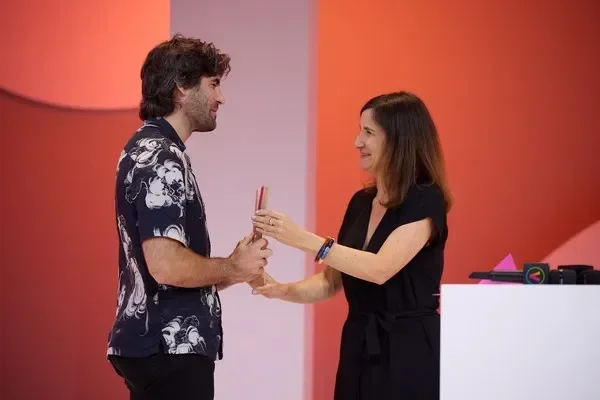
The National Library of France announced the find on June 19, and the newly recovered music was performed publicly shortly afterward by flutist Mathilde Caldérini and harpist Nicolas Tulliez of the Orchestre Philharmonique de Radio France.
For scholars, the manuscript is especially valuable because it captures Mozart not only as a composer, but as a teacher shaping ideas bar by bar. It deepens understanding of how musical creativity was taught, corrected and refined in the 18th century. In the years ahead, discoveries like this may continue to reshape how we experience the living history of classical music.