The concept of a mechanical volcano was originally conceived by Sir William Hamilton, who served as the British ambassador to Naples and Sicily from 1765 to 1800. His passion for volcanology inspired him to merge artistic vision with mechanical innovation, aiming to recreate the stunning visual phenomena of volcanic eruptions.
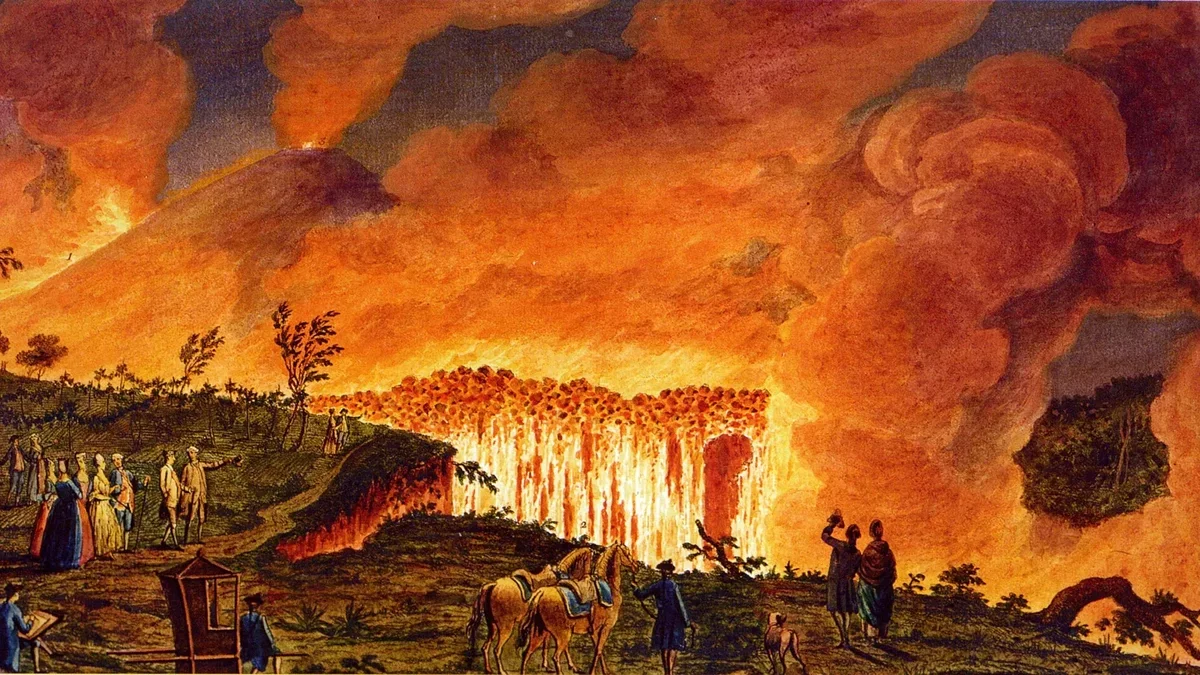
Hamilton's design drew inspiration from the 1771 watercolor 'Night view of a current of lava' by British-Italian artist Pietro Fabris. The device was envisioned to simulate the flowing lava and explosive eruptions of Mount Vesuvius through light and movement. While it remains unclear if Hamilton ever built this mechanism, a meticulously preserved sketch in the Bordeaux Municipal Library provided the blueprint for its contemporary revival.
Reviving the Vesuvius Mechanism
Dr. Richard Gillespie, Senior Curator at the Faculty of Engineering and Information Technology, spearheaded the project that brought this historical invention back to life.
"It's remarkable that exactly 250 years later, our students have successfully reanimated this dormant project," he remarked. "This piece serves as a compelling tool for science communication, reflecting humanity's enduring fascination with the formidable power of volcanoes."
Where Modern Engineering Meets Historical Design
Master of Mechatronics student Xinyu (Jasmine) Xu and Master of Mechanical Engineering student Yuji (Andy) Zeng dedicated three months to constructing the device in The Creator Space workshop. Utilizing advanced materials and technologies such as laser-cut timber, acrylic, programmable LED lights, and electronic control systems, they adapted Hamilton's original clockwork design for a modern audience.
"This project has been an incredible learning experience, allowing me to enhance my skills in programming, soldering, and applying physics," Xu shared.
Zeng expressed how the hands-on experience deepened his understanding of mechanical engineering. "This project was an excellent opportunity to develop my problem-solving skills. We encountered challenges similar to those Hamilton faced, like ensuring the light was designed to conceal the mechanisms," he said.
Experiential Learning and Skill Development
Research engineer Andrew Kogios, who supervised the students, emphasized the significant growth they achieved throughout the project.
"From material selection and 3D printing to troubleshooting electronics, collaborating with Yuji and Xinyu has been immensely fulfilling," Kogios stated. "Experiences like this, complementing their academic studies, will greatly benefit their future careers."
Featured at The Grand Tour Exhibition
The finished mechanical volcano now stands as the highlight of The Grand Tour exhibition at the University's Baillieu Library, where it will be showcased until June 28, 2026.