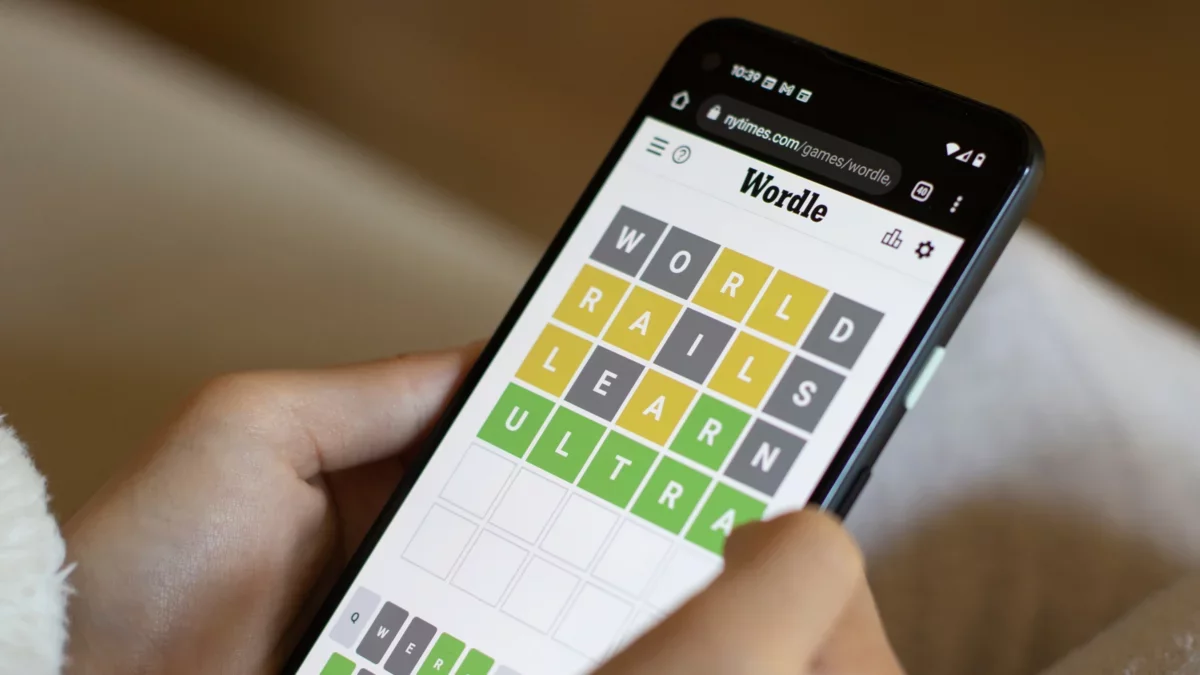
Choosing an effective starting word in Wordle combines both creativity and strategy. With the recent announcement from the New York Times about the inclusion of previously used words, it's time to reconsider your approach. From February 1, 2026, past solutions are now eligible for use in new puzzles.
This change is significant because each word selected in Wordle serves a dual purpose: gathering insights for future guesses while also attempting to solve the puzzle. If you're indifferent about your starting word potentially being a solution, this update may not impact you. However, many players prefer to select words that could also be answers, increasing their chances of a quick win. If you typically retire a word after it has been used, it might be time to embrace some recycling.
Nevertheless, there's no obligation to change your opening word. For instance, my reliable starter, ARISE, was once a solution a few months ago, yet I continue to use it, as it's unlikely to repeat soon. Emily Long, who provides daily Wordle hints, favors RAISE, which was a solution in 2024.
Vowels Matter, But Not Excessively
Studies have identified various ideal starter words, and seasoned Wordle enthusiasts have their own preferences. However, many agree that ADIEU is not the best choice. While it includes four vowels, making it a strategic first guess, a 2023 analysis by the New York Times ranked it as the least effective among the top 30 starters. The top five, based on their effectiveness in revealing letters, are SLATE, CRANE, LEAST, STARE, and RAISE, with ADIEU sitting at the bottom. My personal favorite, ARISE, ranks seventh. Other analyses suggest CRANE or SALET as potential top starters.
Proponents of ADIEU argue that its four vowels help identify at least one vowel in the solution, making it a smart choice. However, the counterargument is that vowels alone may not sufficiently narrow down the possibilities. Many English words remain clear even without vowels. For example, if you guess ADIEU and find an A highlighted, you only know that A exists somewhere in the solution, which doesn't provide much clarity.
A potentially better strategy might be to start with a word rich in consonants and address the vowels later. One local Wordle expert mentioned that there are only five vowels, and a U is rarely present.
Should Your Starter Be a Possible Answer?
One analysis suggested that SALET is an excellent starter due to its combination of common letters and their arrangement, providing valuable information compared to words like SLATE or STALE. However, some might question the use of more obscure words. If you want your starter to be a potential answer, avoid rare words and those recently used. With the new rules in place, previously used words may appear again, but it's unclear how far back they will consider fair game.
If you aim for a quick solution, you might still consider using ADIEU. If you're open to previously used starters, options like SLATE and STALE haven't been used since 2022, while STAND and CRATE were last seen in 2021.
Your Starter Should Align with Your Solving Style
Beyond theoretical analyses, the ideal starter word is one that suits your personal solving style. The human brain processes information differently than a computer. Personally, I prefer to identify vowels early, as they help me visualize potential words. If I know there are vowels in certain positions, I can narrow down my options effectively. For others, a consonant-heavy starter might be more beneficial.
When selecting a starter, think about how you approach the puzzle halfway through. What initial guesses will enhance your solving strategy? If you work best with known starting letters, consider a word like TRASH, which incorporates common consonants right away.
My strategy combines both approaches. For instance, I often follow ARISE with TOUCH to gather insights on both vowels and common consonants. If you start with ADIEU, be ready to follow up with a word like THORN.
Don't Overlook Y, the Sometimes Vowel
Should Y be included in your starting word? Most players skip it, but there's a strong case for incorporating it early in the game. Y is often underestimated as a letter, but it appears frequently in words, such as FUNNY and JAZZY.
Remember that vowels include "A, E, I, O, U, and sometimes Y." Y can function as a vowel in words like FUNNY, where it serves as the second syllable's vowel. Additionally, there are words with Y as the only vowel, such as GLYPH and NYMPH.
If you find yourself lacking vowels during a game, consider including Y in your guesses, especially at the end. Words like LANKY or HORNY could be effective choices when you're stuck.