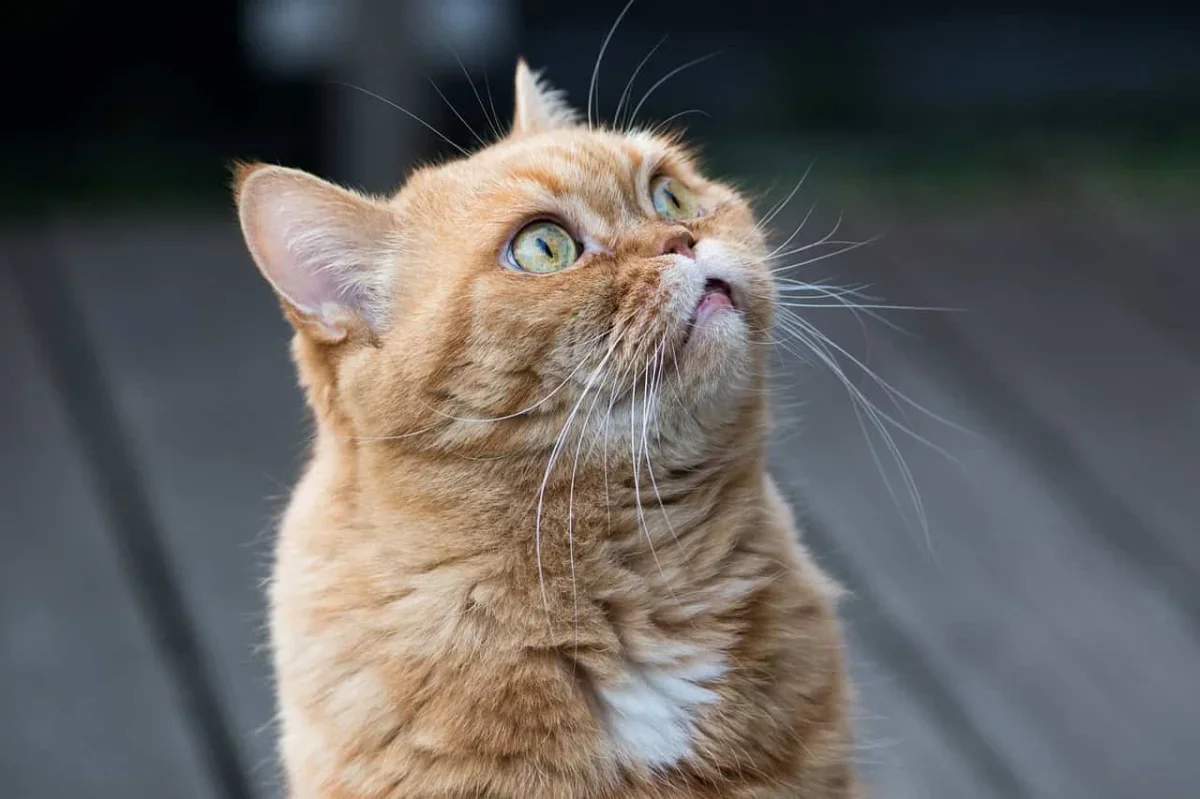
Chris Kaelin, a geneticist at Stanford Medicine, has turned his attention to the fascinating world of orange cats. These vibrant felines, known for their playful personalities, have puzzled scientists for over a century due to the striking fact that approximately 80% of them are male. This raises an intriguing question: why is the orange coloration in domestic cats so closely linked to sex, unlike any other mammal?
In a groundbreaking study from 2025, Kaelin and his team have identified a unique genetic mutation responsible for the orange coat in cats, which differs significantly from what is found in other mammals.
For many years, the orange coat color in cats has been recognized as an anomaly within the genetic frameworks that govern pigmentation in most mammals. Male cats typically display a uniform orange color, while females often exhibit a mix of orange and black fur, known as tortoiseshell or calico patterns. Kaelin explained, "We aimed to unravel the mystery behind the sex-linked orange color trait that is exclusive to domestic cats."
Unlocking the Mystery of a Unique Gene
Mammals produce two types of melanin pigments: eumelanin (dark) and pheomelanin (light). In most species, the production of these pigments is regulated by a membrane protein called MC1R. However, cats present a different case altogether.
The orange coloration in domestic cats is predominantly found in males, with only about 20% of orange cats being female. This is because the orange mutation resides on the X chromosome. Males possess a single X chromosome, making them more likely to express the orange trait, while females require two copies of the orange allele to be fully orange. If a female inherits one orange allele and one non-orange allele, she may develop the characteristic tortoiseshell pattern due to random X inactivation.
Kaelin elaborated, "The mutation affects a gene on the X chromosome. Males, having only one X chromosome, possess one copy of the orange gene, whereas females, with two X chromosomes, need two copies."
Unlike other mammals, where orange or yellow fur results from mutations in non-sex-linked genes, the orange trait in cats is uniquely sex-linked. Kaelin's research team analyzed the genomes of orange cats using DNA samples from spay and neuter clinics, ultimately discovering a small deletion on the X chromosome that activates a gene called Arhgap36 in pigment cells.
A Gene with Unexpected Functions
This gene, Arhgap36, has been associated with certain tumors in humans but had never been linked to coat color in any species. The mutation blocks the production of eumelanin, allowing the production of pheomelanin, effectively transforming the fur color from dark to bright orange.
Kaelin remarked, "This unusual mechanism involves the misexpression of a gene in a specific cell type, which is quite remarkable."
Interestingly, this mutation is not a recent phenomenon; historical evidence suggests it has existed for centuries, possibly flourishing alongside human domestication of cats. Kaelin concluded, "Our findings exemplify how new biological traits can emerge through unexpected genetic pathways."
The research was published in the journal Current Biology, highlighting the significance of understanding genetic traits in mammals as a means of exploring broader genetic interactions.