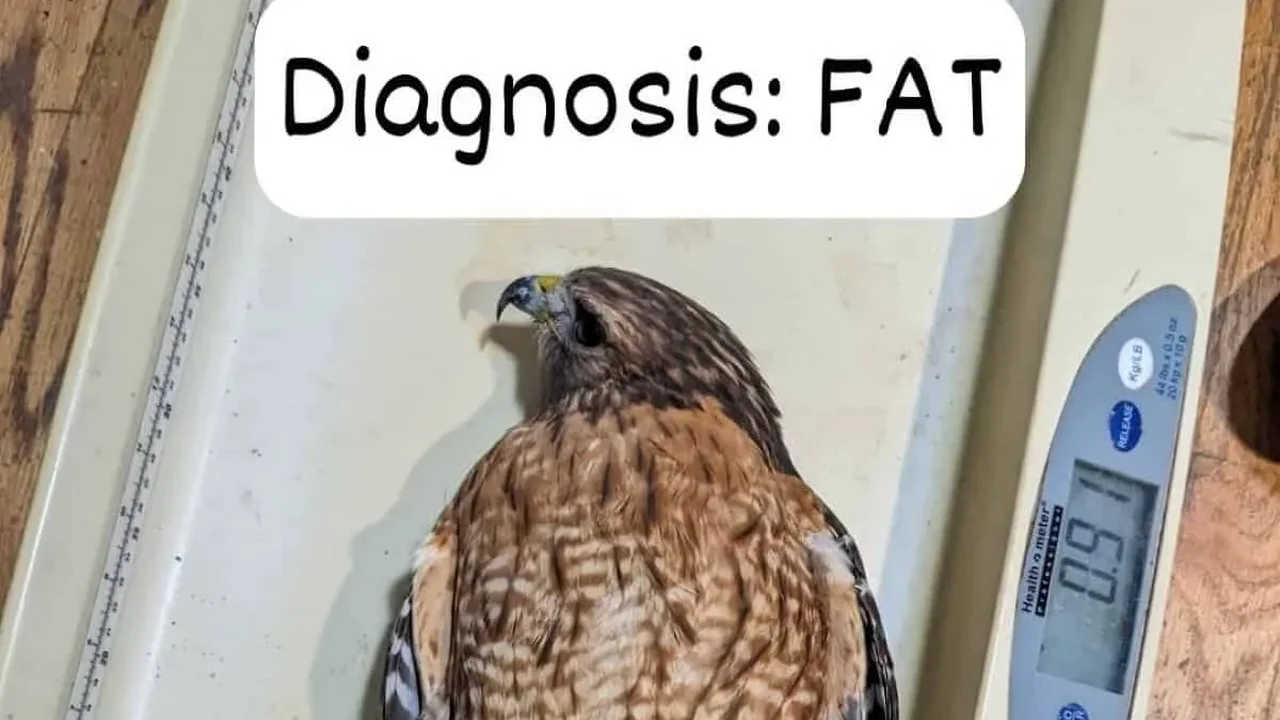
A female red-shouldered hawk in Virginia is back in the air after a rehabilitation program helped her shed weight accumulated while feeding on neighborhood chickens.
The hawk was brought to the Southwest Virginia Wildlife Center after residents reported poultry disappearing and the bird was found unable to fly. Examinations found no injury or illness, but she weighed more than 910 grams--well above the roughly 500-700 grams typical for the species.
When easy meals become a challenge
Wild predators can take advantage of abundant food when it is available. In this case, the hawk appeared to have repeatedly hunted free-ranging chickens, then rested nearby before returning for more. The additional weight made takeoff difficult by increasing the lift her wings needed to generate.
Research on blue tits published in the Journal of Experimental Biology has also shown that wing loading--the weight a bird carries relative to its wing area--can affect flight performance. The study did not examine hawks, but illustrates how body mass can influence a bird's ability to take off quickly.
A gradual return to flight
With controlled feeding and exercise, the hawk lost about 130 grams over a little more than a month. By November 8, 2026, she had regained the ability to fly. She is still building endurance, managing only a few laps around her enclosure before tiring, so the center is continuing her care before considering release.
The wildlife team has also encouraged chicken owners to use covered enclosures to reduce easy access to poultry. The hawk's recovery shows how tailored rehabilitation and practical changes around homes can support safer coexistence between wildlife and people.
As communities expand into wildlife habitats, thoughtful prevention and rehabilitation may become increasingly important to protecting both wild animals and domestic birds.