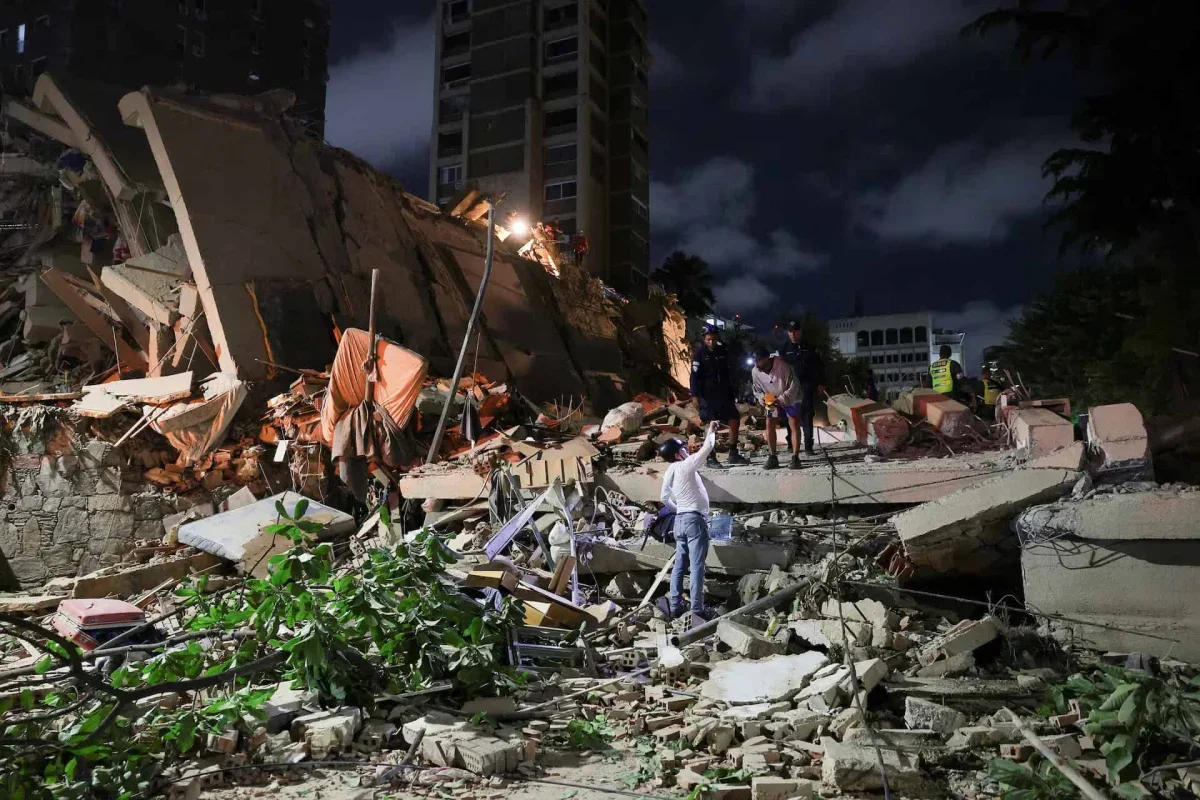
Northern Venezuela was shaken on Wednesday evening by two powerful earthquakes that struck within seconds of each other. The first occurred near San Felipe in Yaracuy state, followed 39 seconds later by another event close to Yumare, only a few kilometres away.
The tremors were felt far beyond the epicentre area, including in Caracas, roughly 150 kilometres to the east. In mountainous terrain, strong shaking can intensify secondary effects such as landslides and soil liquefaction, while the city's sediment-rich ground can further amplify seismic motion.
What scientists mean by a doublet
According to the US Geological Survey, this was likely an earthquake doublet: two closely timed quakes of similar scale, rather than a mainshock followed by smaller aftershocks. In this case, the first quake was measured at magnitude 7.2 and the second at magnitude 7.5.
A doublet usually suggests that two separate faults ruptured in quick succession. One quake may have increased stress on a nearby fault, while seismic waves from the first event may also have helped trigger the second.
Venezuela sits along the active boundary between the Caribbean and South American tectonic plates, where the plates move past each other by about 20 millimetres a year. That motion feeds major fault systems such as Boconó, San Sebastián and El Pilar, making northern Venezuela a naturally active seismic zone.
Researchers note that doublets are uncommon, but they are not unprecedented. Similar paired quakes have been documented in other parts of the world, showing how complex fault networks can release energy in more than one pulse.
For scientists, events like this offer a clearer view of how stress travels through the Earth's crust. For communities, they underline the value of resilient infrastructure, seismic monitoring and preparedness. In the future, studies of earthquake doublets may improve hazard mapping and strengthen early risk planning across active plate boundaries.