In recent years, the landscape of fusion power has evolved dramatically, shifting from a distant dream to a promising reality that has captured the attention of investors. This transformative technology aims to replicate the nuclear reactions that fuel the sun, offering the potential for nearly limitless energy on Earth. While the path to commercially viable fusion power is challenging, the possibilities it presents could revolutionize trillion-dollar energy markets.
The surge in interest surrounding fusion technology can be attributed to significant advancements in three key areas: enhanced computer chips, sophisticated artificial intelligence, and advanced high-temperature superconducting magnets. These innovations have led to improved reactor designs, more accurate simulations, and intricate control mechanisms.
A landmark moment occurred at the end of 2022 when a U.S. Department of Energy laboratory achieved a controlled fusion reaction that produced more energy than was inputted, marking a crucial step toward proving the viability of fusion technology.
Commonwealth Fusion Systems
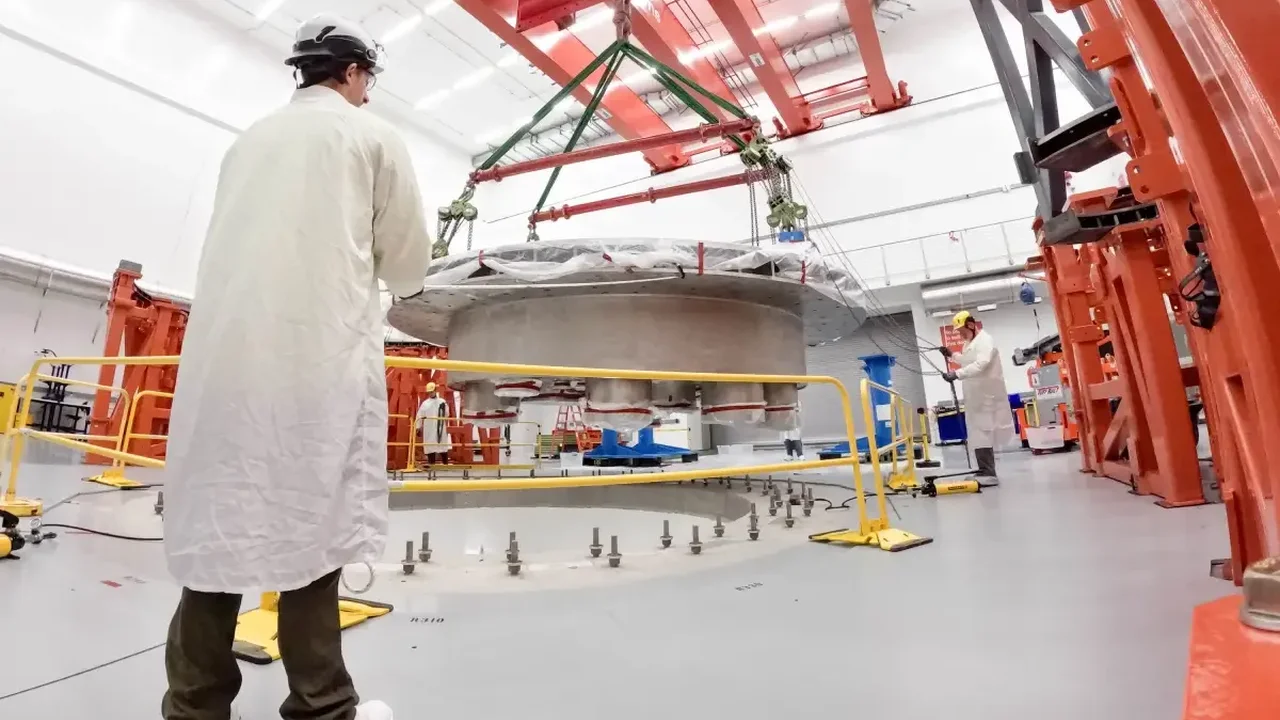
Commonwealth Fusion Systems (CFS) stands out as a leader in private fusion investment, having secured approximately one-third of all private capital in the sector. In August, CFS raised an impressive $863 million, bringing its total funding to nearly $3 billion. The startup is currently developing Sparc, its first power plant designed to produce energy at commercially relevant levels, with operations expected to commence by late 2026 or early 2027.
TAE Technologies
Founded in 1998, TAE Technologies has pioneered a unique approach to fusion using a field-reversed configuration. Recently, the company announced a merger with Trump Media & Technology Group, valuing the combined entity at $6 billion. TAE has raised $1.79 billion to date, with significant backing from investors like Google and Chevron.
Helion
Helion aims to generate electricity from its fusion reactor by 2028, with Microsoft as its first customer. The company has raised $1.03 billion and is known for its innovative approach to plasma confinement.
Pacific Fusion
Pacific Fusion made headlines with a $900 million Series A funding round. The startup employs inertial confinement techniques using coordinated electromagnetic pulses to achieve fusion.
General Fusion
With over $600 million raised, General Fusion utilizes a unique method involving a liquid metal wall to compress plasma. The company recently announced plans to go public through a reverse merger, potentially securing an additional $335 million.
As the fusion energy sector continues to attract investment and innovate rapidly, the potential for a sustainable energy future becomes increasingly tangible. The advancements made by these startups not only pave the way for cleaner energy solutions but also inspire a new era of technological progress in the energy landscape.