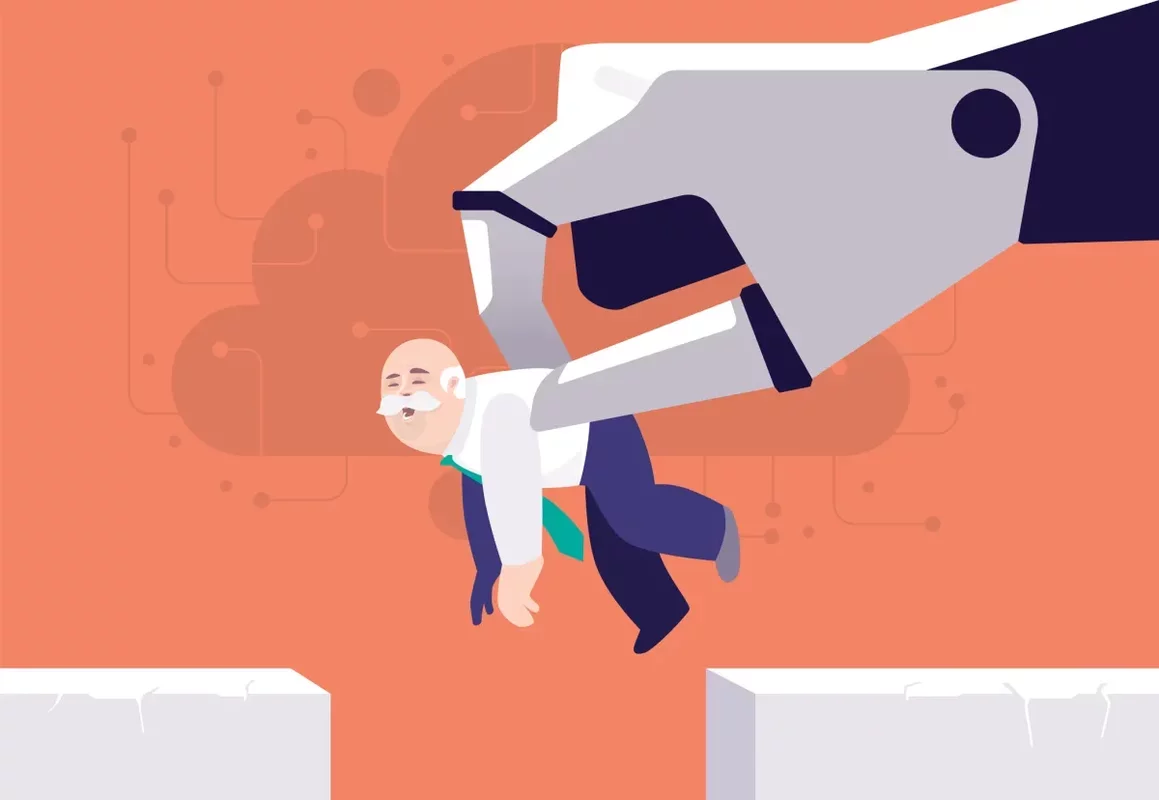
Recently, a tech founder informed his investor about a significant shift in his operations: he was replacing his entire customer service team with Claude Code, an AI tool capable of autonomously writing and deploying software. This change signals a pivotal moment in the tech industry, as traditional software solutions like Salesforce may no longer be the automatic choice.
According to Lex Zhao from One Way Ventures, the ease of creating software through AI coding agents is altering the "build versus buy" decision, making it more favorable for companies to develop their own solutions. This shift raises questions about the viability of the Software as a Service (SaaS) business model, which has long thrived on predictable recurring revenue and high margins.
With AI agents capable of executing tasks previously handled by multiple employees, the traditional per-seat pricing model of SaaS is under threat. As these AI tools can perform complex functions and replicate additional services that SaaS vendors offer, customers now possess a powerful negotiating tool: the ability to create their own alternatives if dissatisfied with existing offerings.
This trend was highlighted when Klarna opted to abandon Salesforce's flagship CRM in favor of its proprietary AI system, showcasing a growing trend among companies to develop in-house solutions. The public markets have reacted to this shift, with stock prices for major SaaS players like Salesforce experiencing declines.
Experts have dubbed this phenomenon the "SaaSpocalypse," marking a transformative era for the industry. However, many venture capitalists believe this disruption is not the end of SaaS but rather a necessary evolution, akin to a snake shedding its skin.
Adapting to Change
The public market's response to new AI products, such as those launched by Anthropic, underscores the volatility in SaaS valuations. Investors are increasingly skeptical, especially as the cost of borrowing rises and concerns about future SaaS usage loom large.
As AI-native startups emerge, redefining what it means to be a software company, the landscape is shifting dramatically. These new players can develop software more efficiently and cost-effectively, posing a challenge to established SaaS firms that have invested years in their technology stacks.
While traditional SaaS products have been seen as enduring, the advent of AI technology introduces new competitors that can evolve at a faster pace. Investors are understandably cautious, as the arrival of AI-native companies prompts questions about the long-term viability of existing SaaS models.
Despite the turbulence, some industry leaders argue that there is still a fundamental need for robust software solutions that comply with regulatory standards and support essential business functions. The future may see a blend of traditional and innovative approaches as the market adapts to these technological advancements.