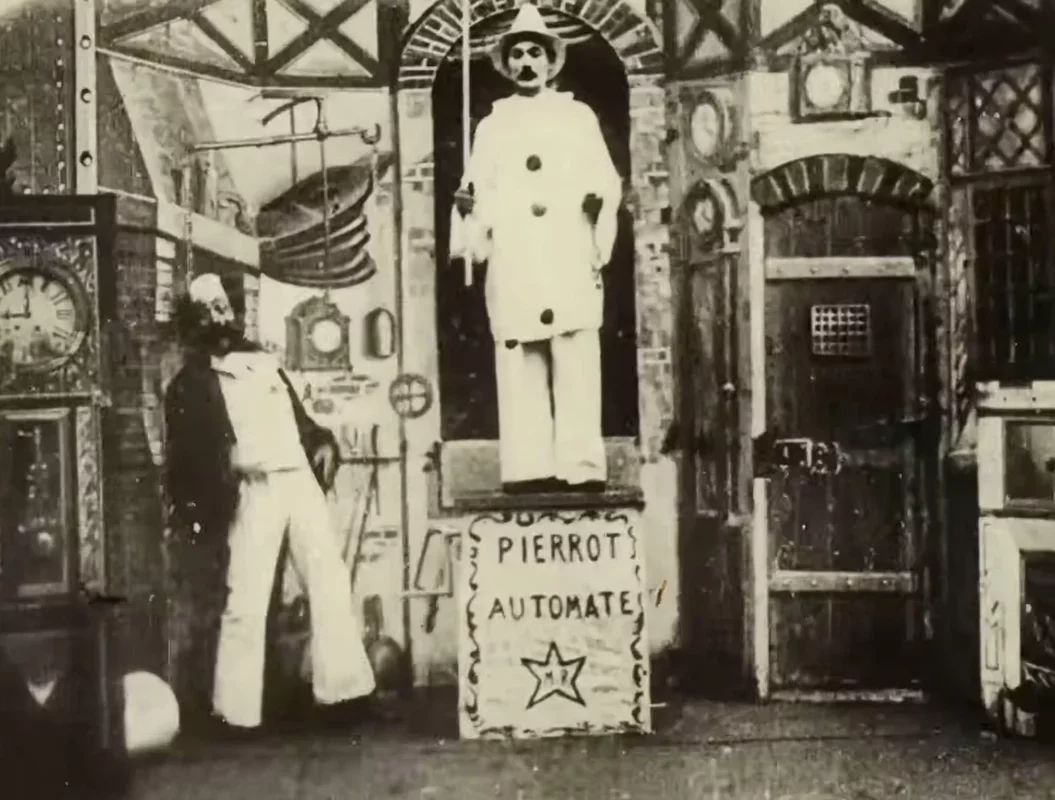
In a remarkable turn of events, the pioneering silent film "Gugusse et l'Automate," created by French director Georges Méliès around 1897, has resurfaced after more than 100 years of obscurity. This 45-second slapstick short features a magician and a Pierrot-inspired automaton engaged in a whimsical duel, showcasing early cinematic creativity.
Méliès, celebrated for his groundbreaking work in fantasy and science fiction, is perhaps best known for his iconic film "A Trip to the Moon," released in 1902. "Gugusse et l'Automate" adds a significant piece to his legacy, representing one of the earliest explorations of sci-fi on screen.
The film was rediscovered thanks to Bill McFarland, who traveled from Grand Rapids, Michigan, to the Library of Congress's National Audio-Visual Conservation Center in Culpeper, Virginia. He brought with him a collection of film reels that belonged to his great-grandfather, William Delisle Frisbee. These reels, part of Frisbee's traveling show, were used to entertain audiences across western Pennsylvania in the early days of cinema.
According to the Library of Congress, McFarland's copy of "Gugusse et l'Automate" is a duplicate that has been removed from the original at least three times. Library technicians dedicated over a week to digitizing and stabilizing the film, allowing it to be viewed online in stunning 4K resolution.
This significant collection also includes Méliès' "The Fat and Lean Wrestling Match" and fragments of Thomas Edison's "The Burning Stable." The meticulous work of conservators has unveiled a treasure trove of cinematic history, bringing these early films back to life for new generations to appreciate.
The resurgence of "Gugusse et l'Automate" not only highlights the importance of preserving cinematic history but also opens up discussions about the evolution of film as an art form. As these early works become accessible, they inspire future filmmakers and audiences alike, reminding us of the creativity and innovation that have shaped the film industry.