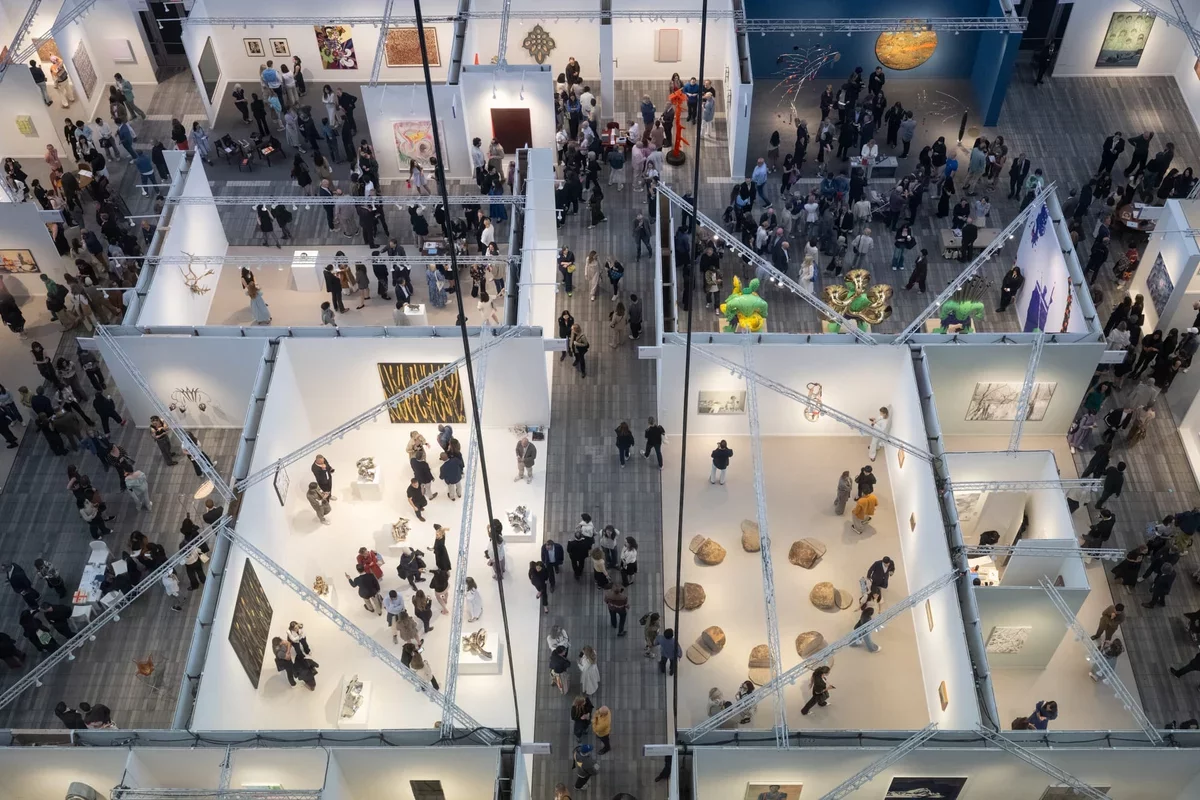
In the vibrant realm of art, particularly during the bustling spring fairs in New York City, the booth at an art fair stands as a coveted stage for galleries and artists alike. This week, the renowned Frieze Art Fair opens its doors to VIPs, commencing a series of events that showcase artistic talent and innovation.
Art fairs serve as a melting pot where galleries connect with collectors and curators, aiming to sell works that justify the often hefty booth fees. These fees can range dramatically, from a few thousand dollars to upwards of $100,000, making the decision to participate a complex calculation for many exhibitors. Insights into booth costs from various New York art fairs shed light on the affordability and value proposition for galleries navigating a competitive landscape.
For instance, at the Frieze Art Fair, booth prices vary significantly based on location and size. Smaller booths can cost between $31,977 and $42,669, while larger spaces may reach $91,700 to $105,717. More accessible options exist in the Focus section, aimed at younger galleries, where fees range from $11,825 to $14,795.
The New Art Dealers Alliance (NADA) offers a more budget-friendly approach, with booth prices set at $11,000 for larger spaces and just $3,500 for the "NADA Projects" tier, designed for experimental participation. This model provides a valuable opportunity for emerging galleries to engage with the art fair experience at a lower financial risk.
In contrast, the Independent Art Fair charges around $110 per square foot, positioning itself as a premium option. It has partnered with local nonprofits to enhance community engagement, reflecting a commitment to social responsibility within the art scene.
Meanwhile, the Affordable Art Fair maintains a pricing structure that starts at $76 to $79 per square foot, while ensuring opportunities for local galleries to participate at no cost through various fellowships. This dedication to affordability fosters a more inclusive environment for both artists and collectors.
As the art fair landscape continues to evolve, initiatives like the Future Art Fair's profit-sharing model and the Open Call program at FOCUS New York exemplify a shift towards supporting emerging talent. By offering subsidized spaces and encouraging innovative projects, these fairs are redefining the traditional art market.
Ultimately, as art fairs adapt to the changing dynamics of the art world, they not only provide a platform for showcasing creativity but also pave the way for future generations of artists and galleries to thrive in an increasingly interconnected cultural landscape.