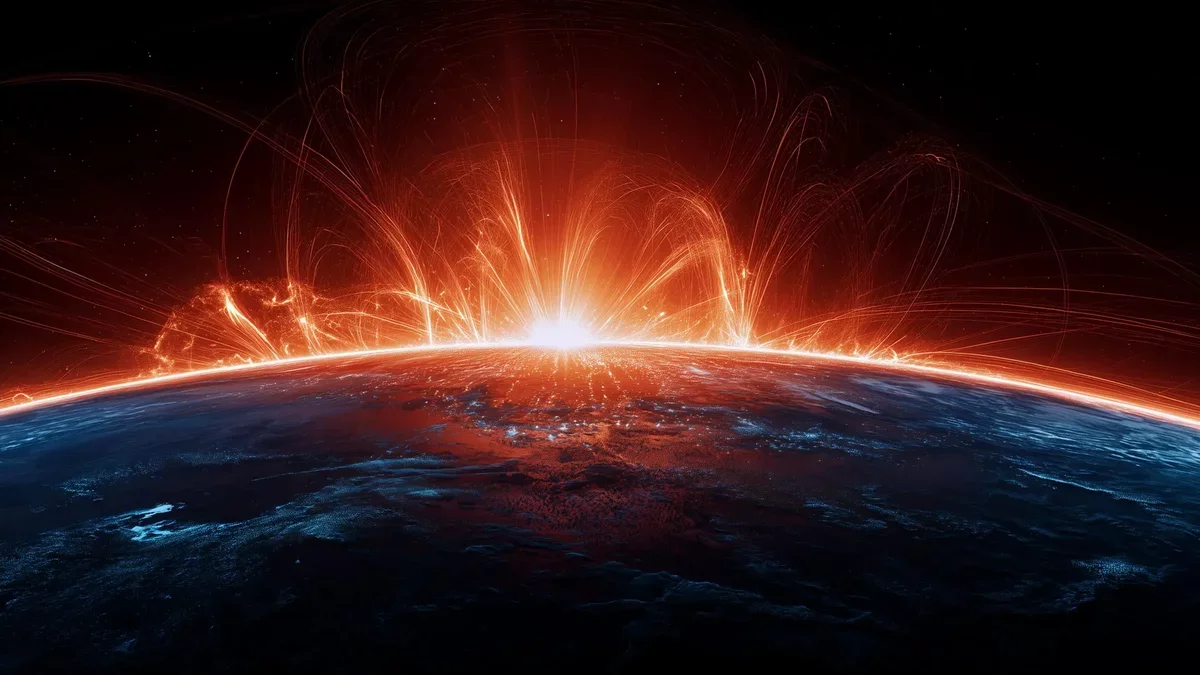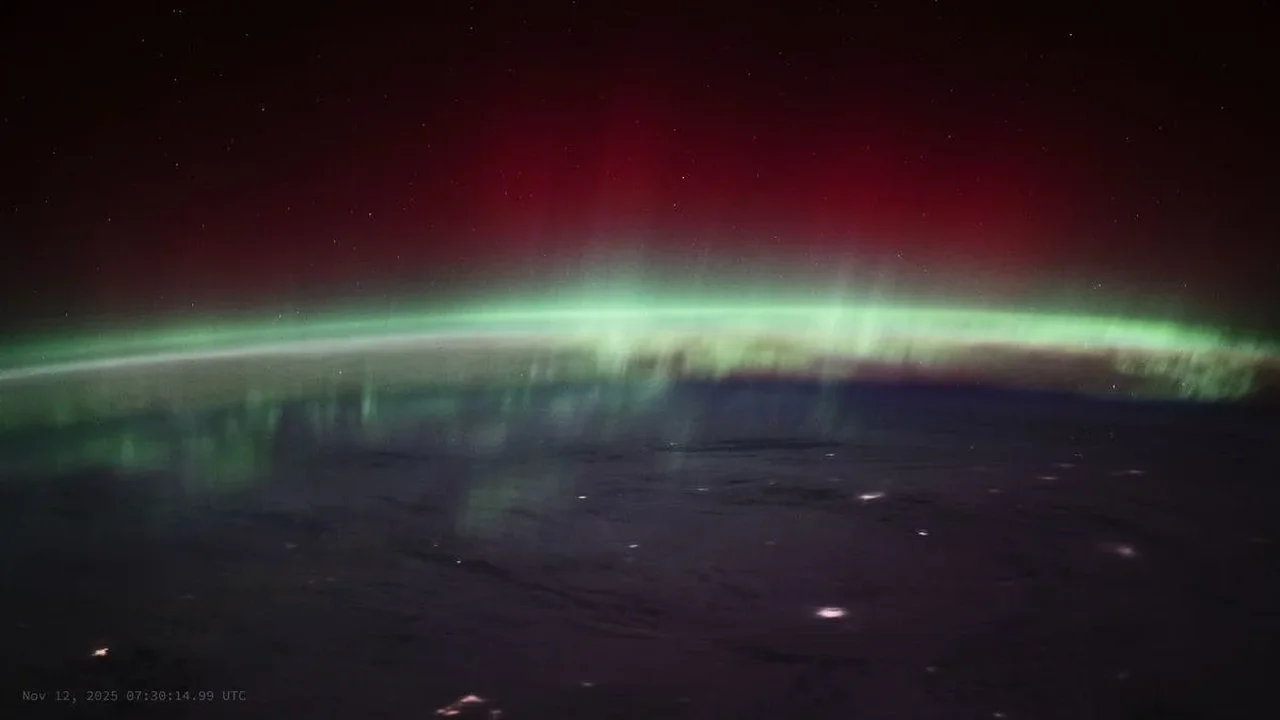
A powerful geomagnetic storm in November 2025 caused an unusual nationwide test for satellite navigation: GPS positions across parts of the continental United States drifted by more than 10 meters, or about 33 feet. The system kept working, but its precision dropped enough to matter for technologies that rely on exact location data.
What Scientists Found
Researchers traced the disruption to a dramatic expansion of the auroral oval, the ring-shaped zone where auroras form around Earth's magnetic poles. During the storm, that region moved far south and created a wide band of unstable, electrically charged air over mid-latitudes, an area usually considered relatively calm.
Using ground GPS stations, aurora cameras, and other instruments, the team reconstructed how the event unfolded. As charged particles surged into the ionosphere, the atmosphere became irregular enough to make GPS signals flicker and weaken. This effect, known as scintillation, is usually strongest near the poles and equator, but this storm spread it across a much broader stretch of North America than scientists had seen before.
In some places, the positioning error exceeded 10 meters. That level of drift may be minor for everyday navigation, yet it can challenge precision agriculture, autonomous systems, and timing-dependent infrastructure such as telecommunications and finance.
Why It Matters
The event adds a new layer to space-weather forecasting. Scientists can already detect major eruptions leaving the Sun, but predicting how those storms will affect local GPS performance on Earth remains much harder. The study suggests that future models will need to combine solar activity with Earth's magnetic field and ionospheric behavior to better anticipate regional impacts.
For industries built on satellite accuracy, the findings highlight a growing need for resilient navigation systems and smarter warning tools. As more machines depend on precise positioning, understanding space weather may become as important as tracking the weather on the ground. In the years ahead, this knowledge could help make global navigation more adaptive, reliable, and future-ready.