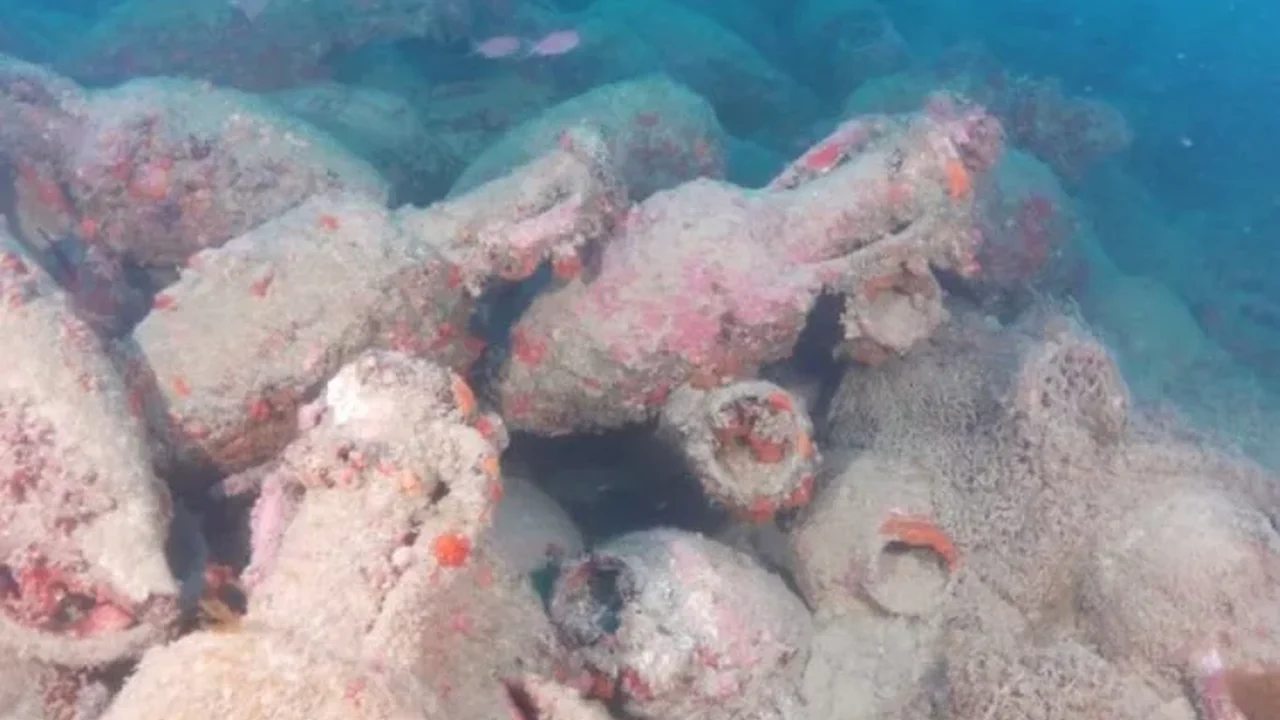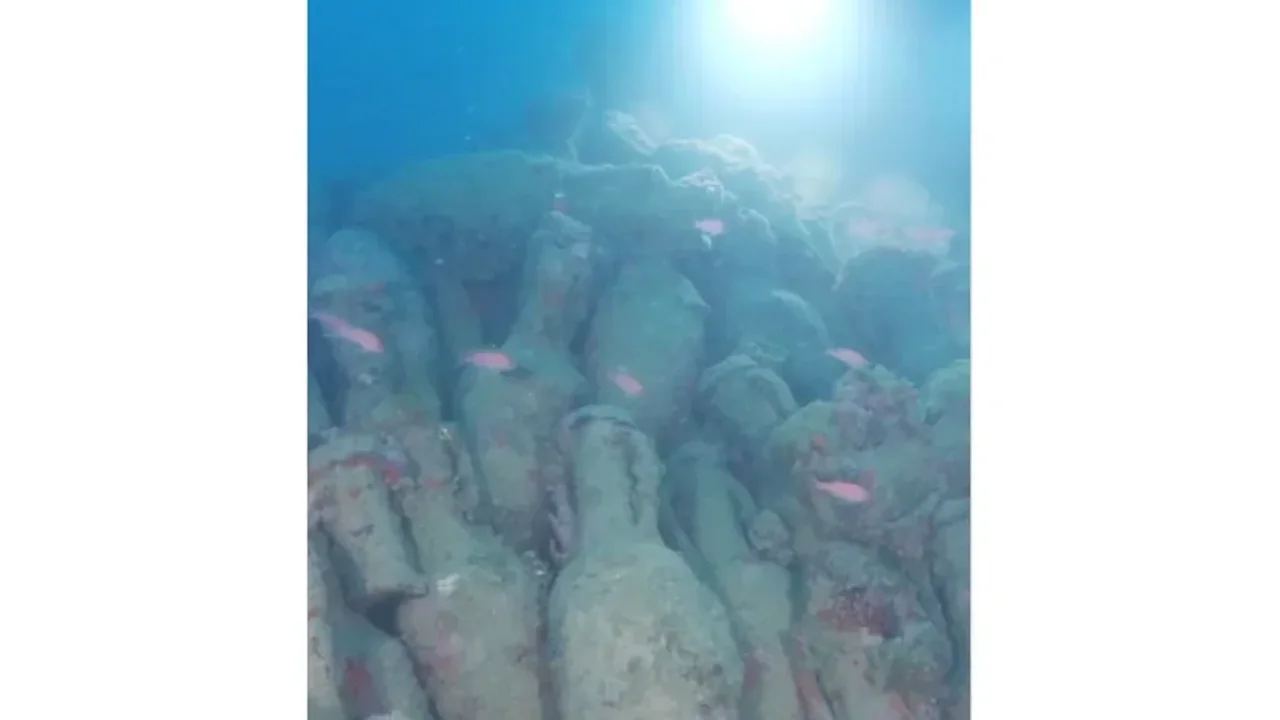
Off the northwest coast of Sicily, a specialized Carabinieri diving unit has identified a 2,000-year-old shipwreck that is drawing attention for its remarkable preservation. The site, found near Mazara del Vallo, lies about 150 feet below the surface and measures roughly 70 feet long and 20 feet wide.
The wreck appears to have carried hundreds of Roman amphorae, the ceramic vessels once used across the Mediterranean for transporting goods. Alongside the pottery, divers also noted two anchors and a lead pipe, offering valuable clues about the ship's structure and cargo.
Italian culture minister Alessandro Giuli described the find as one of the most significant underwater archaeological discoveries in recent years. The Carabinieri have classified the location as an important underwater heritage site, with detailed documentation and study now planned under the supervision of the Superintendency of the Sea.
The discovery was first highlighted after local fishermen alerted authorities, while divers using sonar-based 3D scanning technology helped confirm what lay beneath the seabed. For explorers Giacomo De Mola and Igor Bisulli, the moment turned a routine scan into a rare encounter with the ancient world.
As research continues, the site may deepen understanding of Roman trade routes, maritime engineering, and underwater preservation, shaping the future of archaeological exploration.