Seventy million years ago, an oviraptor, a feathered and flightless dinosaur, was seen protecting a nest of blue-green eggs. However, paleontologists have long debated how this ancient creature incubated its offspring. Did it use its body heat like modern birds, or did it rely on the sun's warmth, similar to crocodiles?
To investigate this intriguing question, a research team from Taiwan constructed a life-sized, heated model of an oviraptor using foam, wood, and a heating blanket. This innovative setup was designed to simulate the adult dinosaur's interaction with a clutch of replica eggs, specifically mimicking the Heyuannia huangi, a Late Cretaceous oviraptor measuring about 1.5 meters in length.
While one might wonder why a physical model was preferred over computer simulations, the complexity of real-world heat transfer made this choice vital. Factors such as wind, soil moisture, and sunlight can significantly influence heat distribution, making it difficult to replicate accurately in digital models. By using a tangible model, researchers could directly observe how heat moved from the dinosaur to the eggs.
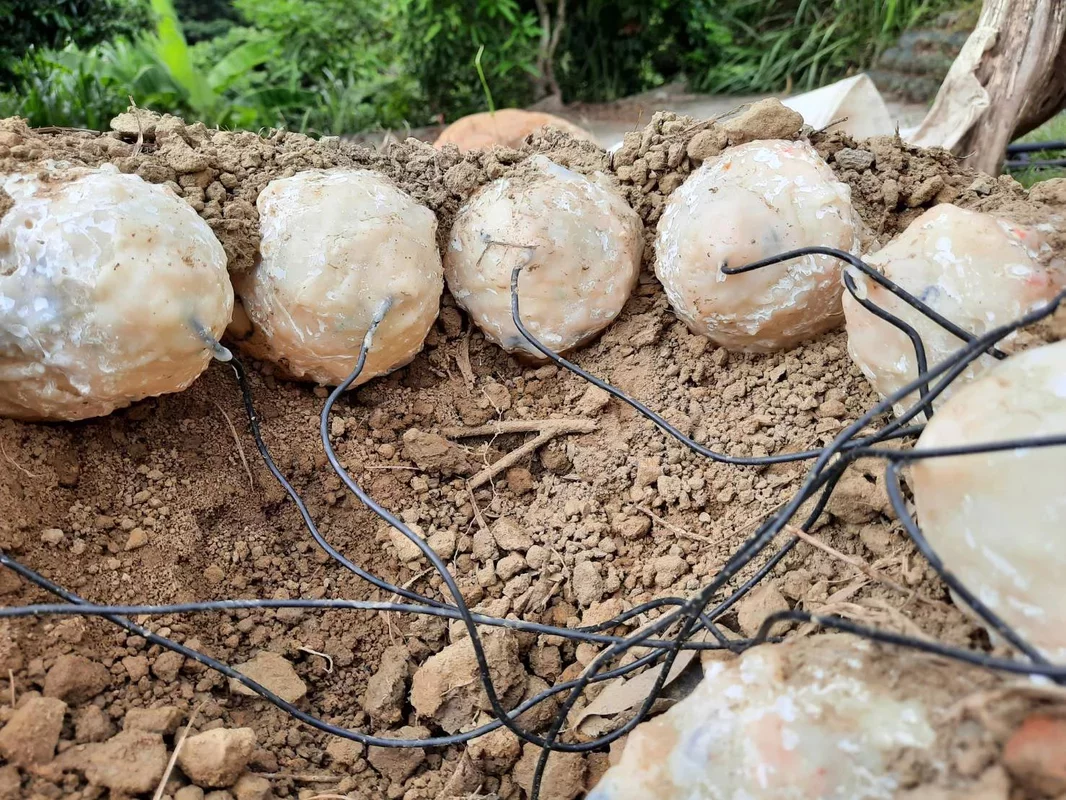
Chun-Yu Su, the study's lead author, emphasized the challenges in realistically reconstructing oviraptor incubation. The eggs were uniquely different from any living species, prompting the team to create resin eggs that closely resembled the original.
The Mechanics of a Dinosaur Nest
Oviraptors utilized semi-open nests, arranging their eggs in overlapping concentric circles, unlike the buried nests of crocodiles. Modern birds employ a technique called thermoregulatory contact incubation (TCI), which requires the parent to touch each egg for effective heating. However, the foam model revealed that the adult oviraptor could not adequately reach all the eggs, leading to uneven temperature distribution.
Dr. Tzu-Ruei Yang, the senior author, noted that during cooler weather simulations, eggs in contact with the adult remained significantly warmer than those on the outer edge, resulting in asynchronous hatching patterns. Some hatchlings emerged days before their siblings, indicating that oviraptors likely did not incubate their eggs in the way modern birds do.
Co-Incubating with the Sun
The findings suggest oviraptors relied more on solar heat for incubation, akin to turtles. The temperature difference between the outer and inner eggs could drop to just 0.6°C under direct sunlight. Yang explained that large dinosaurs likely did not sit atop their nests but instead utilized the sun's warmth, as the open design of oviraptor nests made them more susceptible to environmental heat than soil warmth.
When researchers assessed the incubation efficiency of the oviraptor model, it ranged between 26% to 65%, notably lower than the 84% efficiency seen in modern birds. This indicates that while oviraptors may not have practiced TCI like their avian counterparts, they effectively co-incubated with solar heat, providing essential protection from extreme temperatures.
These revelations not only reshape our understanding of dinosaur parenting but also highlight the potential for future studies using robotics and thermodynamics to explore ancient life. The research, published in the journal Frontiers in Ecology and Evolution, offers a fresh perspective on the evolutionary strategies of dinosaurs and their adaptability to their environments.