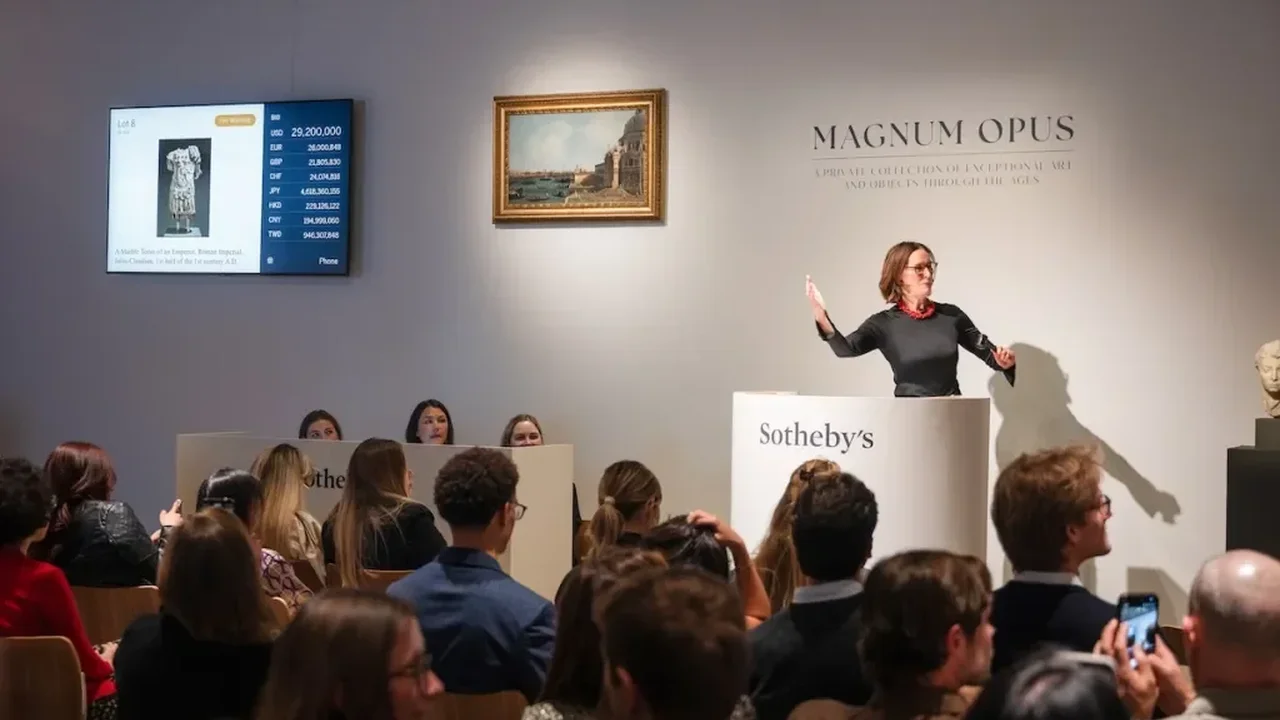
A marble fragment depicting the torso of a Roman emperor sold for $34.3 million at Sotheby's in New York, setting a record for a Roman antiquity at auction.
Standing three and a half feet tall, the sculpture shows the emperor wearing a finely detailed bronze cuirass. It is believed to have formed part of a larger statue of a ruler from the Julio-Claudian dynasty and dates to the first century CE. The work, thought to have originated in Dalmatia, reflects the Roman practice of adapting Greek artistic models.
The sculpture had been estimated at $8 million to $12 million and drew 14 minutes of bidding. Including the buyer's premium, its final price was nearly three times the high estimate. Sotheby's last sold the piece in 2010 for $7.36 million.
The torso accounted for more than half of the evening's $63 million total. Its result highlights the continued appeal of rare classical works, while showing how exceptional objects can connect art, history and collecting across generations. Such sales may help sustain wider interest in preserving and studying ancient heritage.