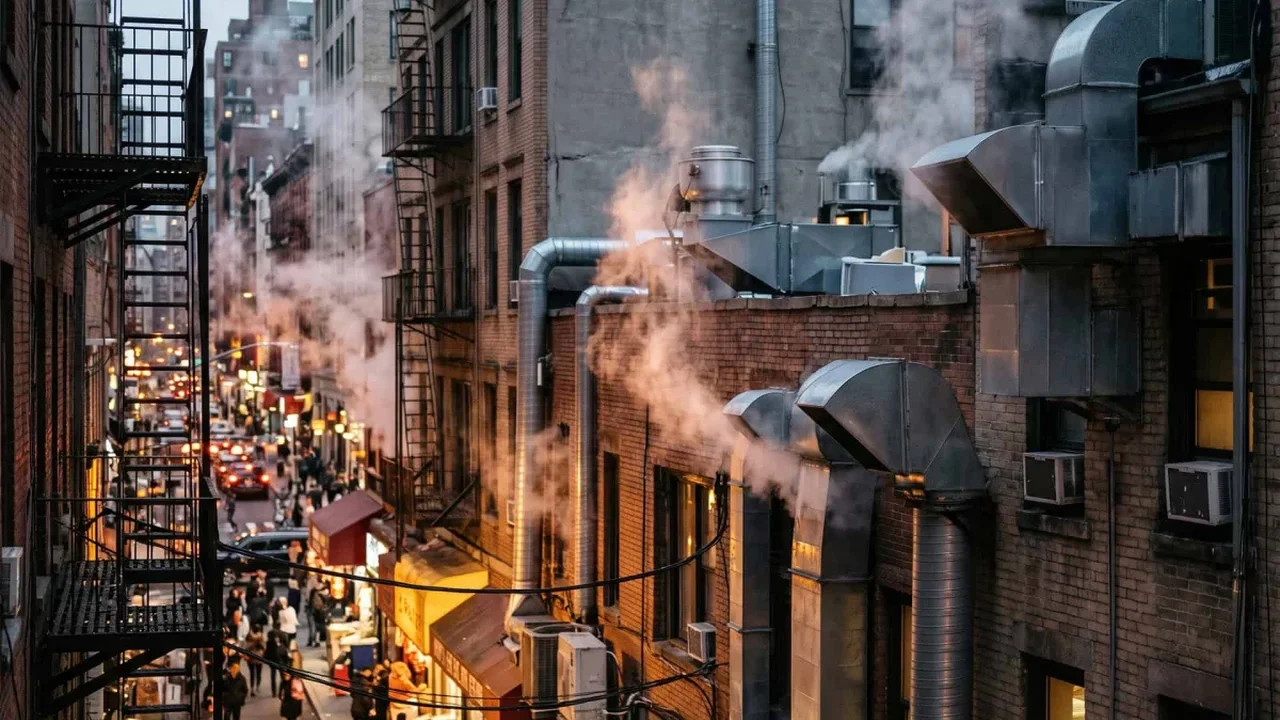
At lunchtime and in the early evening, restaurant kitchens can release more freshly emitted fine particles than vehicle exhausts in parts of London and Beijing, according to a study led by the UK Centre for Ecology & Hydrology.
Researchers used instruments on urban towers in London, Beijing and Delhi to analyze airborne particles smaller than one micrometer. By combining chemical measurements with wind data, they estimated how much particulate matter was rising from city neighborhoods.
In central London, cooking accounted for as much as 83% of measured primary PM1 emissions at midday and 87% in the early evening. In Beijing, the corresponding peaks reached 61% and 76%. Vehicle exhausts contributed less than 10% in these comparisons.
Different cities, different emission patterns
The results reflect changes in urban pollution sources: as vehicle exhaust has declined, cooking emissions have become more prominent in some areas. In Old Delhi, cooking accounted for an average of 8% of daily direct PM1 emissions, while traffic and other combustion sources contributed a larger share. Researchers noted that the absolute amount of cooking particles measured there was comparable to London's.
The findings describe freshly emitted particles, not the full mix of pollution people breathe. At the monitoring sites, cooking-related aerosols made up around 5-10% of ambient PM1 mass. Other contributors include particles formed through atmospheric chemical reactions and non-exhaust traffic dust from brakes, tires and roads.
Filtering kitchen exhaust
Heating oils and fats can release droplets and vapors that form fine particles. Commercial kitchen exhaust systems may carry these emissions outdoors. The study, published in npj Climate and Atmospheric Science, points to high-efficiency filters and grease-trapping equipment as measures that could reduce emissions at their source.
Improved kitchen filtration could become a practical addition to urban air-quality strategies, complementing cleaner transport and helping cities address a wider range of emissions.