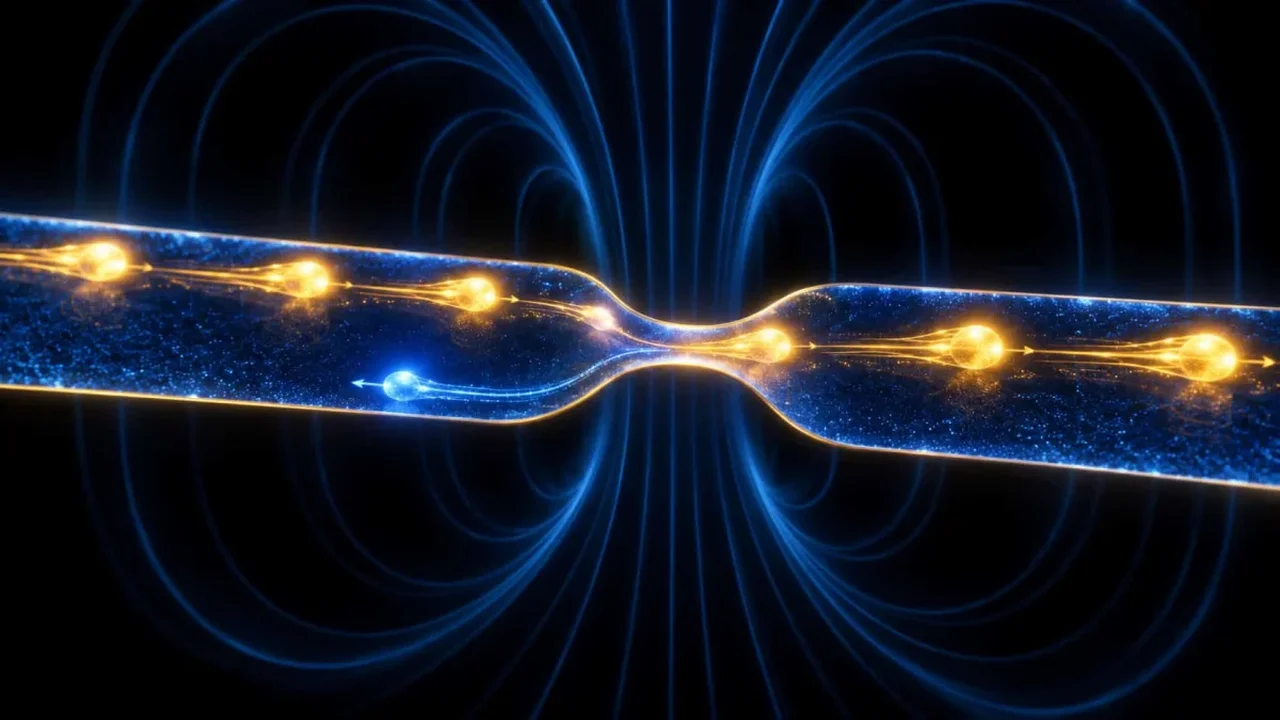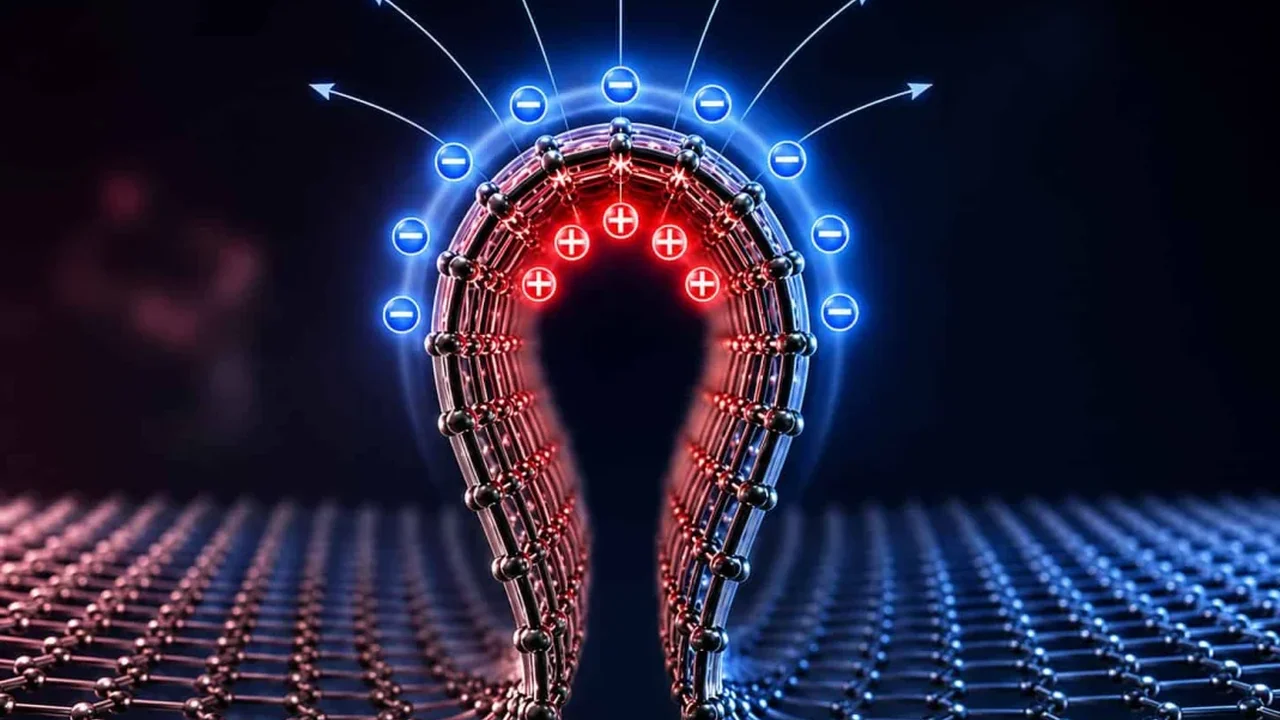
In the realm of quantum many-body physics, researchers have grappled with the behavior of impurities when surrounded by numerous other particles. These impurities can be exotic electrons or atoms. A prevalent explanation has been the quasiparticle model, where a single particle navigates through a sea of fermions--like electrons, protons, or neutrons--interacting continuously with its environment. As it moves, it drags nearby particles along, forming a collective entity known as a Fermi polaron. Although it acts like a single particle, this quasiparticle emerges from the intertwined motion of the impurity and its surroundings. Eugen Dizer, a doctoral student at Heidelberg University, emphasizes that this concept is vital for understanding strongly interacting systems, from ultracold gases to solid materials and nuclear matter.
The Impact of Heavy Particles on Systems
A contrasting scenario is presented by Anderson's orthogonality catastrophe, which occurs when an impurity is so massive that it remains nearly stationary. This significantly alters the surrounding system, causing the wave functions of the fermions to change drastically, disrupting coordinated motion and preventing the formation of quasiparticles. Until recently, physicists lacked a coherent theory linking this extreme case with the behavior of mobile impurities. However, the Heidelberg team has successfully unified these two perspectives using various analytical tools.
Minor Movements Leading to Major Effects
"The theoretical framework we developed elucidates how quasiparticles arise in systems with a very heavy impurity, bridging two previously separate paradigms," says Eugen Dizer, a member of the Quantum Matter Theory group led by Prof. Dr. Richard Schmidt. A crucial insight is that even heavy impurities are not entirely motionless. As their environment adapts, these particles experience minute movements. These slight adjustments create an energy gap that allows quasiparticles to form, even in highly correlated settings. The researchers also demonstrated that this mechanism naturally facilitates the transition from polaronic states to molecular quantum states.
Significance for Quantum Research
Prof. Schmidt notes that the new findings provide a versatile framework for describing impurities applicable across various dimensions and interaction types. "Our research not only enhances the theoretical comprehension of quantum impurities but is also directly applicable to current experiments involving ultracold atomic gases, two-dimensional materials, and innovative semiconductors," he adds.
This study was part of Heidelberg University's STRUCTURES Cluster of Excellence and the ISOQUANT Collaborative Research Centre 1225, with results published in the journal Physical Review Letters.